

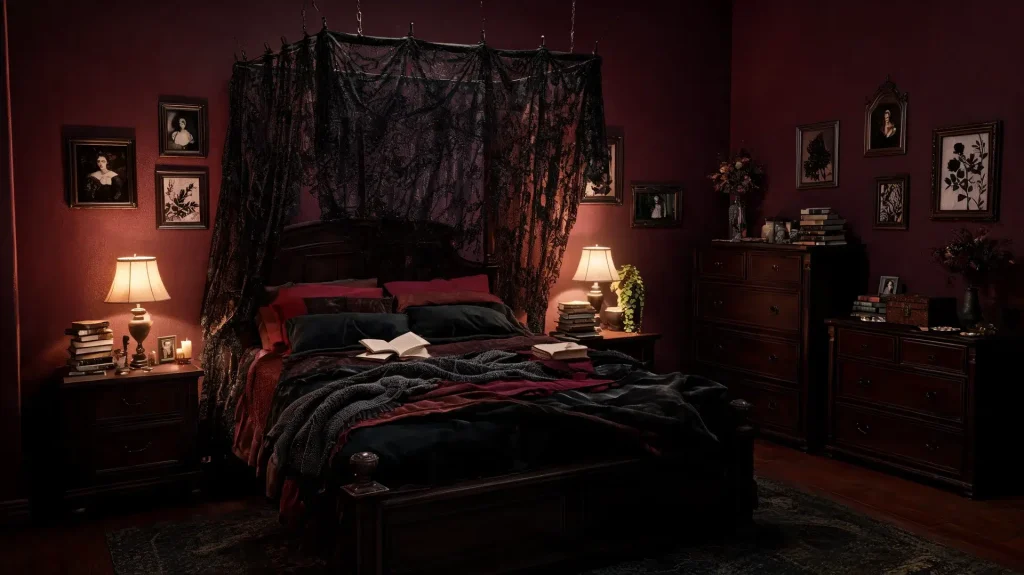
Designing a romantic gothic bedroom is about more than layering dark fabrics and dramatic furniture. It’s about engineering the conditions under which two people feel closer to each other.
I’ve specialized in bedroom environments for most of my design career, partly because the research on this fascinates me. Environmental psychology has a lot to say about how sensory inputs affect arousal, comfort, and emotional openness.
Almost none of it makes it into mainstream decorating advice. Most gothic bedroom guides are just “paint it black and add candles.” That’s not what this is.
What follows are the ideas I return to most in real projects, with notes on what actually works when clients live in these rooms day after day, not just when the photographer shows up.
Why Gothic works for romance (and why most people get it wrong)
Romantic spaces work psychologically when they signal enclosure without confinement, visual complexity without cognitive overload, and sensory richness without sensory assault. Gothic design, done with restraint, hits all three.
A dark, romantic bedroom accent wall can give that mood a clear starting point.
The architecture of canopies, dark walls, layered textiles, and low warm lighting creates exactly the kind of bounded, immersive environment that reduces self-consciousness and increases physical and emotional closeness.
The problem is that most people don’t stop in time. Here’s how each design layer contributes to both the mood and the intimacy of the space.
| Element | Visual + mood | Intimacy effect | Styling note |
|---|---|---|---|
| Color palette | Deep jewel tones across walls, furniture, and textiles | Creates cocooned depth; dark walls reduce visual distraction and focus attention inward, toward the person in the room with you | Layer contrasting textures to avoid flatness |
| Textures | Velvet, silk, fur, leather, layered rugs | Tactile richness primes physical awareness. A room that rewards touch makes people more comfortable touching each other | Mix surfaces; opulence needs contrast to land |
| Lighting | Chandeliers, sconces, candle clusters, dimmers | Warm low light (2200–2700K) relaxes inhibition and makes faces appear more attractive. This is not folklore; it’s documented in social psychology | Always wire for dimmer control; fixed brightness kills atmosphere regardless of every other choice |
| Furniture | Ornate beds, chaises, carved chairs | Creates deliberate retreat zones. A room with only a bed says “this is functional”; a room with a chaise says “this is a place to linger” | One statement piece per zone; competing focal points create visual noise rather than drama |
| Accents | Crystals, tassels, ceiling drapes, carved panels | Visual complexity at a manageable level increases the time people spend looking, which increases the time they spend in the room | Movable accents let you shift the room’s energy without a full redesign |
Romantic gothic bedroom ideas that actually hold up in real rooms
These concepts balance gothic mood with modern livability. Each one comes from real client work, not a mood board fantasy. I’ve noted what makes each one work specifically for intimacy, not just for aesthetics.
1. The canopy cave
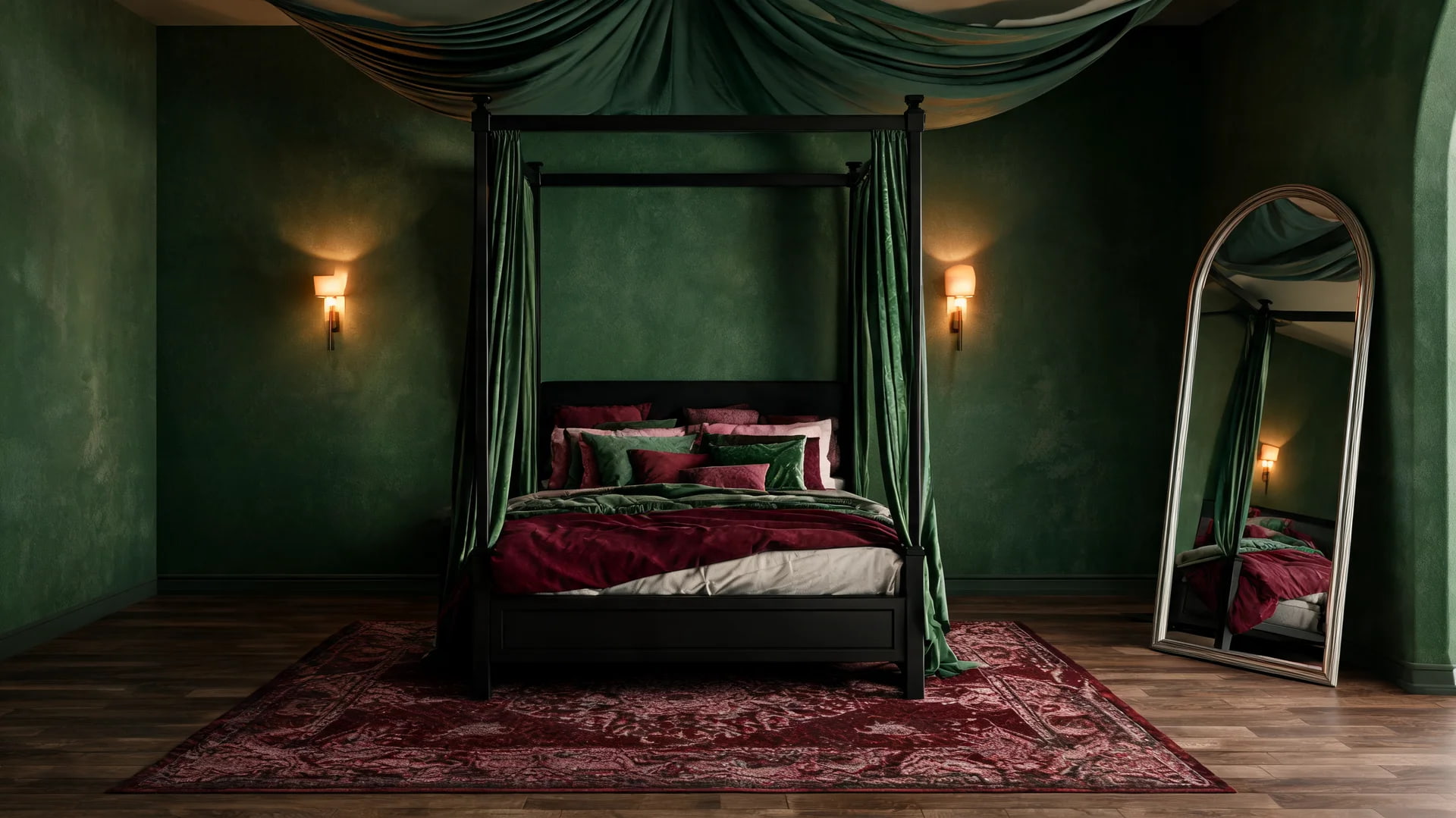
A matte-black canopy bed anchors the room, softened by forest-green fabric framing the sleep zone. Hunter-green walls and walnut flooring ground the space. A burgundy rug and amber sconces add warmth.
The canopy is doing something specific here beyond aesthetics. Enclosure activates what environmental psychologists call “refuge” response, a felt sense of safety and seclusion that relaxes the nervous system. Bedrooms that feel exposed, high-ceilinged, and open are harder to be intimate in. The canopy shrinks the perceived space around the bed without actually reducing the room, which is exactly what you want.
When installing a canopy, keep the fabric over the bed footprint rather than extending it to full ceiling coverage, use lightweight material so airflow and maintenance stay manageable, and leave open edges rather than closing in all four sides. The goal is psychological enclosure, not a tent.
2. The greenhouse after dark
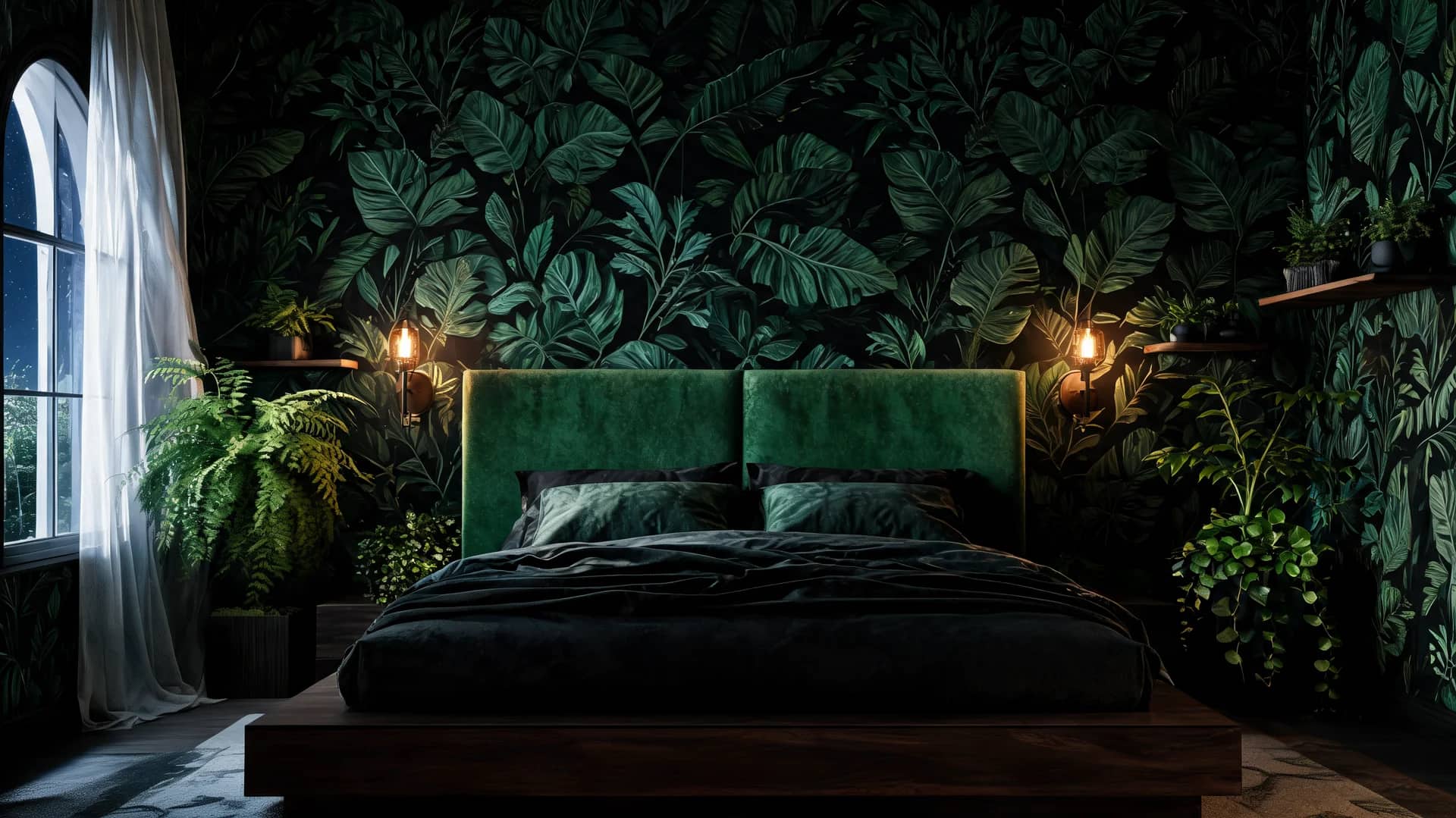
Deep green walls are balanced with curated plant placement rather than full botanical coverage. Dark walnut furniture keeps the structure intact. Trailing greenery softens edges and a sheer-draped window prevents visual heaviness.
This one surprises clients who expect a gothic bedroom to be entirely removed from nature. But there’s consistent evidence that biophilic elements, real organic shapes and greenery, reduce cortisol levels and create a sense of calm that’s distinct from the stimulating drama of purely architectural gothic spaces. The combination of containment (dark walls, heavy furniture) and life (plants, natural edges) is genuinely interesting to be in. It doesn’t have to choose.
Limit plants to defined zones so the room stays controlled. Mix hanging and grounded greenery for visual balance, and keep at least one clear architectural wall so the room doesn’t read as overgrown.
3. The jewel box
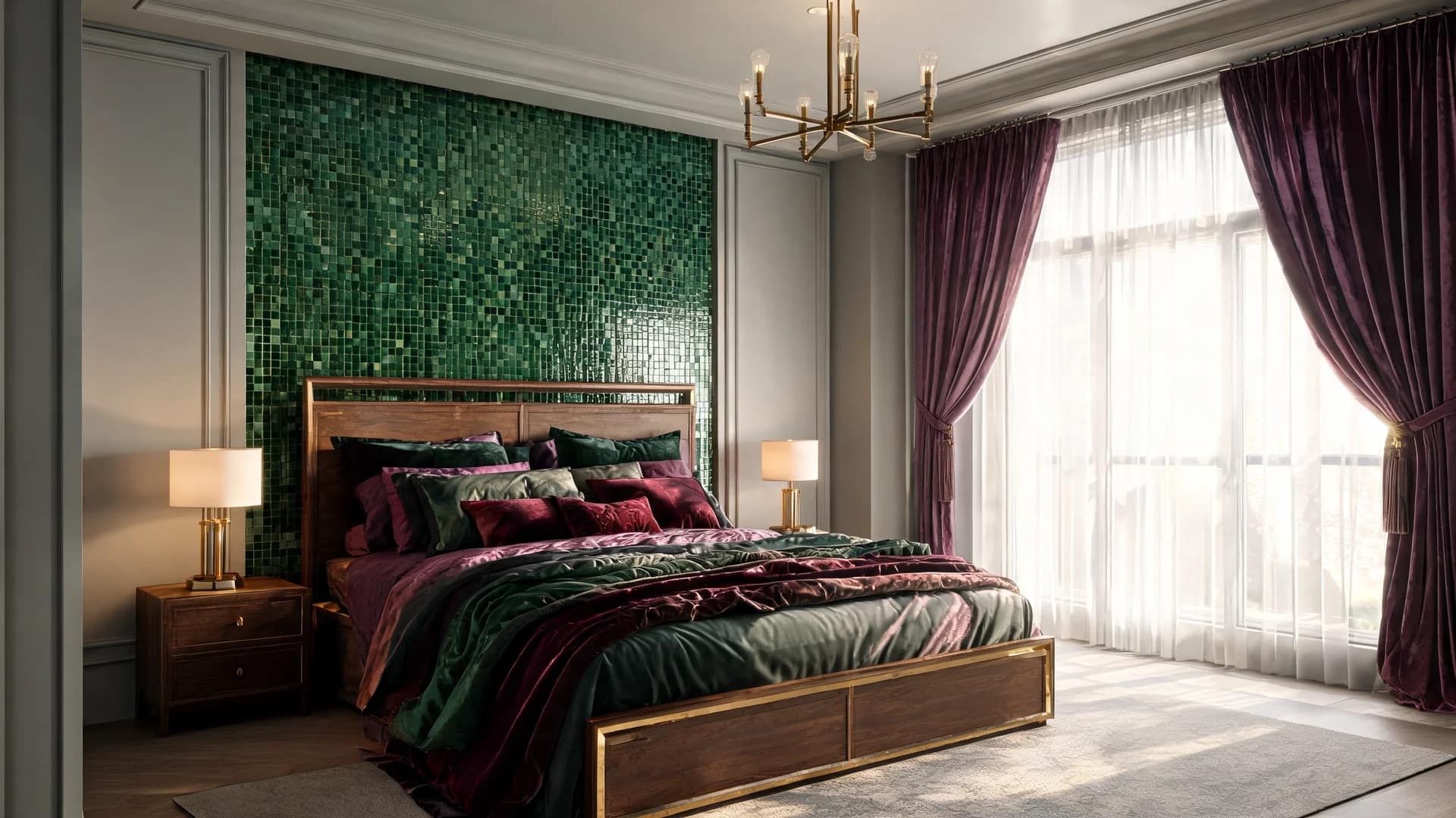
Emerald tile, plum velvet, and brass accents define a layered but restrained material palette. Each surface is spaced to let light move across textures. Soft bedding and low lighting keep the overall mood composed rather than chaotic.
This is the gothic concept I’d point to for couples who want something that feels equally luxurious in daylight. The jewel palette works because it’s warm. Cool gothic palettes (grey stone, ice blue, stark black) feel more theatrical than intimate. Warm jewel tones (emerald, plum, oxblood, amber) read as rich and enveloping rather than performative. The room invites you to stay rather than pose for photographs.
Limit dominant colors to two or three. Space reflective materials to avoid glare. Let one surface, usually the wall behind the bed, act as the main visual anchor and let everything else support it.
4. The loft den
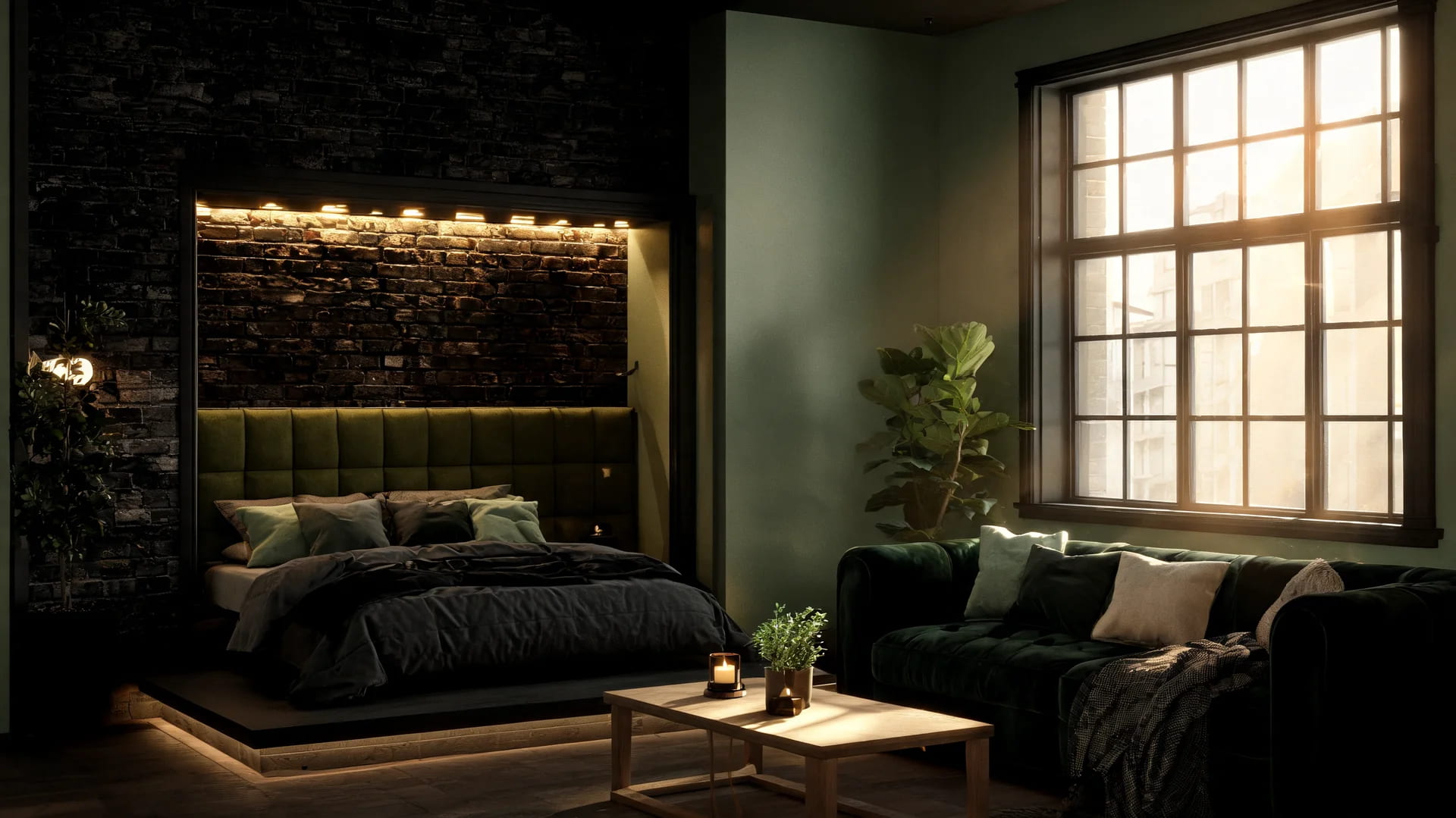
A recessed sleeping nook shares the space with an open lounge area. Dark brick and muted green walls define contrast. Modular seating handles daily living. The layout prioritizes real function over purely decorative composition.
Something I’ve learned from client follow-up: bedrooms with only a bed in them get used for one thing. Bedrooms with a lounge zone get used as destinations: places couples spend time in outside of sleep and sex, which paradoxically makes the room more romantic, not less. When a bedroom becomes a retreat you both inhabit rather than a room you enter for specific purposes, the emotional association with the space deepens. The loft den concept is essentially architectural permission to stay.
Separate sleep and lounge areas clearly so neither zone bleeds into the other. Use built-in lighting for recessed spaces. Maintain open circulation paths. A room that’s awkward to move around in breaks the ease that intimacy requires.
5. The midnight library
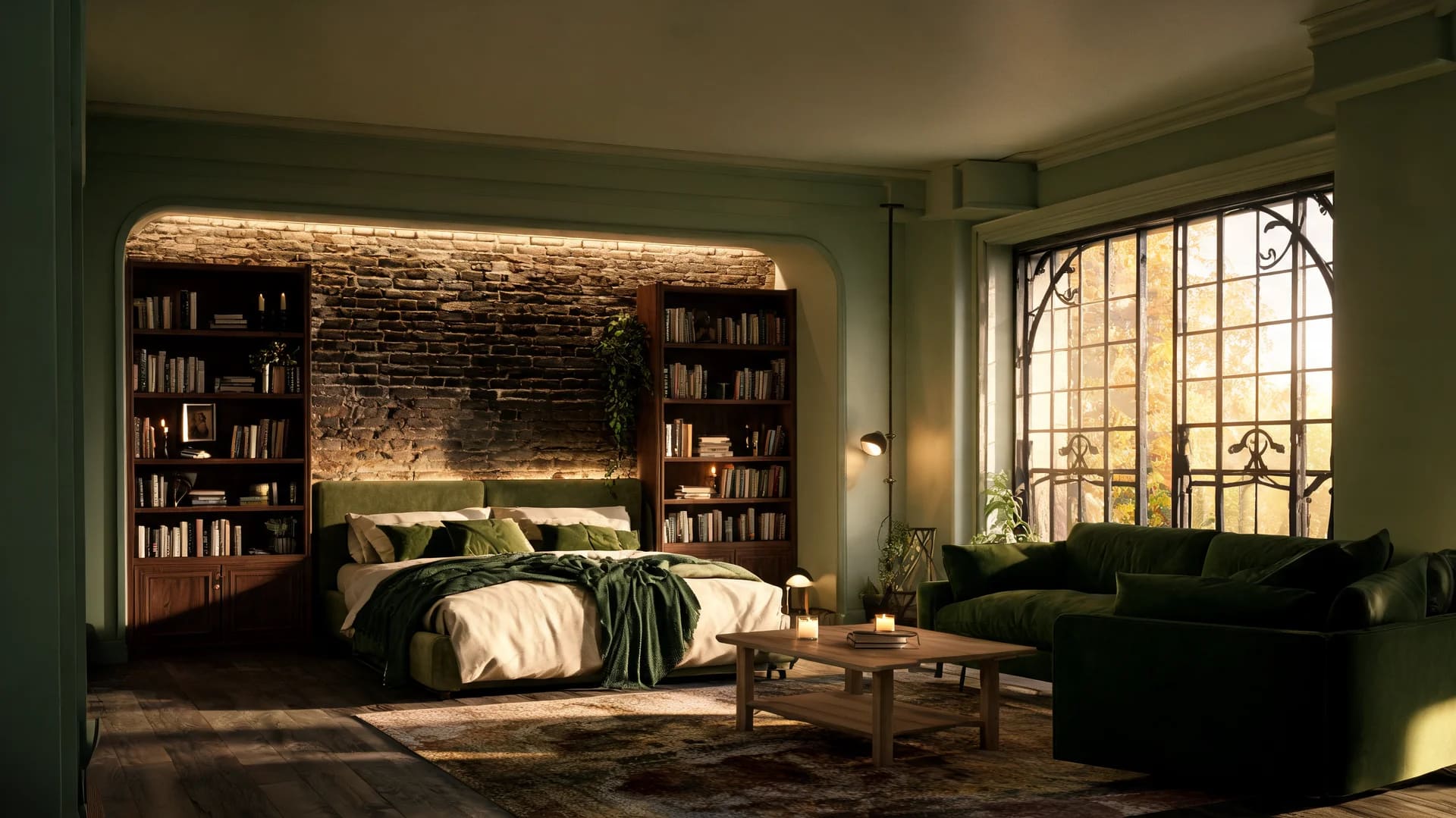
Floor-to-ceiling walnut shelving frames the bed with curated density rather than full saturation. Books and objects are spaced intentionally. Warm Edison lighting and a textured rug soften the overall depth of the room.
There’s a reason people describe libraries as intimate spaces, and it’s the same reason gothic bedrooms work. Both rely on enclosure, visual complexity at a human scale, warm indirect light, and objects that reward close attention. A bedroom with well-considered bookshelves is a room that communicates something about who lives there. That specificity is part of what makes it feel romantic; it doesn’t belong to anyone else.
Leave visible gaps in the shelves for the room to breathe. Mix books with sculptural objects. Use warm indirect lighting only. Overhead strips aimed at shelves create glare rather than warmth.
6. The silk and stone room
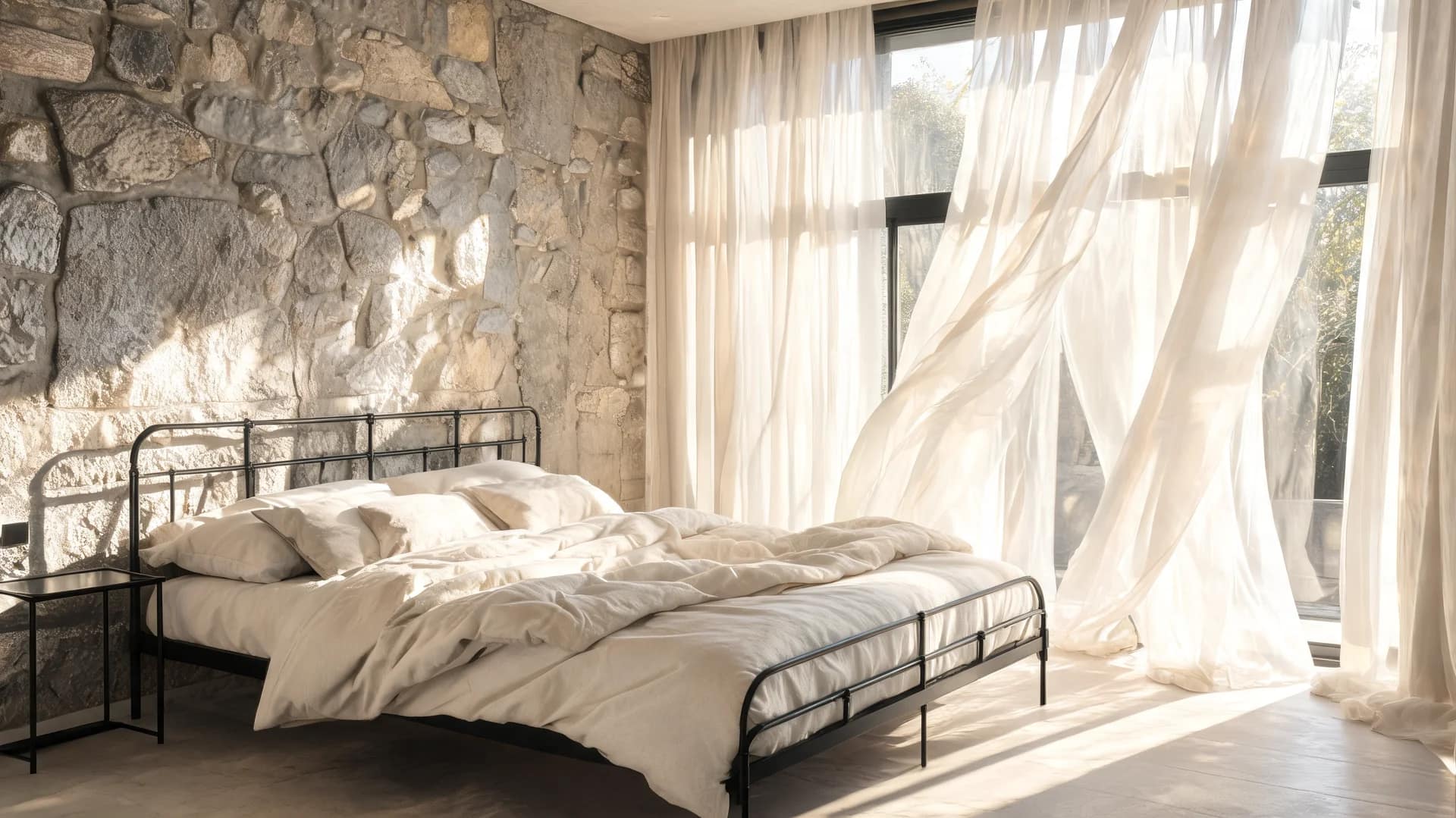
Raw stone or concrete surfaces contrast with flowing silk drapery. The tension between hard and soft materials defines the room. Minimal furniture ensures the textures carry the visual work throughout.
Material contrast is one of the most underused tools in bedroom design. The stone/silk pairing works because it creates a kind of physical metaphor: the room holds both hardness and softness simultaneously, which is essentially what intimacy requires. It’s also sensory: the contrast between what you see (cold stone) and what you touch (silk, soft bedding) creates a quiet tension that keeps the space interesting.
Keep to two primary materials and resist adding a third. Place drapery on selective walls only. Drapery everywhere becomes noise. Balance the visual heaviness of stone with soft, warm lighting, not cool or bright sources.
7. The after-midnight lounge
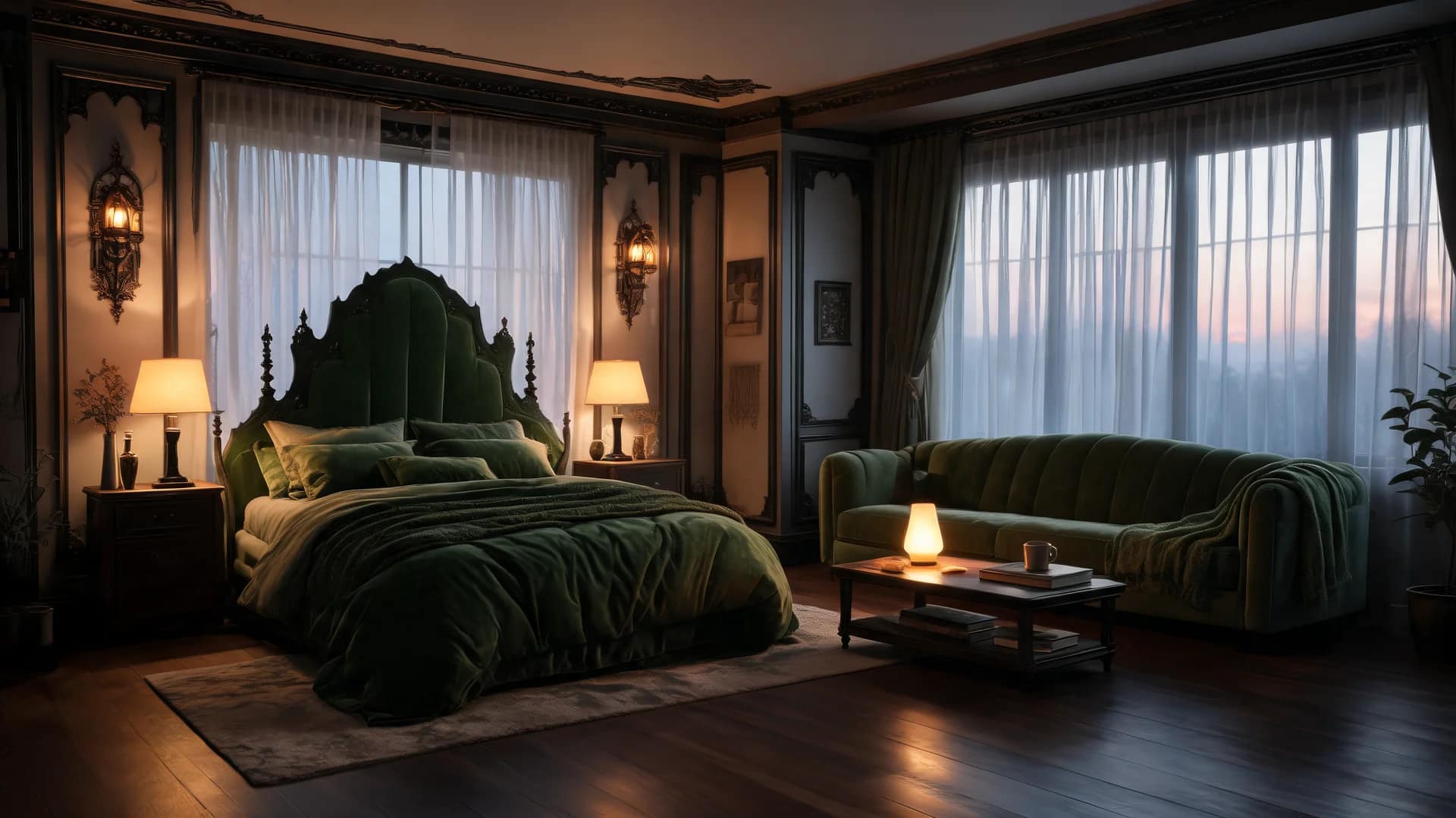
A dual-purpose bedroom where sleeping and lounge zones carry equal weight. Lighting separation defines each area. Consistent flooring maintains cohesion across both uses.
This concept is the loft den’s more intentional older sibling. Where the loft den works with raw brick and a recessed nook, the after-midnight lounge is architecturally deliberate: two zones that feel distinct but belong to the same room. The lighting separation is what makes it work in practice. If both zones share the same overhead source, they read as one room with furniture arranged awkwardly. If each zone has its own light quality, the transition between them becomes a real shift in mood, which is exactly what a bedroom should support.
For a bolder setup, DIY sex furniture ideas work best inside the lounge zone, not the sleep zone.
Assign separate lighting circuits to each area. Keep flooring consistent for visual unity. Avoid furniture pieces that try to serve both zones. A sofa should belong to the lounge zone, not float ambiguously between them.
8. The secret garden chamber
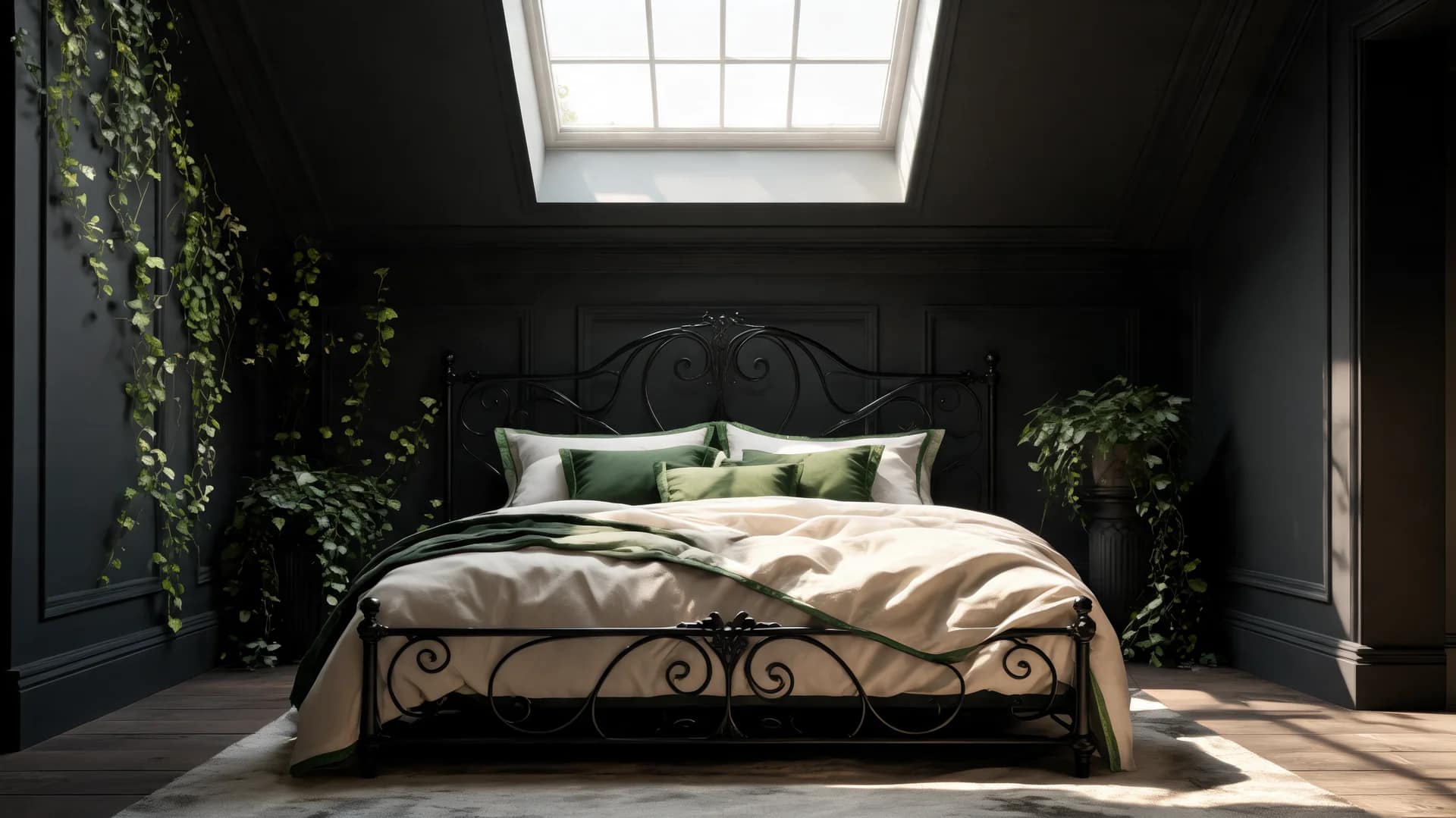
Vines and greenery are controlled rather than overgrown. Iron furniture and muted walls anchor the space. A skylight or central overhead source brings natural variation throughout the day.
The word “secret” in the name is load-bearing. One of the consistent findings in environmental psychology research on intimate spaces is that seclusion, whether real or implied, increases the comfort couples feel being physically close. A room that looks like it could be hidden, that requires some imaginative participation to enter, changes how people hold themselves inside it. The controlled garden aesthetic delivers this without requiring you to actually build a greenhouse.
Control growth direction and density so the room reads intentional rather than neglected. Keep structural furniture visually dominant so the plants read as layering, not as the room’s primary statement. Use one primary natural light source. A skylight that shifts through the day creates a quality of light nothing artificial replicates.
9. The shadow sanctuary
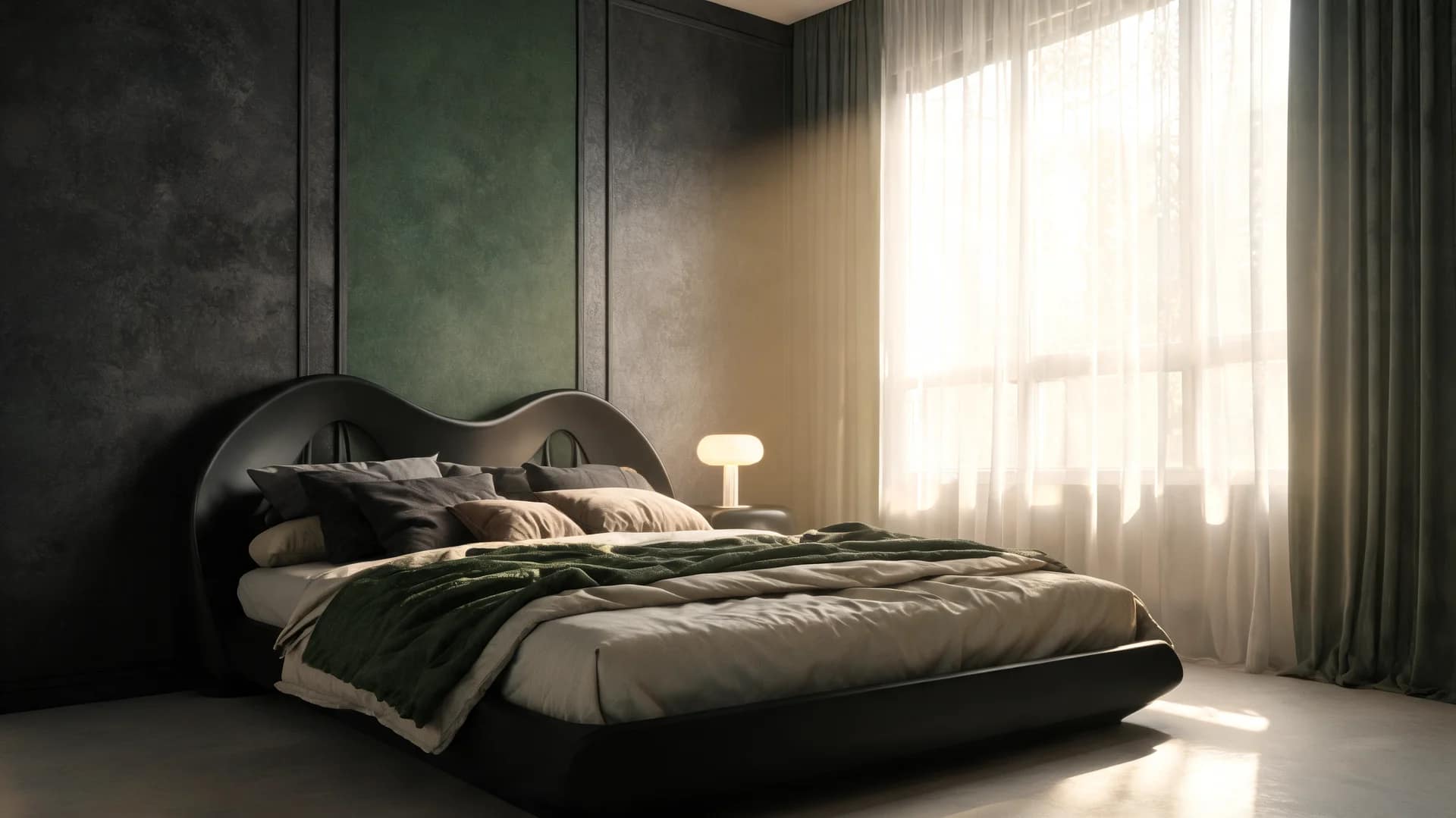
A minimal gothic room built from matte surfaces, layered textures, and controlled low lighting. No excess objects. The atmosphere comes entirely from material depth and lighting contrast.
This is the concept I reach for when clients want something that reads as genuinely personal rather than theatrical. The shadow sanctuary gets its intimacy from what isn’t there: no visual clutter, no competing focal points, no objects demanding attention. What remains is space, texture, and light. That turns out to be enough. Rooms that ask nothing of you psychologically are the easiest to relax in, and relaxation is where romantic atmosphere actually begins.
Prioritize matte finishes throughout. Glossy surfaces catch light and create distraction in a room designed around shadow. Layer textures rather than adding objects. Use only indirect lighting; any direct overhead source undercuts the whole approach immediately.
10. The statement headboard chamber
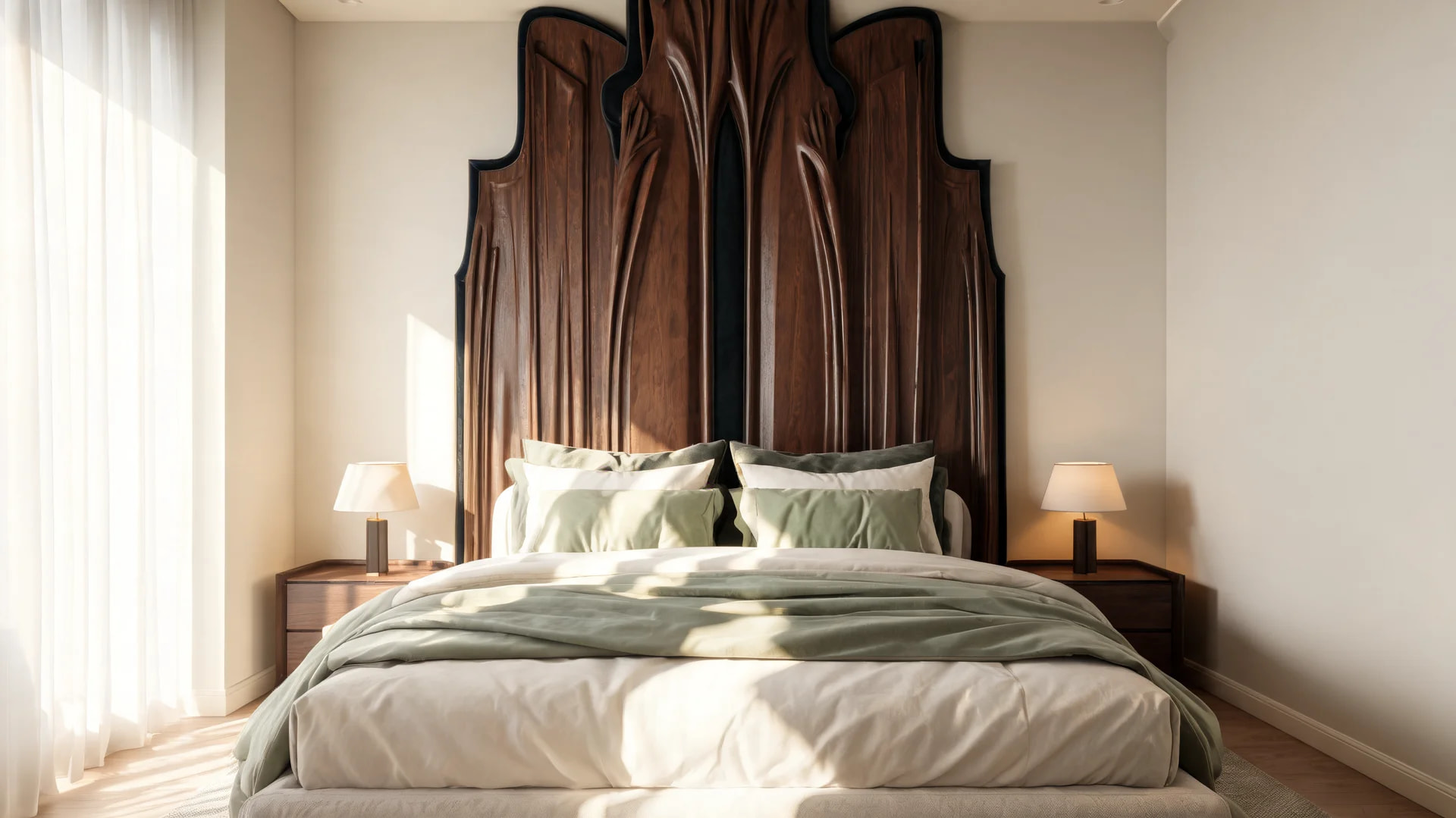
A tall, architectural headboard defines the entire room composition. Everything surrounding it is intentionally subdued. Scale and vertical presence stay the focal point. Lighting is integrated into the structure rather than added separately.
The headboard as a design element is consistently underestimated. When it’s done at genuine scale, reaching toward the ceiling and commanding the wall rather than decorating it, it changes the room’s psychological register. The bed stops being furniture and becomes architecture. Architecturally significant beds read as places you choose to be, rather than surfaces you collapse onto. That distinction is small in description and enormous in the experience of the room.
Extend height close to ceiling level, not halfway up the wall. Keep surrounding walls quiet. Competing wall treatments dissolve the effect. Integrate lighting into the headboard structure rather than placing sconces beside it.
11. The stained glass light chamber
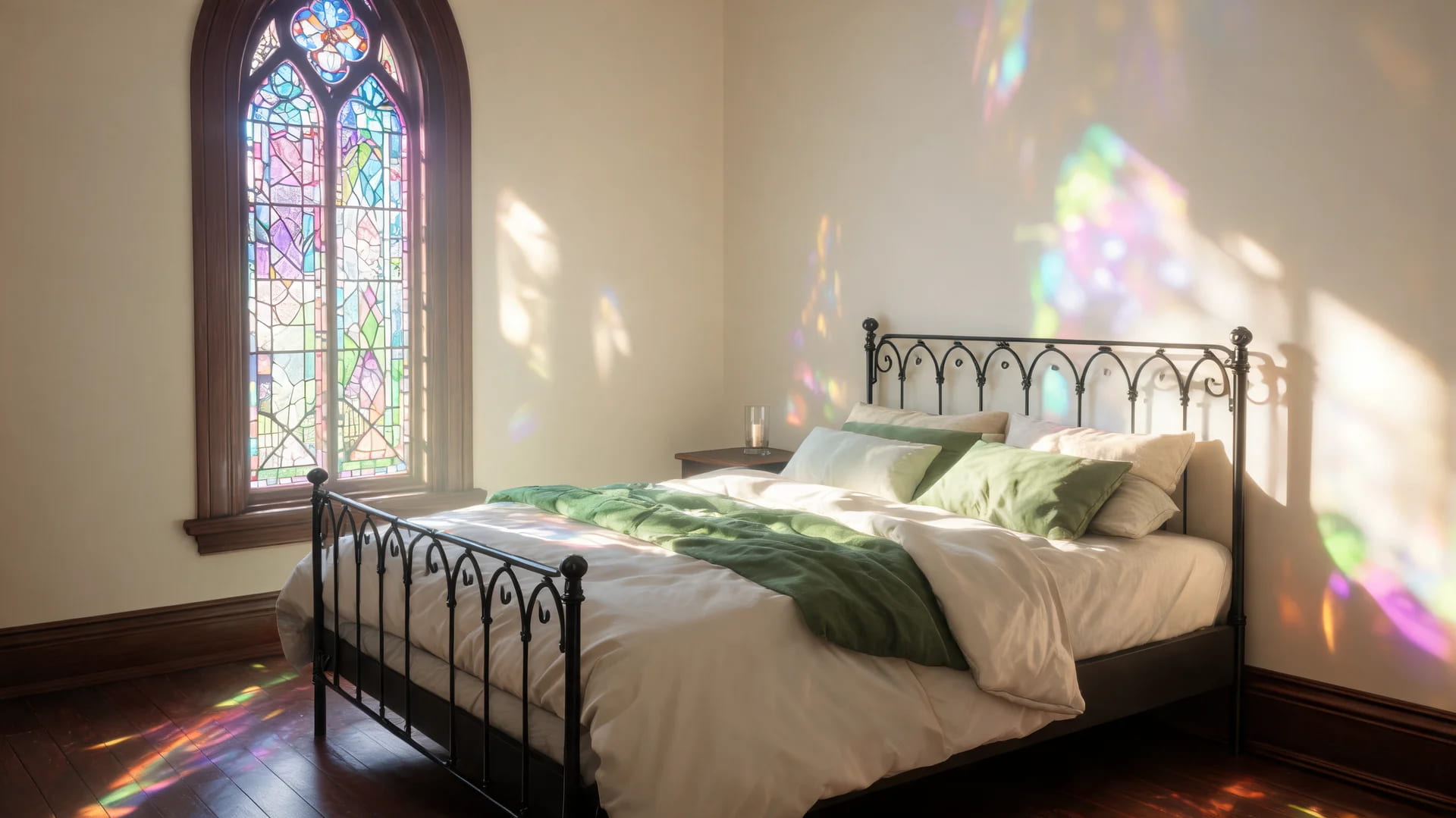
A single stained glass feature transforms daylight into shifting color across the room. One focal installation point keeps the effect controlled rather than overwhelming. The light becomes the primary design element.
I’m always slightly apprehensive about pitching this concept because it sounds maximalist, but it’s one of the most intimate rooms I’ve designed. The reason is that stained glass light is inherently temporal: it moves, it changes with cloud cover, it shifts across surfaces as the sun moves. A room with changing light becomes a room you watch, and shared attention on something beautiful is one of the more reliable generators of emotional closeness. The room does work so that the people in it don’t have to do it consciously.
Use one primary glass feature only. Two installations compete and cancel each other out. Align the installation with the room’s strongest natural light direction. Keep surrounding surfaces neutral so the projected color reads clearly rather than clashing.
12. The gothic arch studio room
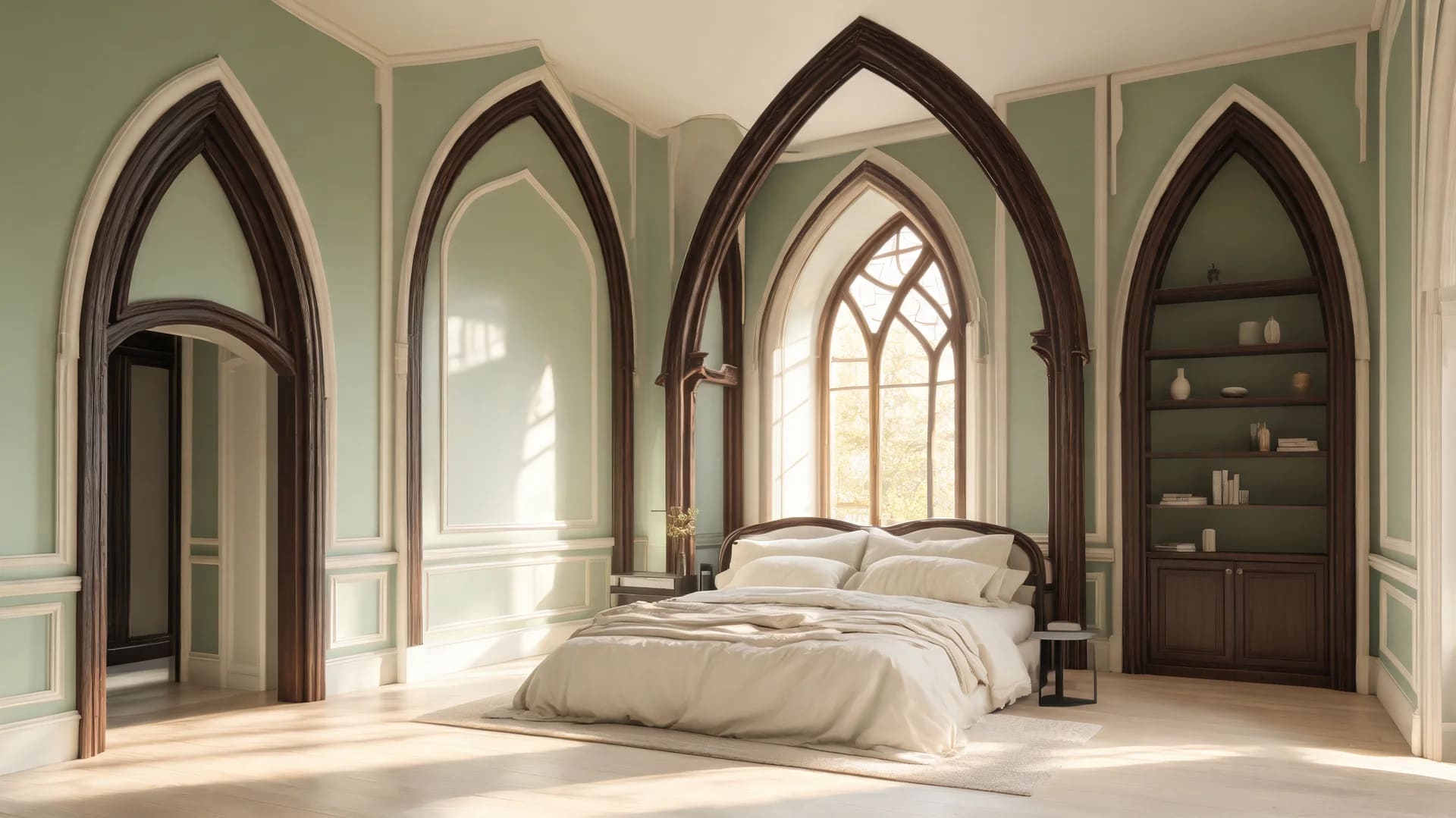
Gothic arches define structural points: doorways, shelving, framing elements. Beneath this geometry, the room stays modern and functional. The balance between architectural detail and everyday usability is the whole point.
This concept works best for clients who want something that reads as gothic to visitors but doesn’t compromise on liveability for the people who actually use the room. The arches carry the aesthetic weight without requiring anything else to follow suit. The rest of the room can be relatively clean, functional, even modern, and the arches hold the character. It’s also the most adaptable concept if two people in a shared bedroom have different tolerances for maximalism.
Use arches consistently across key structural points. Inconsistent arching looks unplanned rather than curated. Avoid overdecorating within the arch frames themselves. Keep furniture modern and simple so the architectural detail has something quiet to contrast with.
Bringing it together
Individual elements only hold up if the room functions as a coherent whole. These are the principles I apply at the end of every Gothic bedroom project to make sure the design works in real life, not just in photographs.
- One focal point per zone. Bed zone, seating zone, and mood corner each need one statement piece. Two statement pieces in the same zone cancel each other out. What you get is visual noise rather than drama.
- Lighting first, everything else second. Plan the circuit layout and dimmer zones before finalizing any other decision. The color temperature, the direction of throw, and the ability to shift between bright and low: every other element in the room depends on how the light falls. I’ve seen beautiful rooms that failed entirely because the lighting wasn’t controllable.
- Texture contrast, not texture matching. Velvet against leather. Smooth stone against rough wood. Matching textures flatten the room; contrast gives it depth and gives people’s hands something to explore.
- Stay within a color register. Pick a jewel-tone family, either cool (sapphire, emerald, amethyst) or warm (ruby, amber, oxblood), and stay inside it. Mixing warm and cool jewel tones against each other doesn’t read as rich; it reads as unresolved. The palette needs to belong to one temperature to create the cocooning effect that makes these rooms work romantically.
- Leave the shadow alone. A gothic bedroom needs empty surfaces and dark areas to breathe. The dark space between elements is part of the design. The room’s atmosphere lives in its negative space as much as in its objects. Resist filling every surface, and you’ll find the room gains depth rather than losing it.
When these principles hold, the room stops being a collection of gothic references and becomes a single place: dramatic enough to feel like an escape, liveable enough to actually be one.
Frequently asked questions
How do I stop a gothic bedroom from feeling cold rather than intimate?
The culprit is almost always lighting color temperature. Bulbs rated above 3000K (cool white or daylight) make dark rooms feel clinical rather than warm. Replacing every source with bulbs rated 2200K–2700K (warm white to soft white) is the single highest-impact change you can make, and it costs almost nothing. Beyond lighting, an excess of synthetic materials (faux velvet, vinyl upholstery, plastic accents) reads as cold in a way that real wood, wool, and genuine leather don’t. If the room feels harsh, start there before changing anything structural.
What flooring works best in a gothic bedroom?
Dark hardwood (ebonized oak, dark walnut, or jacobean-stained pine) is the strongest base. Stone tile works well in warmer climates where thermal mass isn’t a comfort problem. What absolutely doesn’t work is light grey flooring, which is everywhere at the moment and undercuts the warmth and depth that everything else in the room is working to build. If you’re stuck with existing light floors, large dark rugs covering most of the visible floor area are a genuine fix rather than a compromise. They change the room’s perceived color temperature significantly.
Can this look work on a tight budget?
Yes, but you have to choose where to concentrate the money and where to save it. In my experience, the headboard, curtains, and lighting hardware define the room’s character more than anything else. That’s where the budget should go first. Paint in deep jewel tones costs the same as paint in any other color. Second-hand carved furniture often costs less than flat-pack alternatives. DIY fabric ceiling treatments can carry real atmospheric weight if the hardware they hang on is done well. The mistake is spreading a limited budget evenly across everything, which means nothing gets done properly.
How do I make a gothic bedroom work when I share it with a partner who has different tastes?
The most gothic elements (ceiling treatments, window drapery, wall color) are shared background rather than personal territory, and they carry more aesthetic weight than almost anything else in the room. If those surfaces hold the aesthetic, the furniture can be considerably more neutral in form without losing the character of the space. A gothic bedroom can absorb a contemporary reading lamp or a mid-century nightstand if the dominant surfaces are doing their job. What matters is that walls, ceiling, curtains, and bedding hold the register. Personal objects and functional furniture can be negotiated around that foundation.
Does a gothic bedroom have to be dark all the time?
No, and the best ones aren’t. Blackout curtains in a dimmer-controlled room give you full control over the light quality throughout the day. The same room that feels like a midnight sanctuary at 10 pm can have filtered morning light coming through sheer underlayers at 8 am. The goal is a room with range, not a room that’s permanently set to one mode. Clients who try to keep gothic bedrooms dark around the clock usually find that the space becomes oppressive within a few weeks. Designing for a controllable light range, including good-quality natural light for everyday use, is what makes the dark moods actually feel like a choice.
A final note
A well-designed romantic gothic bedroom doesn’t announce itself. It envelops you. That’s a different thing entirely.
The details that make the biggest difference in these rooms are rarely the most obvious ones.
It’s rarely the furniture. It’s the lighting circuit plan, the consistency of hardware finishes, the ceiling treatment you almost skipped, and the restraint that stopped the room from tipping into chaos before it found its balance.
Those are the decisions that determine whether you end up with a bedroom that genuinely changes how you feel to be in it, or one that just photographs well.
If you’re working on your own space and want to think through specific elements, drop your questions in the comments.





One Response