

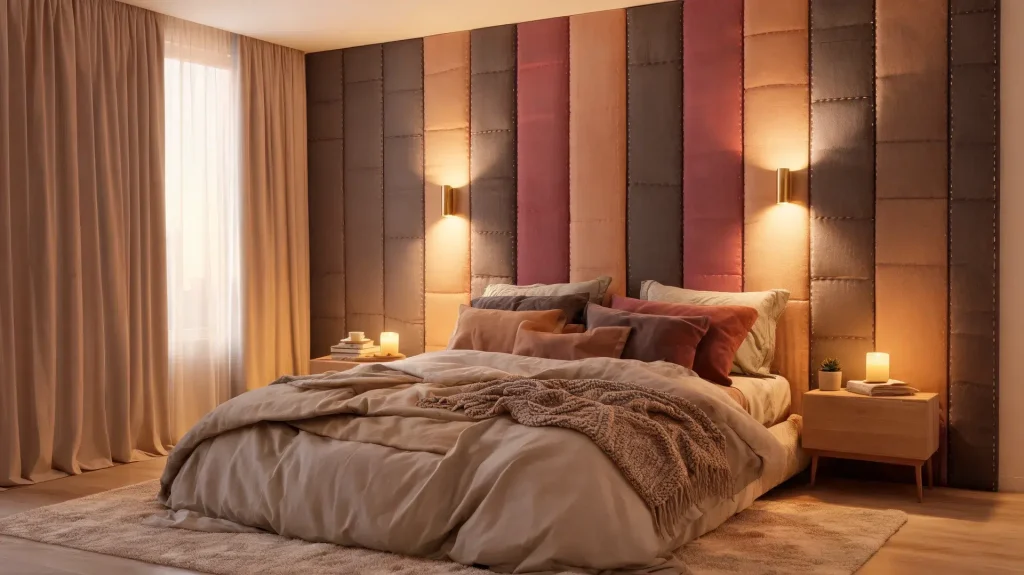
Creating a romantic bedroom accent wall is about more than picking a pretty color, it’s about shaping a space that feels intimate, safe, and emotionally alive.
The accent wall sets the tone for the entire room. It draws the eye, anchors the bed, and quietly does the emotional heavy lifting.
Over the years, I’ve designed dozens of these spaces for clients who wanted their bedrooms to feel like a retreat, not just a room. The right combination of texture, light, and material can completely transform how a space feels after dark.
Below, I’ve broken down the core elements, the best ideas I return to again and again, and practical tips to help you get it right.
Key elements of a romantic bedroom accent wall
Before you choose a treatment, it helps to understand what actually makes a wall feel romantic. It’s rarely one thing, it’s how these five elements work together.
| Element | Why It Matters | Example / Suggestion |
|---|---|---|
| Color | Sets emotional tone, signals intimacy | Emerald, plum, ruby, dusty blush, warm charcoal |
| Texture | Adds tactile depth and sensory warmth | Velvet panels, wood slats, 3D plaster, layered fabric |
| Lighting | Shapes mood without harsh glare | Dimmable sconces, backlit panels, warm LED strips |
| Architecture | Creates visual structure and shelter | Arches, niches, curved panels, floating ledges |
| Personal Accents | Makes the space feel curated and lived-in | Mirrors, art, plants, soft textiles |
When these five are layered with intention, the wall stops being a backdrop and starts being the emotional center of the room.
Romantic Bedroom Accent Wall Ideas That Shape Intimacy
A bedroom accent wall does more than decorate a surface; it defines how the space feels, how light behaves, and how close two people feel to each other in the room at night.
1. Full mirror wall (smoked/antiqued)
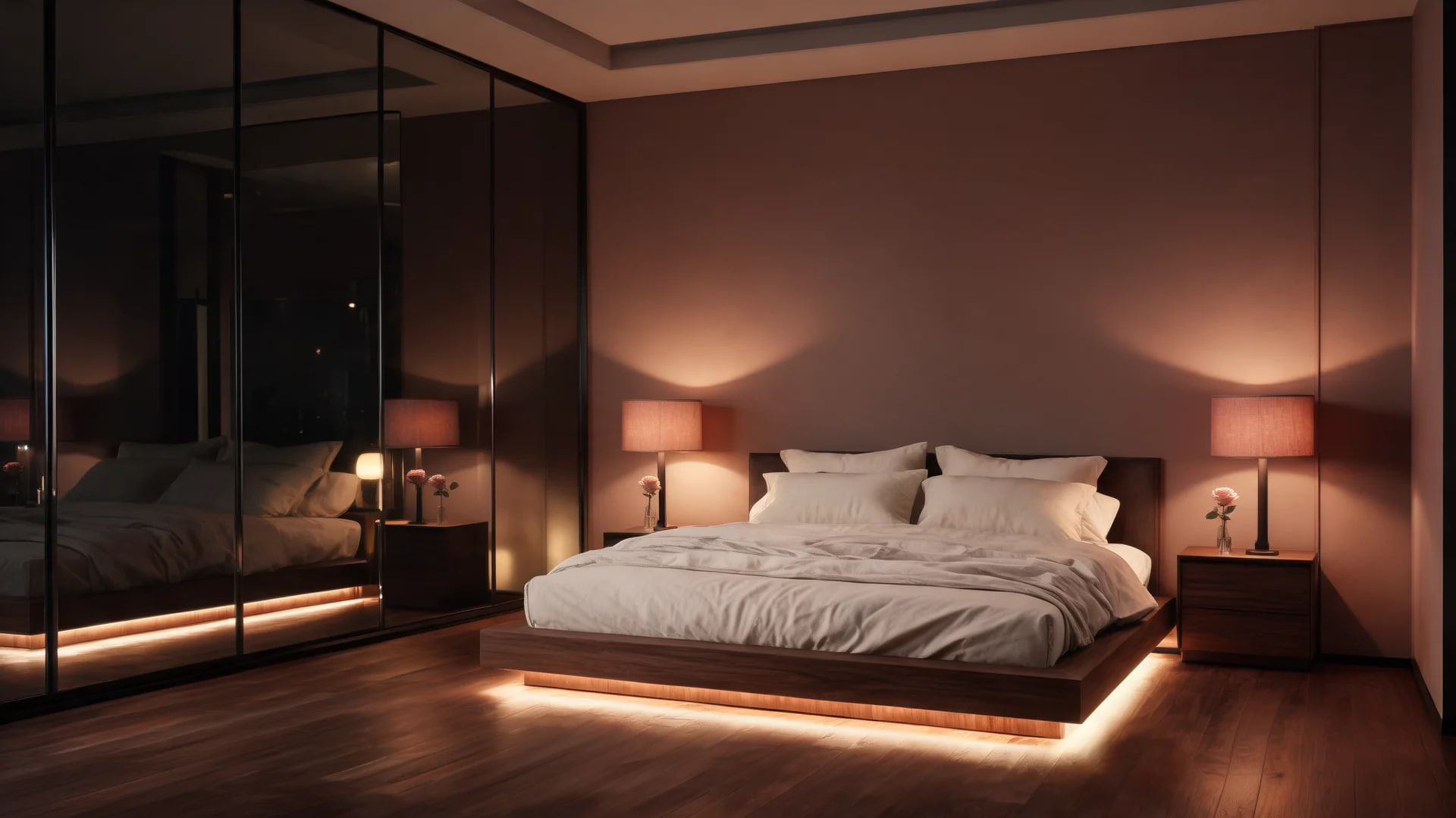
A full mirror wall is used when the goal is to expand perceived space while maintaining softness through controlled reflection. I prefer smoked or antiqued finishes instead of flat mirrors because they reduce visual sharpness at night. The wall works best when paired with warm, low-level lighting rather than overhead sources.
- Spatial Role: Expands room depth without adding physical elements
- Material Behavior: Smoked glass softens reflection and reduces visual clarity
- Emotional Effect: Keeps the bedroom open but visually calm at night
2. Flowing arch niche wall
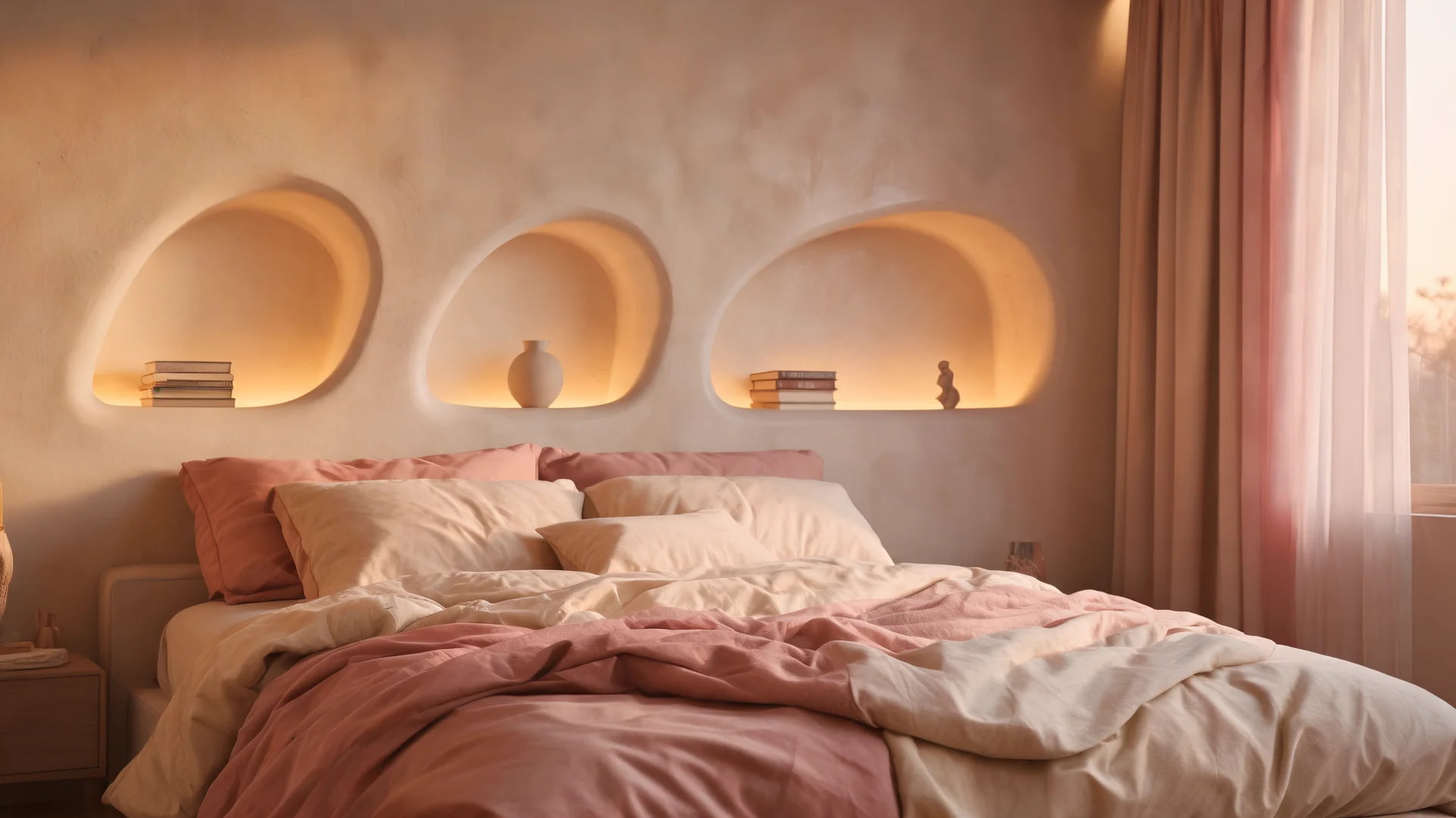
A flowing arch niche wall introduces architectural softness by carving depth directly into the wall rather than layering surface décor. I use this when the bed needs framing without heaviness. Recessed niches allow lighting and objects to sit within the structure, creating controlled visual rhythm.
- Spatial Role: Frames bed through built-in architectural curvature
- Material Behavior: Plaster arches and recesses create layered shadow depth
- Emotional Effect: Produces a sheltered, softened bed focus without enclosure
3. Couple mural wall
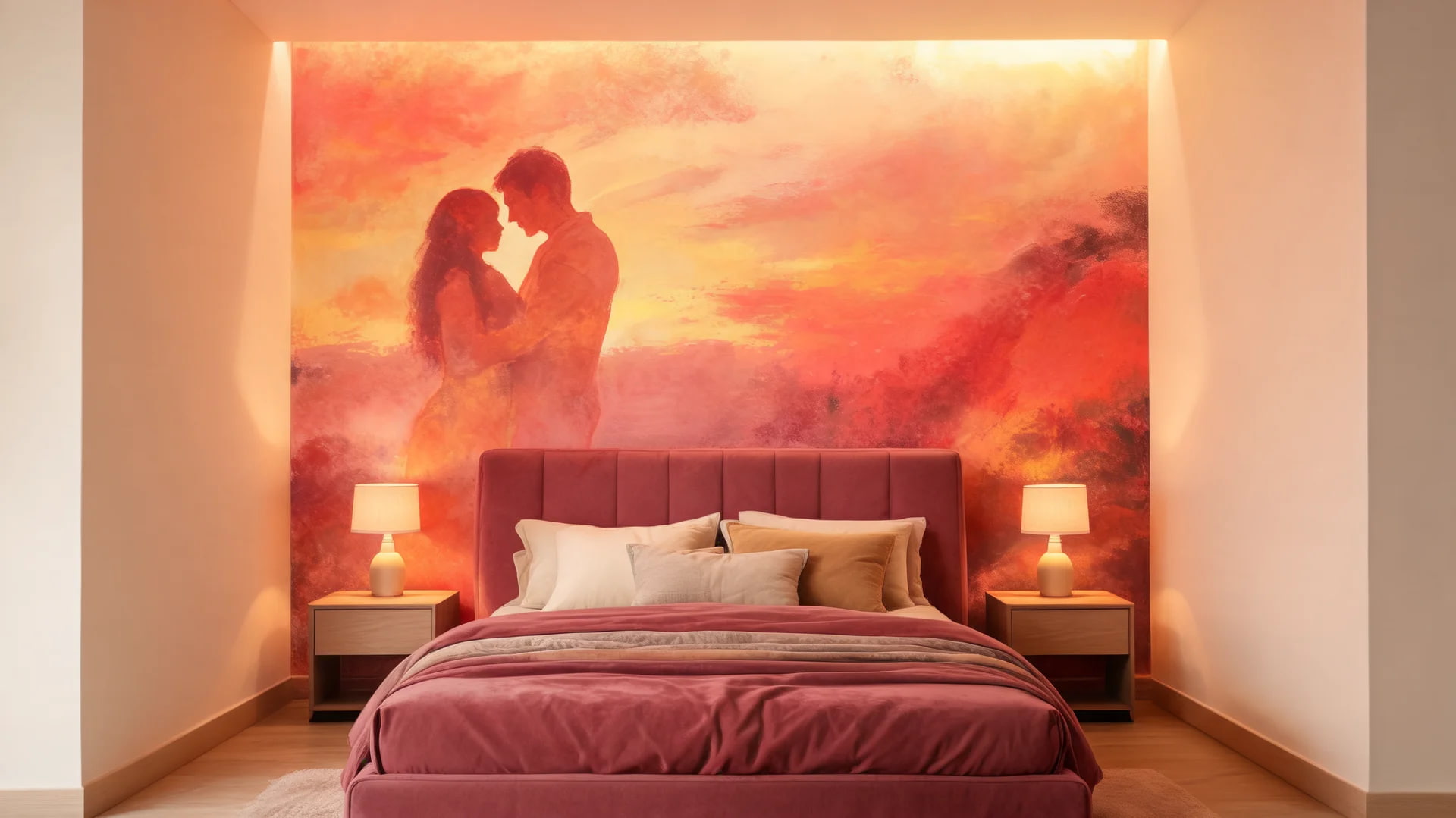
A couple mural wall is used when the bedroom needs emotional identity rather than decorative styling. I usually work with abstracted or softened imagery so the wall feels integrated rather than visually dominant. Scale and lighting are critical to ensure it reads as atmosphere rather than signage.
- Spatial Role: Establishes an emotional focal point behind the bed
- Material Behavior: Large-scale mural integrates into wall surface
- Emotional Effect: Builds personal connection through memory-based visuals
4. Projector wall
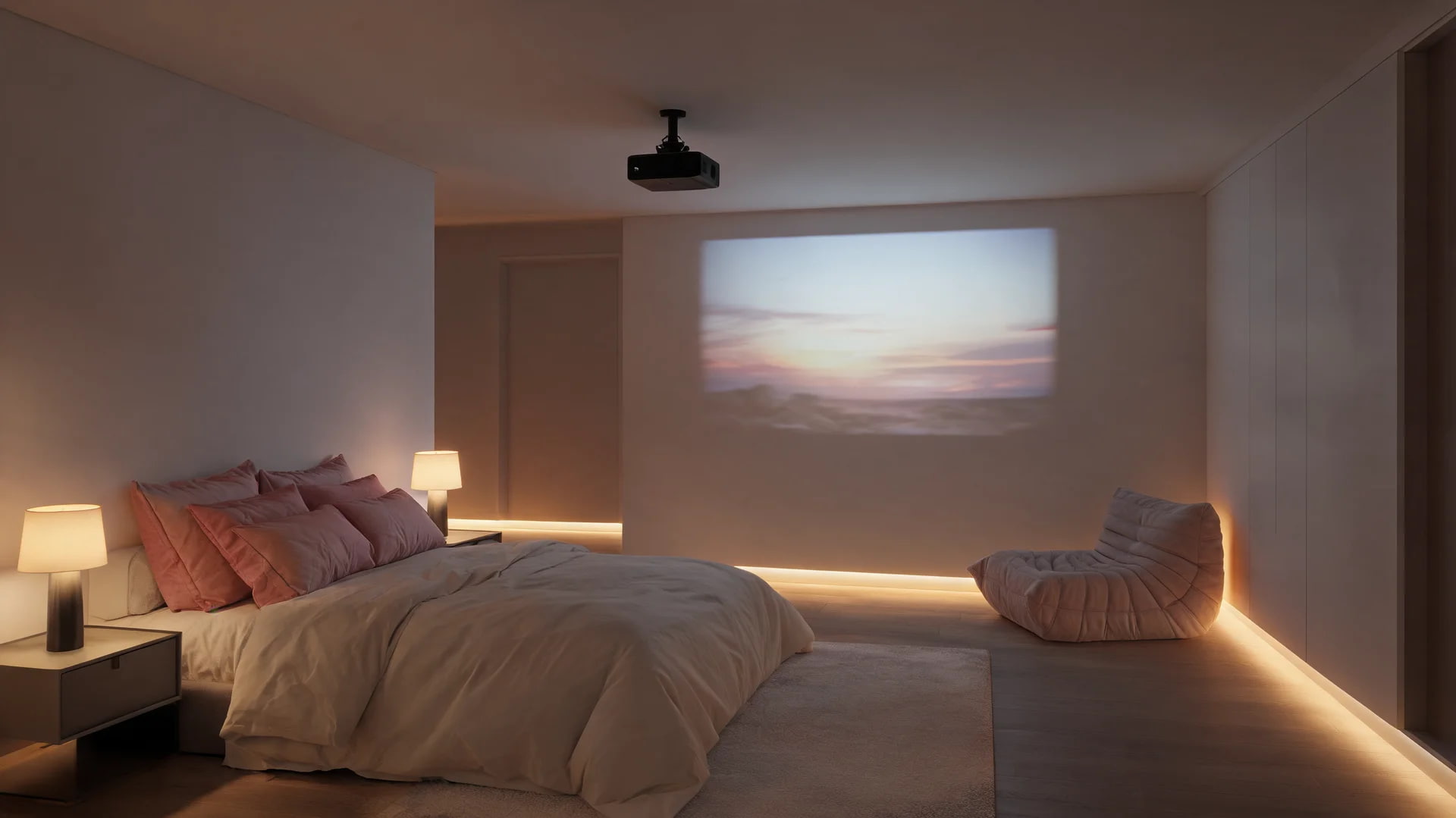
A projector wall turns the bedroom into a controlled cinematic surface that remains visually minimal when inactive. I typically use matte projection finishes so the wall disappears during the day and activates only at night. The success depends heavily on keeping the surrounding furniture visually quiet.
- Spatial Role: Converts wall into a dynamic viewing surface
- Material Behavior: Matte finish supports clear projection without glare
- Emotional Effect: Creates shared immersive experiences without physical clutter
5. Open city-view suite wall
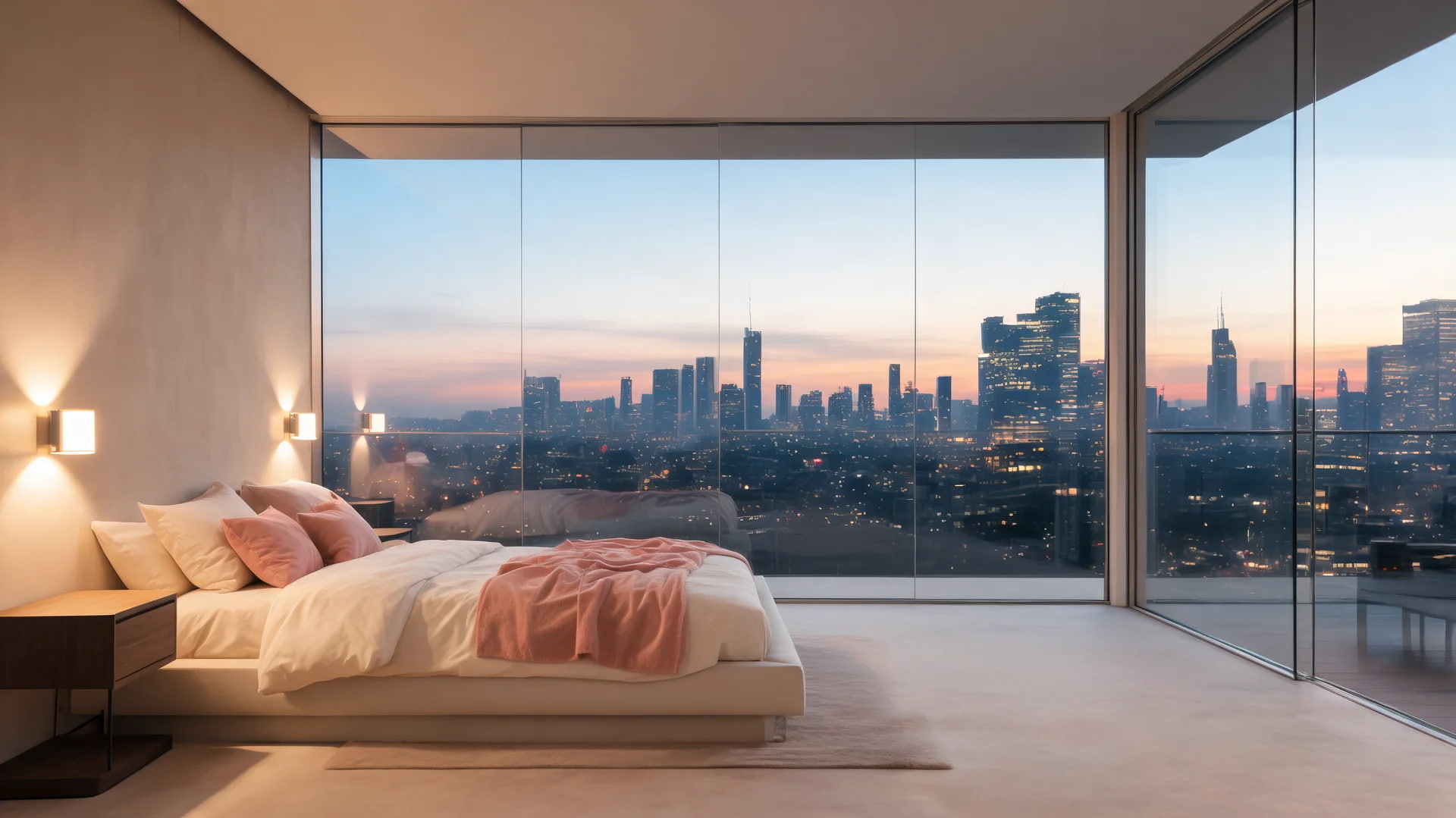
An open city-view suite wall removes interior visual barriers by prioritizing full-height glazing as the main architectural feature. I design interiors around the view rather than adding competing focal points. Furniture stays low and minimal so the exterior becomes the dominant spatial layer.
- Spatial Role: Connects interior bedroom to external environment
- Material Behavior: Floor-to-ceiling glass maintains uninterrupted sightlines
- Emotional Effect: Creates a calm observational connection to the outside world
6. Sunken lounge pit
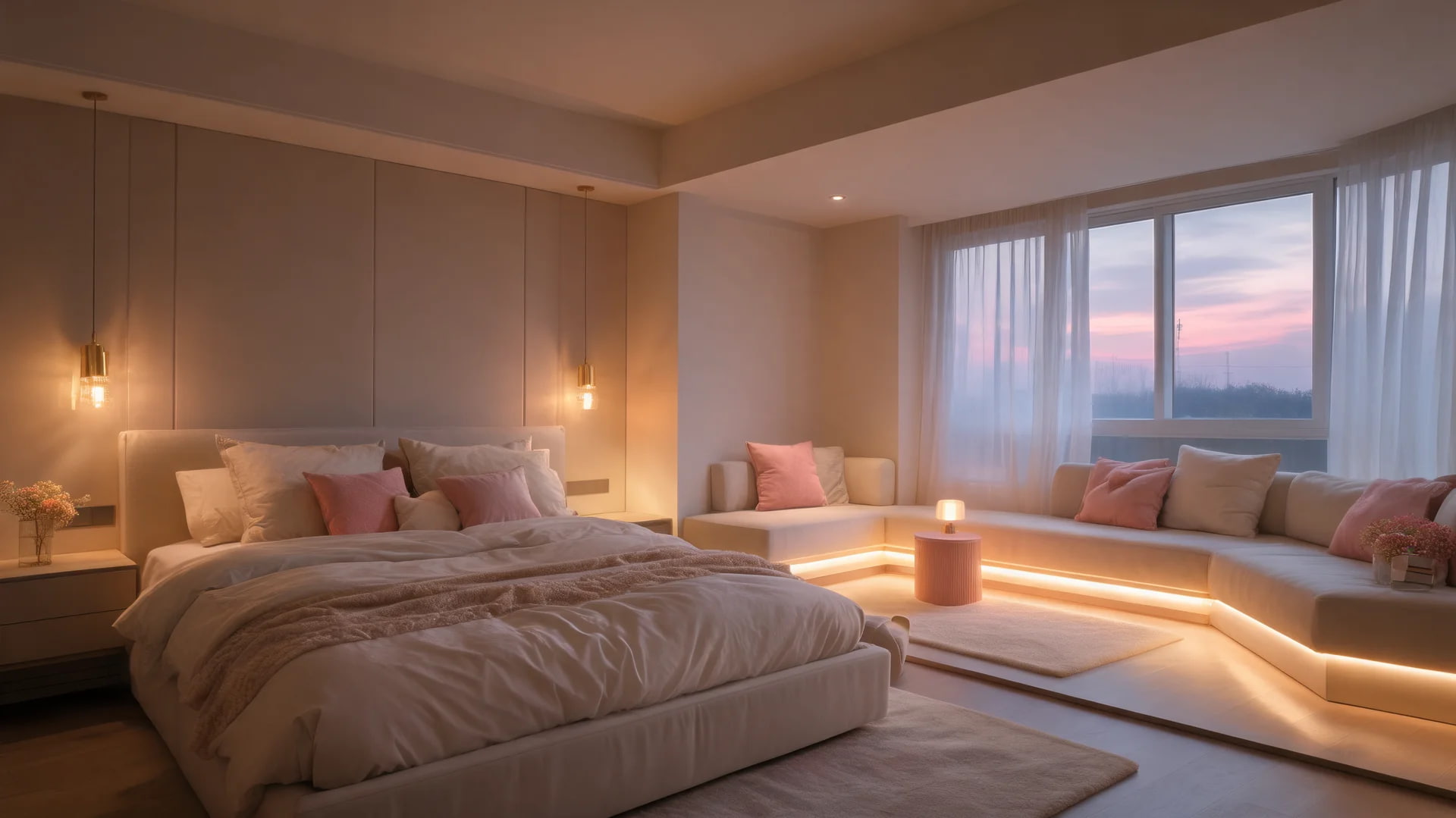
A sunken lounge pit creates a secondary intimacy zone within the bedroom through a change in level rather than walls. I use this when a separate but connected relaxation space is needed. Built-in seating naturally wraps the body and defines enclosure without visual heaviness.
- Spatial Role: Adds lowered secondary rest or social zone
- Material Behavior: Built-in structure creates natural containment through depth
- Emotional Effect: Encourages closeness through lowered, enclosed seating
7. Velvet silk ceiling treatment
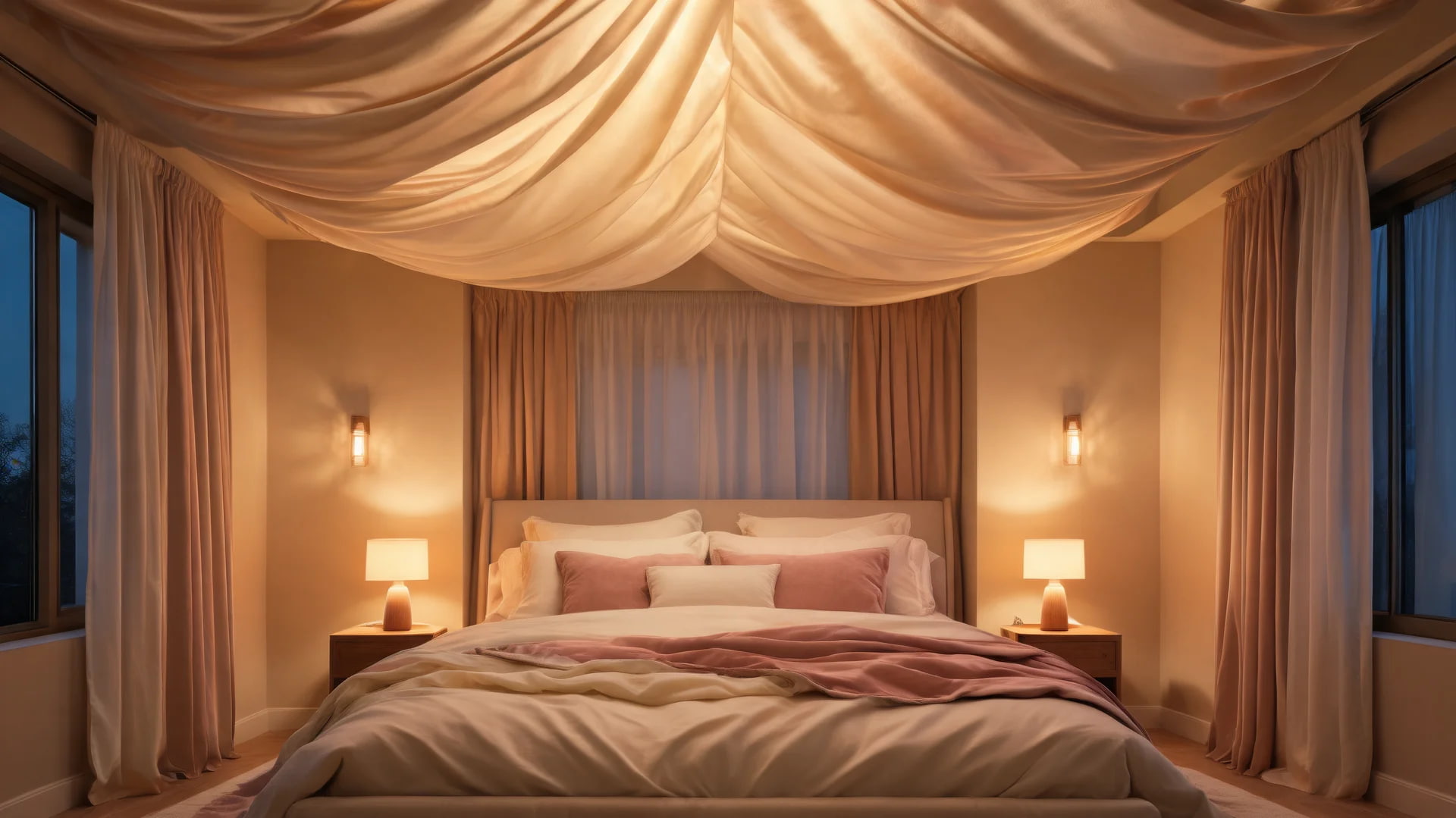
A velvet or silk ceiling treatment turns the overhead plane into a soft enclosure layer. I use this in bedrooms where wall treatments are minimal, but the mood needs warmth. It also fits well with a romantic gothic bedroom that features dark fabrics, low lighting, and layered bedding. Fabric diffusion reduces harsh lighting and creates a continuous, cocoon-like feel.
- Spatial Role: Extends softness across the full room ceiling plane
- Material Behavior: Fabric diffuses light and softens shadows
- Emotional Effect: Creates enveloping, restful bedroom atmosphere
8. Indoor water feature wall
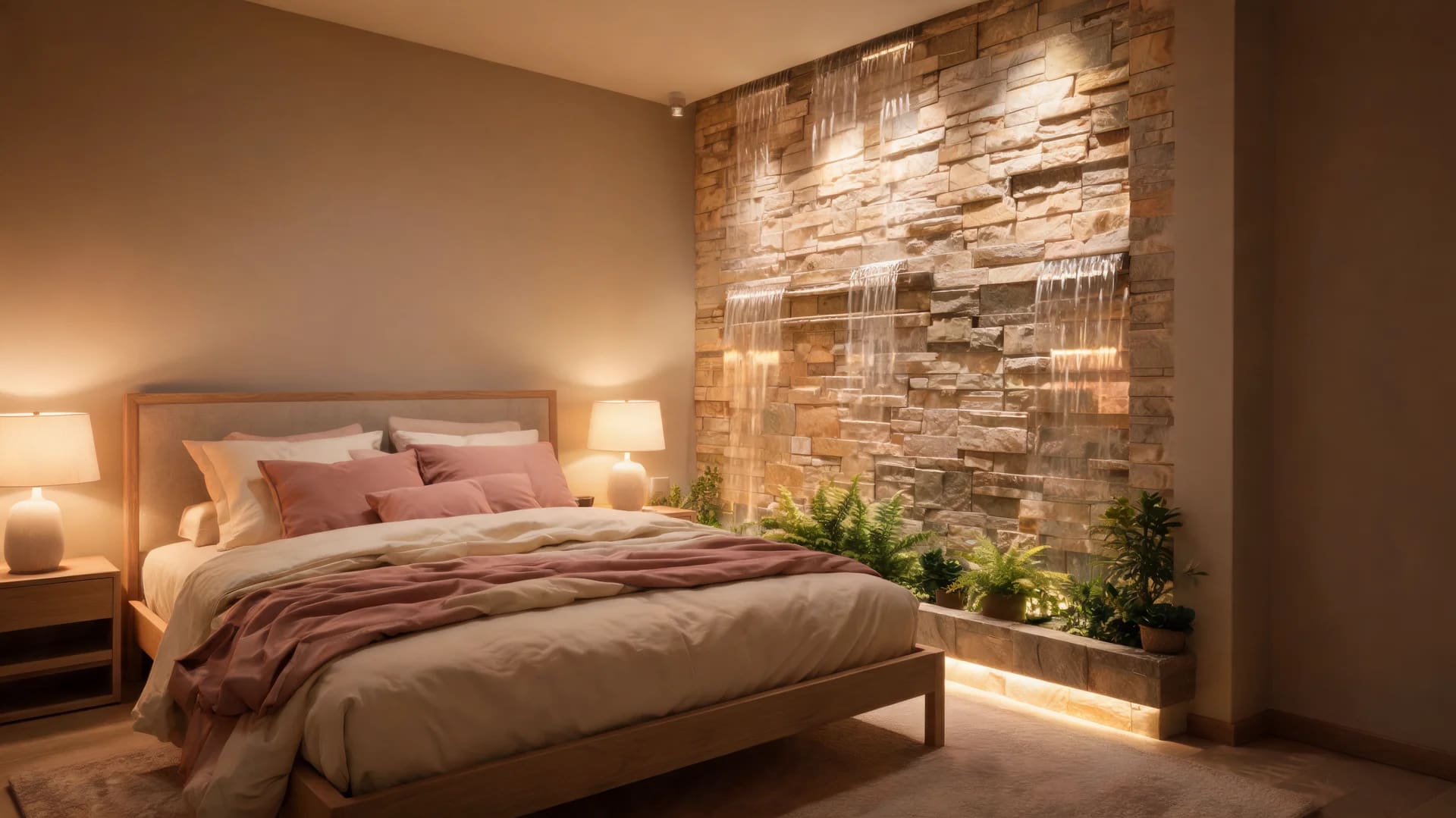
An indoor water-feature wall introduces movement and sound into the bedroom environment. I use this sparingly in projects where sensory layering is intentional. When combined with moss or greenery, it softens architectural rigidity and adds subtle, continuous motion.
- Spatial Role: Adds a sensory layer through sound and motion
- Material Behavior: Water + natural elements introduce organic surface variation
- Emotional Effect: Creates a calming ambient presence through movement
9. Dramatic canopy bed system (circular bed optional)
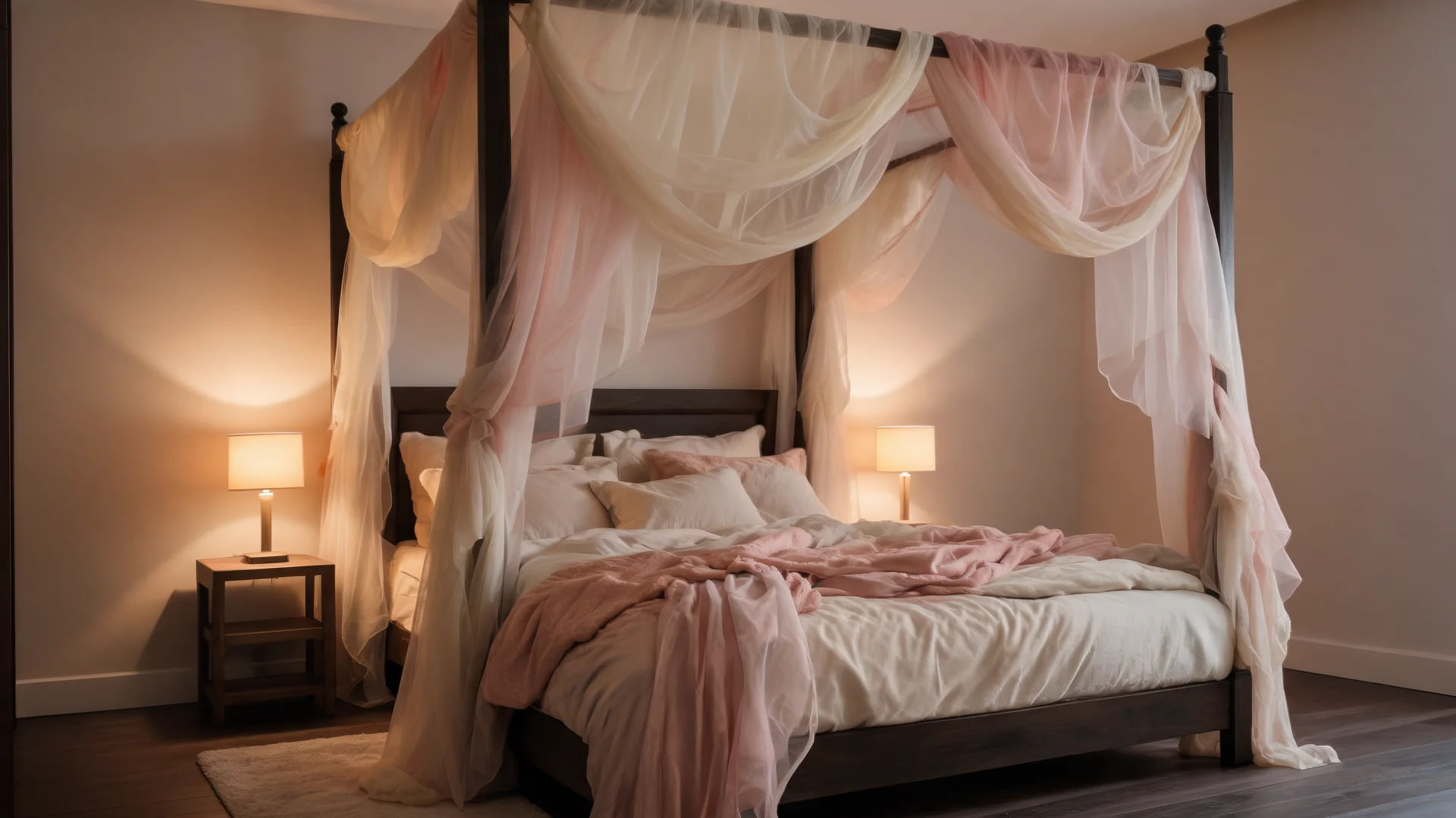
A canopy bed system defines the sleeping area as a controlled enclosure. I often use circular beds in these layouts because they improve fabric flow and spatial softness. The canopy is designed as an adjustable boundary rather than decoration, allowing intimacy levels to shift.
- Spatial Role: Establishes the bed as a central enclosed volume
- Material Behavior: Fabric layers regulate openness and enclosure
- Emotional Effect: Increases physical closeness through spatial containment
10. Smart lighting scene system
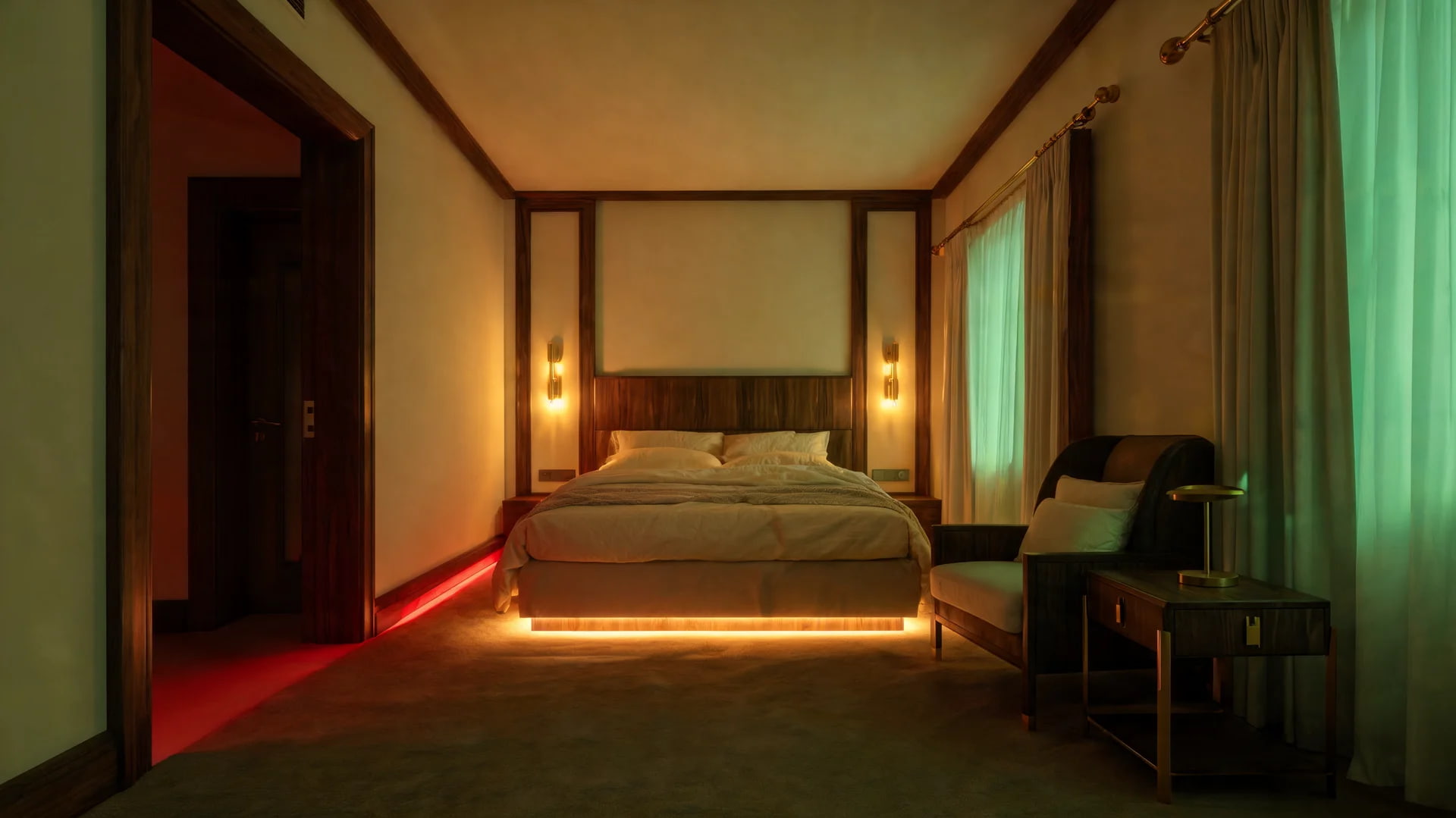
A smart lighting system allows the bedroom to shift emotional tone across different zones and times of day. I design separate lighting layers for bed, lounge, and entry so each area behaves independently. Warm low-level scenes are essential for maintaining nighttime softness.
- Spatial Role: Divides the bedroom into controllable lighting zones
- Material Behavior: Layered lighting replaces static illumination systems
- Emotional Effect: Supports a smooth transition between activity and rest
11. Private bedroom terrace
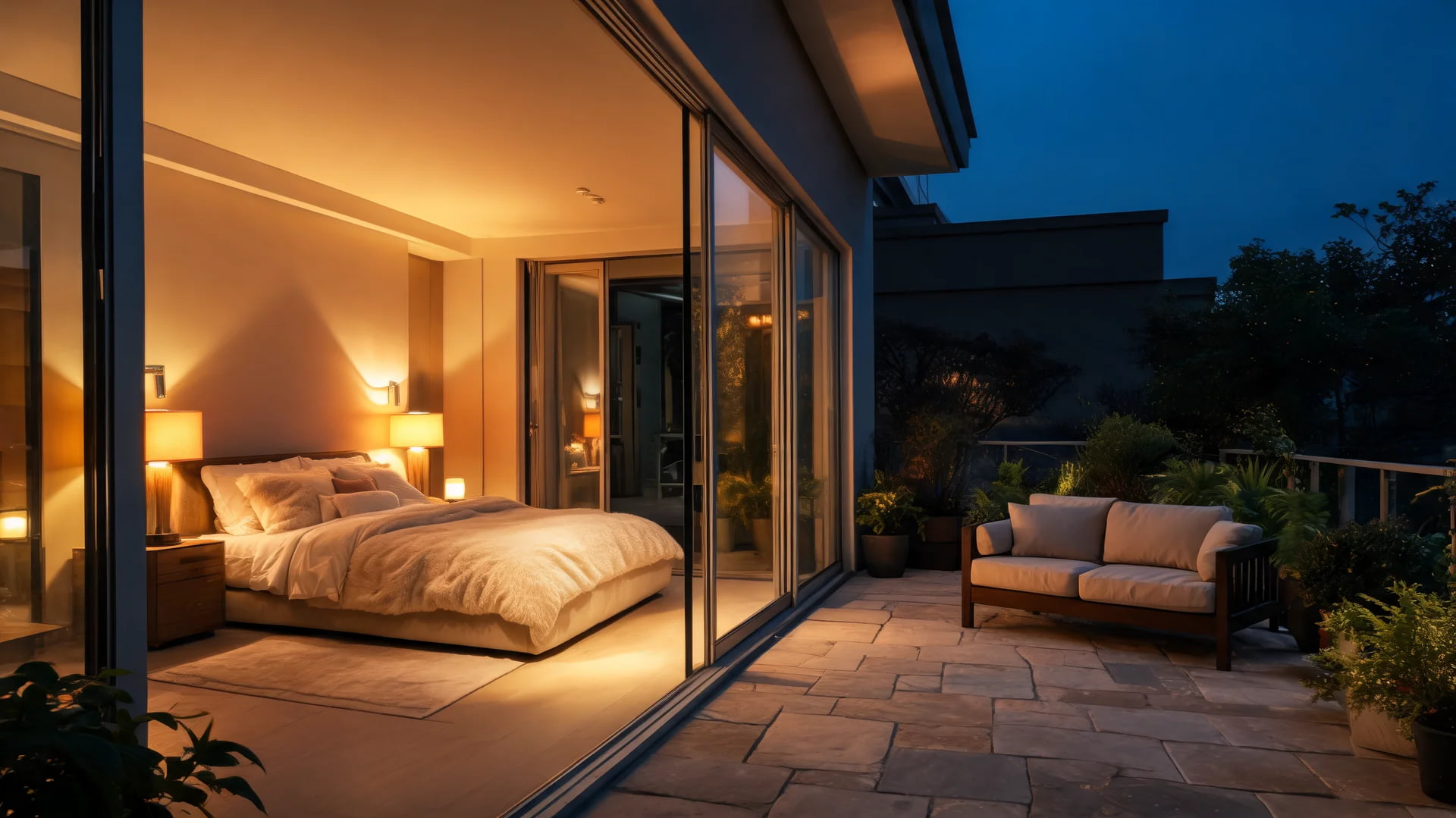
A private bedroom terrace extends the sleeping environment into an outdoor zone through full-height glass transitions. I treat this as an extension of the bed space rather than a separate balcony. Minimal outdoor furniture ensures continuity between interior comfort and exterior air. The same quiet layout can also support sex furniture without making the terrace feel separate.
- Spatial Role: Extends bedroom into private outdoor living area
- Material Behavior: Glass maintains uninterrupted interior-exterior flow
- Emotional Effect: Introduces openness without losing privacy
12. Arch + integrated lighting feature
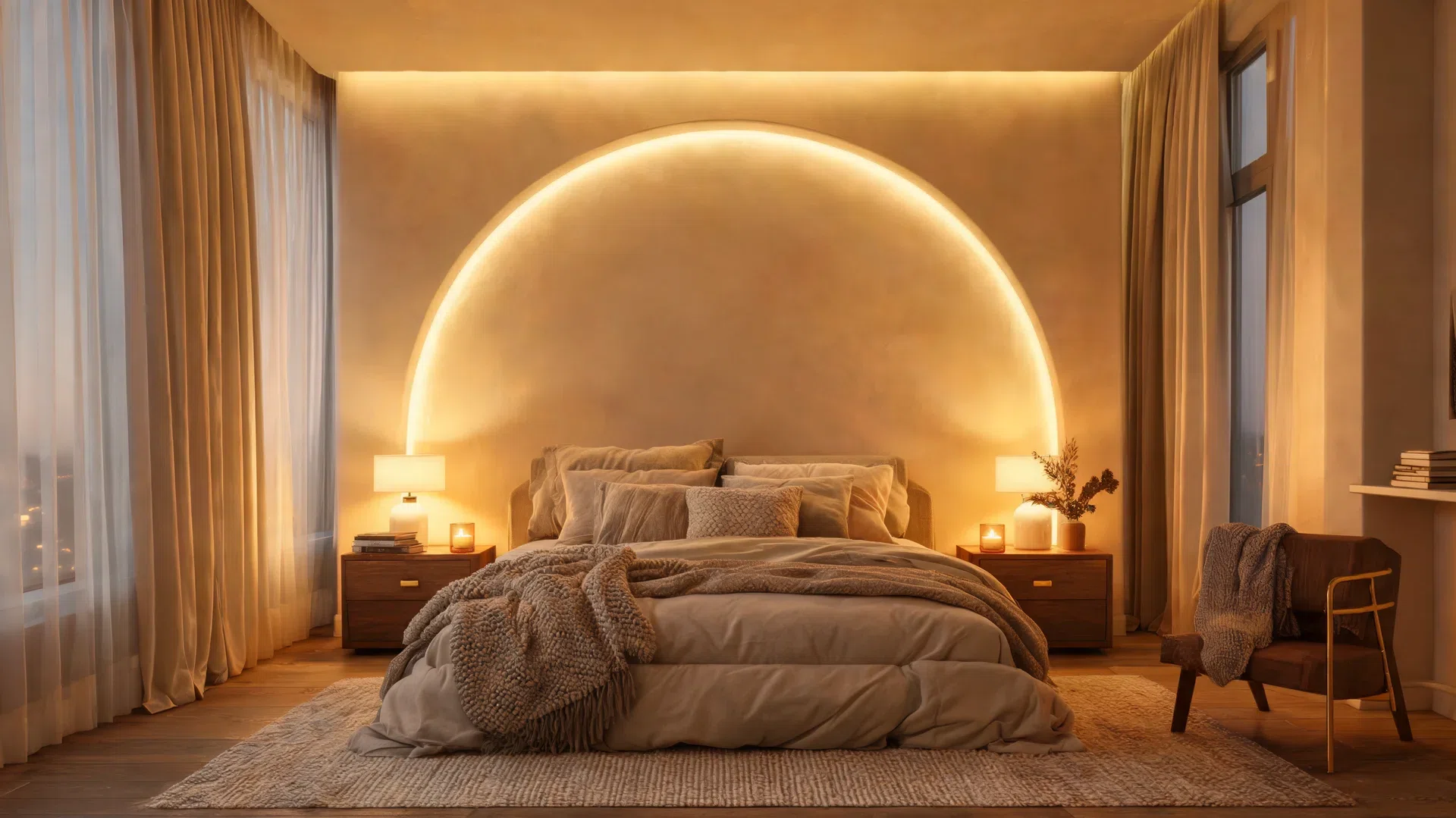
A plaster-built arch frames the bed with concealed warm LED lighting running along its inner curve. The structure defines the sleeping zone without adding physical heaviness, using light instead of bulk to create form. The glow subtly wraps the wall and softens architectural edges, making the bed feel naturally centered within the room.
- Spatial Role: Frames the bed with soft curves and integrated lighting instead of a solid enclosure.
- Material Behavior: Plaster surface diffuses warm concealed LEDs, creating a soft halo around the arch
- Emotional Effect: Creates a calm, sheltered sleeping space with gentle warmth and visual softness.
Tips for designing your romantic accent wall
A few things I tell every client before we finalize the treatment:
- Always test in your actual lighting. A color swatch at a paint store looks nothing like it does in your bedroom at 9 p.m. Live with a large painted sample for at least three days before committing.
- Layer your light sources. One overhead light will kill any accent wall. You need at least two light sources at different heights, a sconce, a floor lamp, and an LED strip to show off texture and depth.
- Keep the other three walls quiet. The accent wall only works as a focal point if nothing else is competing with it. Neutral finishes on surrounding walls aren’t boring; they’re the frame.
- Scale your treatment to your ceiling height. Vertical panels, tall arches, and full-height fabric work well in rooms with 9 ft+ ceilings. In lower rooms, go horizontal or keep the treatment to two-thirds wall height.
- Let the bed placement lead. The accent wall should be the wall the bed sits against, almost without exception. Placing it elsewhere creates a disconnect that no amount of styling fixes.
Frequently asked questions
Does the accent wall have to be behind the bed?
Almost always, yes. The wall behind the headboard is the natural focal point of a bedroom, it’s what you see when you walk in and what frames the bed. Placing the accent treatment on a side wall can work in very specific layouts, but it usually creates visual imbalance. When in doubt, follow the bed.
How do I make a dark accent wall work in a small bedroom?
Dark walls actually work well in small rooms when you handle the lighting correctly. Use warm, low-level light sources rather than overhead lighting; this creates depth and visually pulls the wall back. Pair the dark wall with lighter bedding and one reflective element (a mirror or metallic object) to keep the space from feeling heavy. A moody bedroom wall in a small room reads intimate, not cramped, when the lighting is right.
Can I mix two accent wall treatments together?
Yes, and some of the best results come from combining a structural element with a surface one, for example, an arched plaster frame with a fabric panel inside it, or wood slats with integrated LED strips. The key is that one treatment should lead and the other should support. If both are equally dominant, the wall reads as busy rather than layered.
How much should I budget for a statement accent wall?
It varies widely. A painted arch with LED strips can cost under $200 in materials if you DIY. A built-in niche wall with custom plasterwork runs $1,500–$4,000 depending on complexity. A living plant wall with irrigation typically starts at $800 for a basic panel setup. Fabric draping and gallery ledges sit in the middle range and offer the best visual return for the budget.
To end it all
A well-designed romantic bedroom accent wall does more than add visual interest; it changes how the room feels.
The right combination of color, texture, and light can make an ordinary bedroom feel genuinely private and considered.
These are the bedroom feature wall ideas I come back to because they work across different budgets, room sizes, and personal styles. Start with one strong element, get the lighting right, and let the wall do the rest.





2 Responses