


There is a lot of information out there about types of female orgasms, but most of it lands in one of two places: either too clinical to feel useful, or too vague to actually teach you anything.
What gets lost in between is the real picture, which is that female sexual pleasure is genuinely varied, shaped by anatomy, emotions, and lived experience all at once. This is not a topic that fits neatly into a checklist.
In my years working as a health educator at a reproductive health clinic, the questions patients asked most were about pleasure, specifically why their experience did not match what they had read or been told.
That gap is exactly what this article is here to close – a good look at women having orgasms, with the full picture explained plainly.
What happens when a woman is having an orgasm?
A female orgasm is the body’s peak point of sexual pleasure. It happens when arousal builds, and the nervous system releases that tension through rhythmic muscle contractions, often in the pelvic floor, uterus, and vaginal walls.
During orgasm, the brain, emotions, muscles, and genitals all work together. Blood flow increases around the vulva and vaginal tissue, sensitivity rises, and muscle tension builds until the body reaches release.
This can feel different for every woman. It may also feel different for the same person at different times. Stress, hormones, trust, comfort, mood, and touch can all affect how easily orgasm happens and how intense it feels. No two orgasms are exactly the same.
Female sexual anatomy and why it matters for orgasm
You cannot fully understand orgasm without understanding the body that produces it. The clitoris is the most nerve-dense structure in the human body. OHSU research on clitoral nerve fibers confirmed over 10,000 nerve endings concentrated in a small external glans, but that is only part of it.
The clitoris extends internally as two crura and two vestibular bulbs that wrap around the vaginal canal. Most of what the clitoris does happens beneath the surface, which is why external touch can produce internal sensations.
The vaginal canal itself is not particularly sensitive along most of its length. The areas that do respond to pleasure are concentrated at the front wall (where the G-spot is located), near the cervix (the A-spot), and at the cervical opening.
The pelvic floor muscles, specifically the pubococcygeus and bulbocavernosus groups, contract rhythmically during orgasm and contribute significantly to its intensity. When these muscles are strong and coordinated, orgasms tend to feel stronger.
Beyond the genitals, erogenous zones like the nipples, inner thighs, neck, and lower abdomen all feed into the same arousal network because they connect via the vagus nerve and spinal pathways to the same pleasure-processing regions of the brain.
Understanding your anatomy is not just academic. It is practical information that changes what feels good and why.
Types of female orgasms
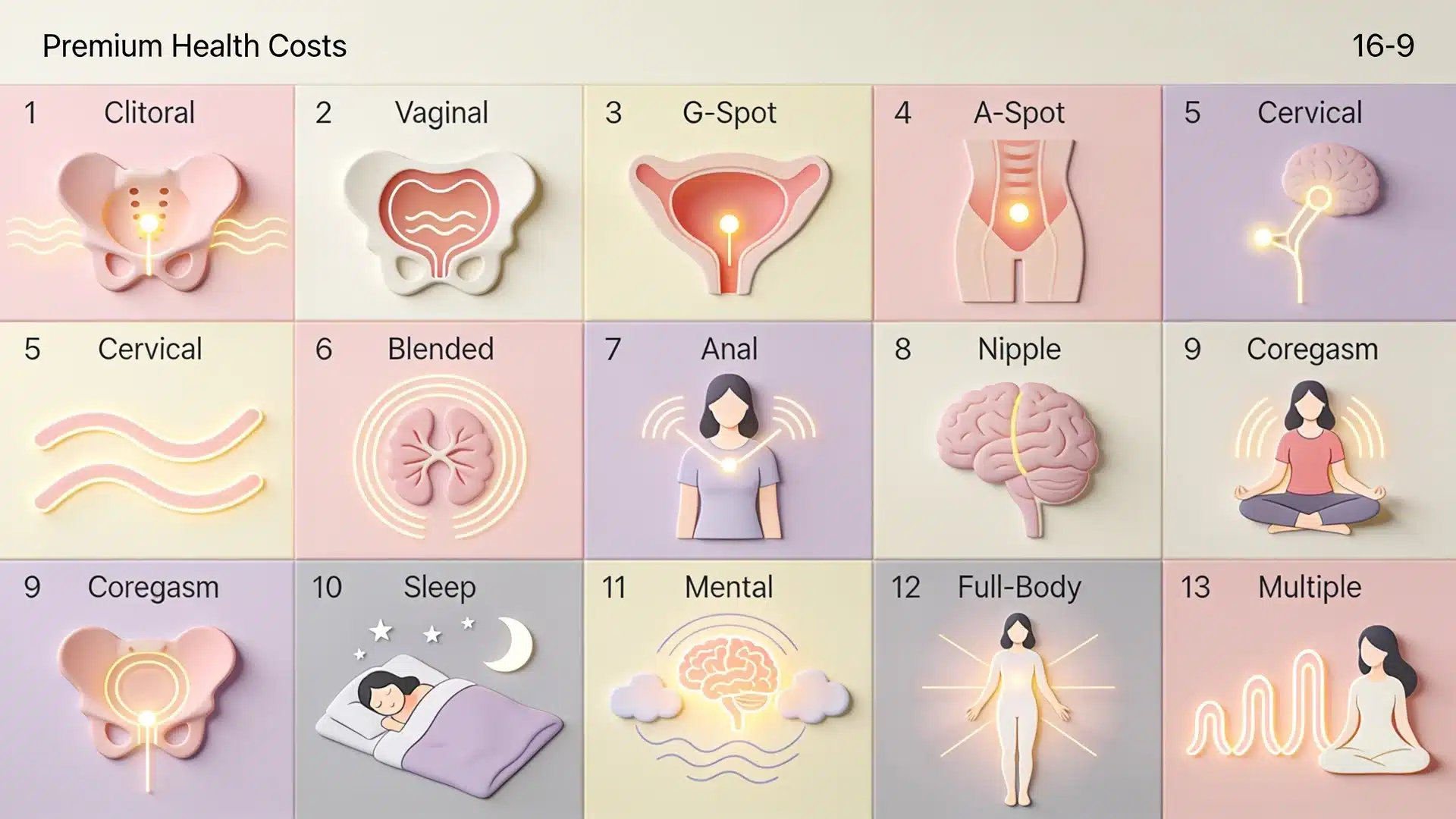
Female orgasms can happen through different kinds of touch, pressure, arousal, and body response. These types help explain why pleasure feels different for every woman and situation.
1. Clitoral orgasm
The most common route to orgasm for most people with a vulva is direct clitoral stimulation. Research on women’s orgasm preferences consistently shows that the majority of women need clitoral contact, whether from a hand, a partner’s mouth, or a vibrator, to reach climax.
Sensations are typically described as sharp, focused, and intense, concentrated in the external genital area. This is not a lesser orgasm. It is simply the most anatomically straightforward one.
2. Vaginal orgasm
The idea of a purely vaginal orgasm, one triggered solely by penetration without any clitoral involvement, is still debated in sexual medicine.
Some researchers argue it does not exist as a truly separate category because internal stimulation still indirectly activates the internal portions of the clitoris.
Others document cases in which deep internal pressure alone produces a climax. What matters practically is this: some people experience strong pleasure from penetration, others do not, and neither experience is abnormal.
3. G-spot orgasm
The G-spot (Grafenberg spot) sits on the anterior, meaning front, wall of the vaginal canal, roughly 5 to 8 centimeters in from the vaginal opening.
It is not a distinct anatomical structure but rather a region of spongy erectile tissue that swells with arousal and, in many people, is highly responsive to firm, rhythmic pressure.
A G-spot orgasm is often described as deeper and more diffuse than a clitoral orgasm, and it may be accompanied by the urge to urinate initially, which is normal and typically passes with continued stimulation.
4. A-spot orgasm
The anterior fornix erogenous zone, more commonly called the A-spot, sits deeper than the G-spot, near the cervix on the front vaginal wall.
Research on the A-spot zone documents how physician Dr. Chua Chee Ann identified this area in the 1990s, finding that stimulation there produced rapid natural lubrication and, for some, intense arousal leading to orgasm.
It generally requires deeper penetration or a specifically angled toy to reach and responds better to slow, consistent pressure than to fast movement.
5. Cervical orgasm
Not everyone enjoys cervical stimulation, and that is completely valid. The cervix connects to the uterus via the vagus nerve, which bypasses the spinal cord entirely, which is why people with spinal cord injuries can sometimes still experience cervical orgasm.
For those who do enjoy it, the sensation is often described as deeply emotional, almost meditative, full-body and slow-building rather than sharp. It typically requires significant arousal beforehand.
6. Blended orgasm
A blended orgasm happens when two or more pleasure points are stimulated simultaneously, most often the clitoris and the G-spot together.
Many people describe these as more intense than single-source orgasms, which makes anatomical sense: more nerve pathways are firing at once, creating a compounding signal to the brain.
Positions or toys that allow for simultaneous clitoral and internal stimulation are specifically designed around this principle.
7. Anal orgasm
The anal region is richly innervated, particularly through the pudendal nerve, which is the same nerve that serves the clitoris and penis.
Anal stimulation can trigger orgasm both through direct nerve stimulation and through indirect pressure on the internal clitoral network or prostate (in people who have one).
For comfort and safety, generous lubrication and gradual progression are non-negotiable. Many people who enjoy anal play describe the resulting orgasm as deeper and more expansive than other types.
8. Nipple orgasm
Brain imaging research in the Journal of Sexual Medicine showed that nipple stimulation activates the same region of the sensory cortex as genital stimulation, which is why nipple orgasms are neurologically real, not imagined.
The nipples and genitals are mapped as neighbors in the brain’s sensory processing area. For some people, sustained nipple stimulation alone is enough to produce a climax.
Sensation can range from warm and spreading to sharp and localized depending on the individual.
9. Coregasm
A coregasm, or exercise-induced orgasm (EIO), is exactly what it sounds like: an orgasm triggered during physical activity, most often exercises that heavily engage the pelvic floor and core, like hanging leg raises, rope climbing, pull-ups, and certain yoga poses.
Indiana University exercise orgasm study findings suggest that pelvic floor muscle contractions during exertion can activate the same reflex arc involved in orgasm. They are more common than most people realize, and they are a completely involuntary physiological response.
10. Sleep orgasm
Sleep orgasms, sometimes called nocturnal orgasms, occur during the REM stage of sleep, often accompanying erotic dreams. They involve the same physiological process as waking orgasm, increased blood flow, muscle contraction, and neurological activation, just without conscious initiation.
They are more frequently reported in people in their 20s and 30s, but can happen at any age. They are thought to be more common during periods of high sexual frustration or hormonal fluctuation.
11. Mental or fantasy-induced orgasm
Some people can reach orgasm through thought alone, through fantasy, breathwork, meditation, or focused mental imagery, without any physical touch. This is documented in clinical literature and appears to be connected to particularly strong mind-body pathways in some individuals.
Research on imagined genital stimulation found that people with spinal cord injuries demonstrated that the brain can generate and complete the orgasm response entirely internally. It is rare, but it is real.
12. Full-body orgasm
A full-body orgasm is less a distinct anatomical category and more a descriptor for an experience in which orgasmic sensation spreads well beyond the genitals, sometimes through the limbs, chest, face, and scalp. This typically involves a high level of overall arousal and emotional safety, and often an extended buildup.
Some practitioners of tantric and somatic approaches actively work toward this experience through breathwork and sustained attention. Whether labeled as full-body or not, the experience is genuinely distinct from a localized climax.
13. Multiple orgasms
Unlike people with a penis, who typically experience a refractory period, meaning a recovery window after orgasm during which another is not possible, many people with a vulva do not have a fixed refractory period.
This means consecutive orgasms can occur without returning to a baseline. Multiple orgasms can be sequential, meaning there is a brief plateau between them, or serial, meaning they follow very rapidly one after another. Not everyone experiences them, and they are not a benchmark for good sex.
You can also check out this full explanation on the 13 types of female orgasms:
How different female orgasms feel
Beyond the anatomical source, orgasms also vary in their pattern of sensation. Some researchers have proposed descriptive categories based on how the pleasure builds and releases:
- Wave orgasm: Pleasure rises and falls in rolling waves rather than a single peak. Common with sustained, consistent stimulation and often described as deeply satisfying rather than intensely sharp.
- Avalanche orgasm: A slow, steady build that suddenly tips into a rapid and intense release. The contrast between the gradual climb and the abrupt climax is part of what makes it feel particularly powerful.
- Volcano orgasm: The longest buildup of all three, described as simmering tension that eventually erupts. Often associated with pelvic floor engagement and deliberate pacing during partnered or solo play.
Why the variation? Sexual anatomy differences, hormone levels, emotional state, arousal level at the time, and relational safety all interact.
Two orgasms with the same person, on the same day, can feel completely different depending on how the body arrived at them.
Factors that affect the ability to orgasm
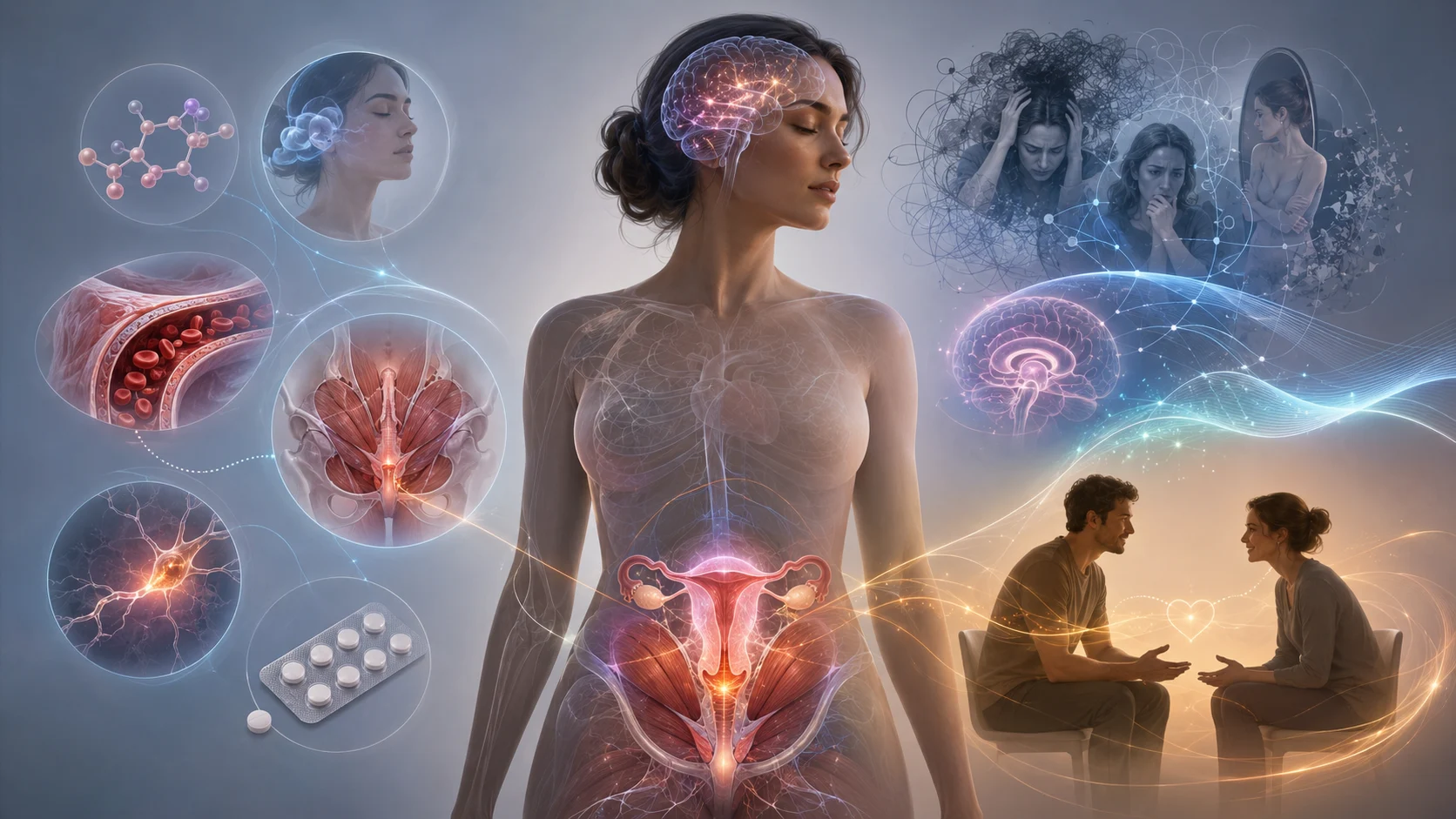
Orgasm can be affected by the body, mind, and relationship context. Understanding these factors helps you spot what may support pleasure and what may quietly get in the way.
1. Physical factors
Hormonal fluctuations across the menstrual cycle, perimenopause, and menopause significantly affect orgasm intensity and ease. Estrogen supports vaginal lubrication and tissue sensitivity; as levels drop, both can change.
Certain medications, particularly SSRIs (selective serotonin reuptake inhibitors, a common class of antidepressants), are associated with delayed or absent orgasm in some users. Pelvic floor dysfunction and some chronic pain conditions also affect the response.
2. Psychological factors
The brain is the most important sex organ in the body. Stress, anxiety, and intrusive thoughts actively compete with the arousal signals needed to reach orgasm.
Body image concerns, past negative experiences, and performance pressure all suppress the limbic system’s ability to engage with pleasure. This is not weakness. It is physiology. Creating mental conditions where the brain feels safe is as important as anything physical.
3. Relationship factors
Emotional trust and open communication are among the most consistent predictors of orgasm in partnered sex across the research literature.
Knowing that preferences can be expressed without judgment lowers the cognitive load that gets in the way of physical response. Sexual compatibility, meaning mutual understanding of what each person enjoys, is built rather than found through conversation and attention over time.
Heres a full explanation of what happens during orgasms in women:
Common myths about female orgasms
Myths about female orgasms can create pressure, shame, and confusion. Clearing them up helps you understand pleasure in a healthier, kinder, and more body-aware way:
- Vaginal orgasms are superior to clitoral ones: This hierarchy has no anatomical basis. It largely originates in Freudian theory, which has not held up under modern research. An orgasm that works for your body is the right orgasm.
- Everyone should climax from penetration alone: Data on the orgasm gap suggests that a majority of people with a vulva do not regularly orgasm from penetration without additional clitoral stimulation. This is typical, not a malfunction.
- Multiple orgasms are a sign of great sex: The frequency of orgasm is not a quality metric. Some of the most satisfying sexual experiences do not involve orgasm at all.
- All women experience orgasm the same way: Anatomy, hormones, psychology, and lived experience all differ. There is no universal template.
- Orgasm is the only measure of sexual satisfaction: Pleasure, connection, arousal, and intimacy all have value independent of whether orgasm occurs.
Once these myths are removed, orgasm becomes less about performance and more about comfort, consent, pleasure, and honest communication between partners.
How to improve orgasm awareness and sexual satisfaction
Better orgasm awareness often starts with simple, honest attention to your body. These steps can help you notice patterns, share needs clearly, and support healthier sexual satisfaction:
| Focus area | What it means | Why it helps |
| Understanding your body | Notice what touch, pressure, rhythm, and setting feel good during solo time. | It helps you know your own response before guiding a partner. |
| Communicating preferences | Tell, show, or gently guide a partner during intimacy. | Clear feedback helps both partners feel more connected and satisfied. |
| Trying different stimulation | Test different kinds of touch, pace, toys, or positions. | Some bodies respond better when stimulation varies rather than stays the same. |
| Building emotional closeness | Create trust, patience, comfort, and space for honest feedback. | Feeling safe can make arousal and orgasm easier for many people. |
| Prioritizing sexual health | Talk to a GP or sexual health professional about pain, libido changes, or orgasm concerns. | Medical support can identify physical, hormonal, or emotional factors affecting pleasure. |
Small changes can make a real difference over time. When you understand your body, speak clearly, and care for your sexual health, pleasure becomes less pressured and more personal.
When to seek professional help
For many people, orgasm patterns change over time, and that does not always signal a problem. However, if reaching orgasm has become consistently difficult or has stopped altogether when it was not an issue before, it may be worth speaking with a healthcare professional.
Ongoing difficulty reaching orgasm, painful sex, pelvic discomfort, or a sudden change in sexual response are all valid concerns that deserve attention.
In some cases, these changes can be linked to hormonal fluctuations, medication side effects, stress, underlying health conditions, or pelvic floor dysfunction.
A doctor, sexual health specialist, or pelvic floor physiotherapist can help identify possible causes and discuss treatment options that fit your needs. Seeking support is a practical step toward better well-being, not something to feel embarrassed about.
Addressing concerns early can improve comfort, confidence, and overall sexual health.
Frequently asked questions
Can orgasms feel different with different partners?
Yes. Emotional connection, communication, and the specific type of stimulation a partner provides all affect the orgasmic experience. The same anatomy can produce very different responses depending on relational and contextual factors.
Is it possible to become desensitized to orgasm through frequent masturbation?
High-intensity vibration used exclusively over long periods can sometimes reduce sensitivity to lighter touch. Varying the type and intensity of stimulation tends to prevent this. Sensitivity typically returns after a short break if it occurs.
Do orgasms change during pregnancy?
Yes, often significantly. Increased pelvic blood flow during pregnancy can make orgasms feel more intense for some people. Uterine contractions after orgasm are normal and not harmful in low-risk pregnancies, though anyone with concerns should check with a midwife or OB.
Can orgasms help with menstrual cramps?
There is some evidence that the muscle contractions and endorphin release associated with orgasm can temporarily relieve menstrual cramp pain for some people. It is not a treatment, but it is not harmful either.
Is squirting the same as orgasm?
Not necessarily. Squirting (female ejaculation) and orgasm can occur simultaneously or independently of each other. The fluid expelled during squirting originates from the Skene’s glands and the bladder, and its occurrence does not confirm or deny that orgasm has happened.
Does age affect the ability to orgasm?
Age brings hormonal changes that can affect lubrication, sensitivity, and the timing of arousal. Postmenopausal people may find orgasms take longer to build or feel different in quality. These changes are manageable, often through topical estrogen, pelvic floor work, or adjusted stimulation approaches.
Can people who have never had an orgasm learn to have one?
Primary anorgasmia, meaning never having had an orgasm, often responds well to directed self-exploration, sometimes guided by a sex therapist. The majority of people who have not experienced orgasm are able to with the right approach and information.
Closing thoughts
What makes types of female orgasms such a worthwhile subject is not the list itself but what the list reflects: that female sexual pleasure is complex, layered, and genuinely individual.
No single experience is the standard, and no single pathway is the correct one. What matters is understanding your own body well enough to know what it responds to, and feeling safe enough to pursue it, whether alone or with a partner.
My years in a clinical setting made one thing very clear that the people who had the most satisfying sexual lives were not the ones who had read the most. They were the ones who felt the least ashamed of asking real questions and the most willing to pay attention to what their own bodies were telling them.
That is where women having orgasms actually begins, not in a technique, but in that permission. Drop a comment below and let me know if this helped you understand yourself better.
Sources
- Peters, B. (2022). The pleasure-producing human clitoris has more than 10,000 nerve fibers. Oregon Health & Science University: news.ohsu.edu, OHSU clitoris nerve fiber count
- Komisaruk, B.R., et al. (2011). Women’s Clitoris, Vagina, and Cervix Mapped on the Sensory Cortex: fMRI Evidence. The Journal of Sexual Medicine, 8(10), 2822–2830: academic.oup.com, Journal of Sexual Medicine, fMRI study
- Komisaruk, B.R., et al. (2011). Stimulation of the female genital region produces strong activation of various brain sites. ScienceDaily: sciencedaily.com, genital brain activation study
- Wise, N.J., Frangos, E., & Komisaruk, B.R. (2016). Activation of sensory cortex by imagined genital stimulation: an fMRI analysis. Scandinavian Journal of Pain: ncbi.nlm.nih.gov, imagined genital stimulation fMRI
- Herbenick, D., et al. (2012). Exercise can lead to female orgasm and sexual pleasure. Indiana University Center for Sexual Health Promotion. Published in Sexual and Relationship Therapy: sciencedaily.com, exercise-induced orgasm study
- Chua Chee Ann. (1997). A proposal for a radical new sex therapy technique for the management of vasocongestive and orgasmic dysfunction in women. Sexual and Marital Therapy, 12(4), 357–370. Summarized via: medicalnewstoday.com, A-spot research overview
- Frederick, D.A., et al. (2018). Differences in orgasm frequency among gay, lesbian, bisexual, and heterosexual men and women in a U.S. national sample. Archives of Sexual Behavior. Discussed in: theconversation.com, orgasm gap research summary
- Herbenick, D., et al. (2018). Women’s experiences with genital touching, sexual pleasure, and orgasm. Journal of Sex & Marital Therapy, 44(2), 201–212. Reported in: vice.com, women’s orgasm preferences study
- What happens during a female orgasm? Video explainer on the physiological and neurological process of orgasm in women: YouTube, female orgasm explained
- The 13 types of female orgasms. Full video breakdown of each orgasm type, how it occurs, and what distinguishes one from another: YouTube, thirteen orgasm types explained