

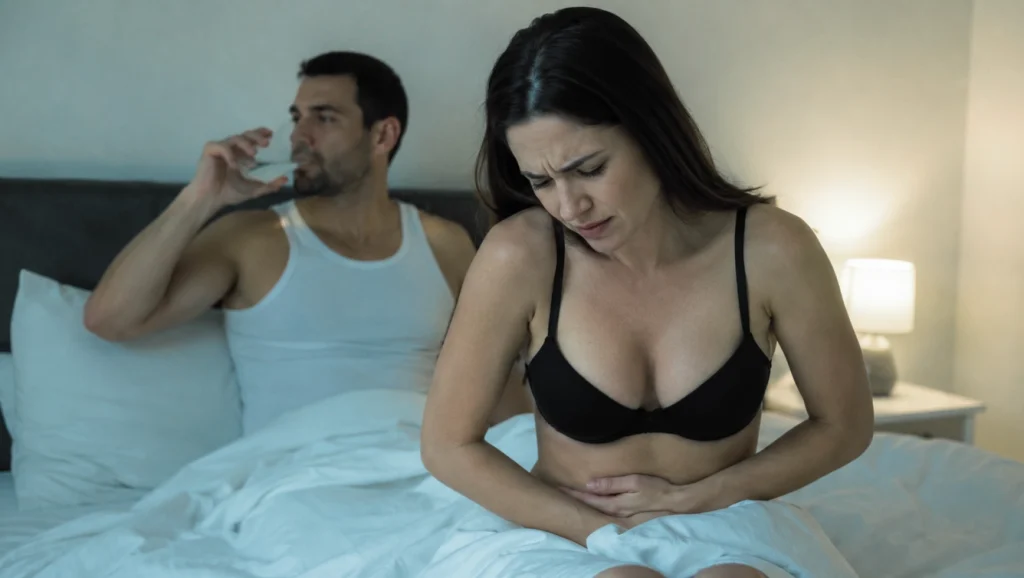
Ovary pain after sex can show up as a sharp jab, a dull drag, or a deep cramp low in the belly, right when you expected to feel relaxed and close. It can be scary, especially when it sits on one side.
During my years as a health educator at a reproductive health clinic, this worry came up constantly, usually whispered. The ache may come from an ovary, but it can just as easily come from the uterus, cervix, bladder, or pelvic floor.
Maybe your vagina hurts after sex too. Learning how to relieve pain after sex starts with finding where it begins, and sudden, severe pain should never be ignored.
What ovary pain after sex actually means
Sex involves far more anatomy than the vagina. Deep penetration can press against or shift the cervix (the neck of the womb), the uterus, the ovaries, the bladder, the bowel, and the web of pelvic floor muscles holding everything in place.
So when something aches afterward, the location can be misleading. Pain can show up mid-thrust, right after, or hours later, and people usually call anything low, deep, or one-sided “ovary pain” because that is where it feels like it lives.
There is an emotional layer too, because the pain happened during intimacy, and that can stir up guilt or fear that has no business being there. You did nothing wrong.
Pelvic pain after intimacy is a body signal asking for attention, not a verdict, and definitely not something to push through.
“Why do my ovaries hurt after sex?”
The short answer from my clinic days: deep thrusting puts mechanical pressure on structures that are already sensitive, and anything inflamed, infected, or tense will complain afterward.
An existing ovarian cyst, scar tissue, infection, or a clenched pelvic floor turns ordinary pressure into a deep ache. Some people cramp after orgasm because climax makes the uterus and pelvic muscles contract, which is normal physiology behaving dramatically.
Cycle timing matters too, since tissues feel more reactive around ovulation or right before a period. None of this is rare. A review in American Family Physician reported that pain during or after intercourse, what doctors call dyspareunia, affected 46 percent of sexually active women in one primary care sample.
A one-off twinge that fades is less concerning than pain after intercourse that is severe, repeated, or paired with other symptoms.
Pain location: A quick map of what hurts where
Before any appointment, pin down exactly where the pain sits. Location is your strongest clue, though never the full diagnosis on its own. Use this table as plain language for the doctor visit, not a verdict:
| Where it hurts | How it feels | Often points to |
| Deep, low belly, one-sided | Sharp, stabbing, or crampy | Cyst, ovulation pain, torsion if severe |
| Deep, central pelvis | Pressure, heaviness, pain with deep thrusting | Uterus, endometriosis, fibroids, pelvic floor |
| Vaginal opening and canal | Burning, rawness, stinging, friction soreness | Dryness, irritation, infection, small tears |
| Deep “hit” sensation | Aching after deep strokes, sometimes spotting | Cervix contact, cervical sensitivity |
| Bladder area | Burning pee, urgency, pressure | UTI, bladder irritation |
| Lower gut | Cramps, bloating, tied to bowel habits | Bowel involvement |
Self-diagnosing from a table is a trap, since causes overlap and one symptom rarely tells the whole story. Describing your pain this precisely, though, makes your appointment far more productive.
Common causes of that deep ache
These are the heavy hitters behind deep pain after intimacy, the conditions that surfaced again and again across my clinic years. Each shows up differently, so here is how to tell them apart.
1. Ovarian cysts
Cysts are fluid-filled sacs that form on an ovary, usually as a normal side effect of ovulation, and most clear on their own. According to the Cleveland Clinic, they are extremely common before menopause.
Deep penetration can jostle a cyst, producing sharp pain on one side after sex, heaviness, or bloating. A rupture causes sudden, fierce pain. Severe pain with vomiting, faintness, or fever means emergency care, not a heating pad.
2. Endometriosis
Endometriosis means tissue similar to the uterine lining grows where it should not, gluing sensitive structures together. Thrusting tugs on those spots, so the pain can be stabbing, burning, or crampy and may linger after sex because the tissue stays irritated.
A 2024 cross-sectional study indexed on PubMed found 75.7 percent of endometriosis patients reported painful sex. Many start avoiding intimacy out of fear, which quietly erodes desire and confidence.
3. Pelvic inflammatory disease
PID is an infection of the reproductive organs, often from untreated chlamydia or gonorrhea climbing upward. Per ACOG, bacteria move from the vagina and cervix into the uterus, ovaries, or fallopian tubes.
Clues include pelvic pain after sex, odd discharge, fever, bleeding after sex or between periods, and painful peeing. Get tested promptly, because untreated PID can scar the tubes and threaten fertility.
4. Cervix bumping and deep penetration
The cervix sits at the top of the vagina and gets touchy during certain cycle phases. Some positions, doggy style being the classic example, allow the deepest reach, and fast thrusting with minimal warm-up practically guarantees contact.
The result is a deep ache or “hit” feeling, occasionally with spotting. This is rarely dangerous on its own, but repeated cervical pain deserves attention, slower pacing, and depth control.
5. Dryness and friction
When your vagina hurts after sex in a raw, burning, stinging way, friction is usually the culprit. Not enough lubrication, marathon sessions, condoms, hormonal shifts, postpartum healing, menopause, stress, and certain medications all dry things out.
Friction can cause tiny tears that burn when you pee afterward. Lube genuinely helps, but recurring burning, itching, odor, or unusual discharge means an infection check, because vaginal soreness is not always mechanical.
6. Pelvic floor tension
Pelvic floor muscles clench in response to stress, anxiety, or memories of painful sex, a pattern called hypertonicity, which is medical-speak for muscles that never fully relax.
Tight muscles make penetration ache deep and leave you sore after. Research in the Journal of Sexual Medicine tied pelvic floor tenderness to more severe deep pain during sex. Pelvic floor physical therapy can retrain that bracing reflex.
Other triggers that fly under the radar
Beyond the usual suspects sits a second tier of causes for lower abdomen pain after sex. They get less airtime online, yet they walk into exam rooms constantly:
- Yeast, BV, UTI, or an STI: Infections overlap, itching, odor, burning pee, discharge, or no symptoms at all, so testing beats guessing.
- Fibroids and adenomyosis: Benign uterine growths and thickened uterine walls cause deep cramps, heavy periods, and aching after penetration or orgasm.
- Ovulation and PMS sensitivity: Mid-cycle pain, called mittelschmerz, is one-sided by nature, and sex during that window amplifies it.
- Post-orgasm cramping: Climax triggers uterine contractions, so a crampy afterglow should fade within hours.
- Stress and pressure: Feeling rushed, unsafe, or disconnected tanks arousal and lubrication while tensing muscles. That is physiology, not imagination.
Any of these can hide behind what feels like ovarian pain, which is exactly why one symptom rarely points to one cause. Some people also find that vomiting during periods accompanies the same cycle of pelvicsymptoms, pointing to a shared hormonal or inflammatory root that a proper workup can help identify.
How to relieve pain after sex at home
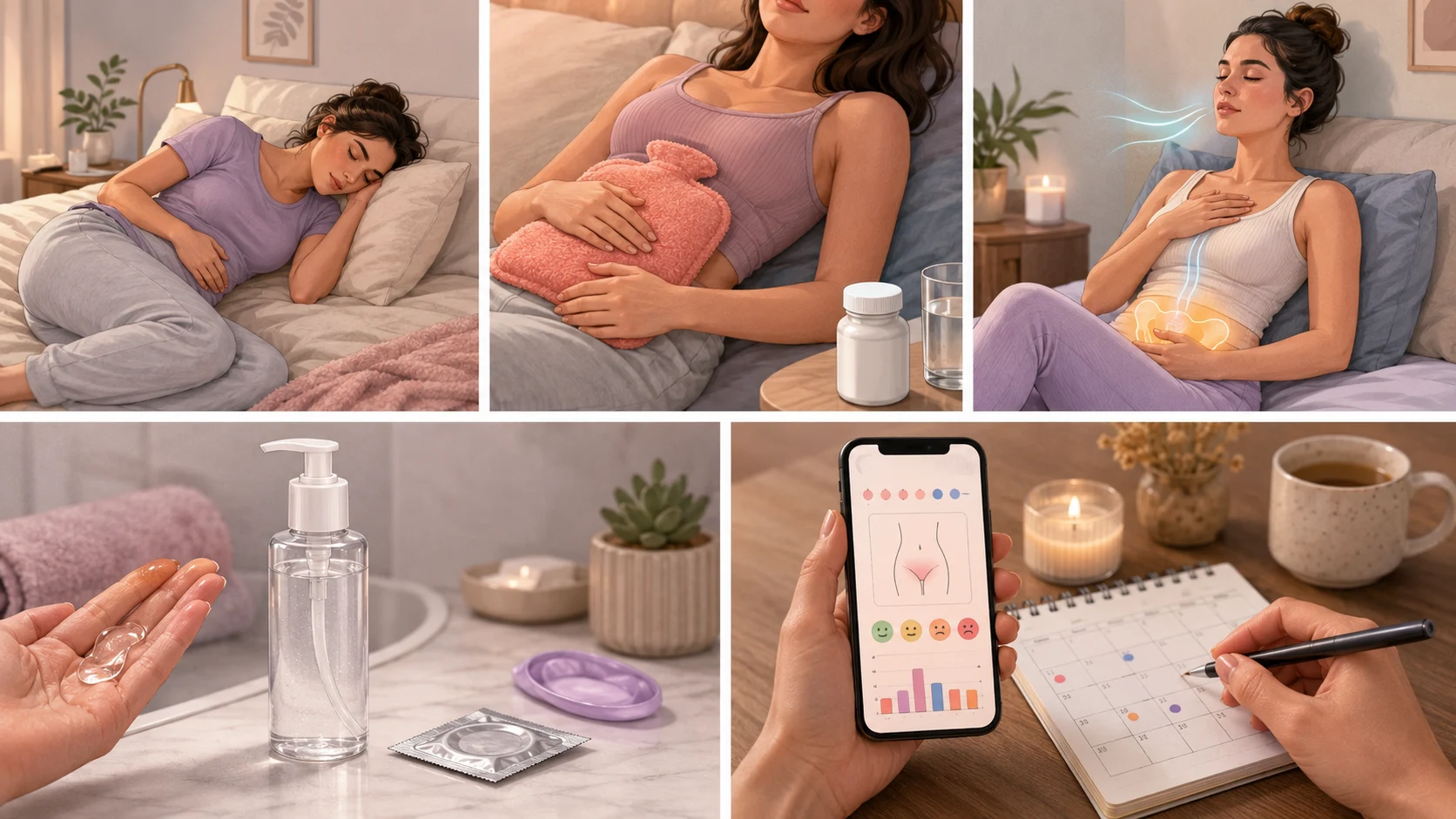
Here is how to relieve pain after sex when the cause is mild and no red flags appear. These are the comfort measures I walked patients through, low-risk and worth trying first.
1. Stop and rest
Stop the moment pain starts, no heroics, no finishing for someone else’s sake. Lie in whatever position eases the pressure: knees bent, side-lying, or a pillow under the hips.
Resting lets stirred-up tissues and contracted muscles settle. Pain that fades within an hour or two with gentle rest is usually the reassuring kind, while pain that climbs rather than calms is your cue to call a provider.
2. Heat and careful pain relief
A heating pad on the lower belly relaxes crampy muscles, and a warm bath works too, as long as there is no dizziness, heavy bleeding, or fever.
Some people add an over-the-counter pain reliever for mild cramping after sex, following the label exactly.
Ask a doctor first if pregnant, on blood thinners, or managing ulcers, kidney, or liver conditions, because casual dosing advice is not my lane.
3. Breathing and pelvic floor release
Slow belly breathing tells a guarded pelvis to stand down. Inhale into the lower abdomen, then exhale while consciously softening the jaw, belly, hips, and inner thighs, since those areas clench together.
Skip aggressive stretching right after pain. This pelvic floor relaxation works best for tension-type soreness, the kind that follows stress, bracing, or a history of sex that hurt before.
4. A smarter lube strategy next time
If friction caused the soreness, fix the glide. Water-based lubricant plays nicely with condoms and every toy material, while silicone-based lasts longer but should stay away from silicone toys.
Skip scented or “tingling” products on irritated tissue; they are marketing, not medicine.
Apply before discomfort starts and reapply freely. Remember the limit: lube solves friction, not cysts, infections, or endometriosis.
5. Track the pattern
Become your own data set. Note when pain started, where it sat, intensity from 1 to 10, the type of pain, position used, lube or not, cycle day, any bleeding or discharge, fever or nausea, whether orgasm happened, and how long it lasted.
A simple symptom log on your phone turns a vague complaint into a pattern a gynecologist can actually work with.
Know when deep pain is an emergency
My non-negotiable rule from clinic work is to never sleep off severe pelvic pain. Seek emergency care with any of these:
- Sudden, severe pelvic pain, especially one-sided pain that will not ease
- Fainting, dizziness, or sudden weakness
- Fever or chills
- Vomiting or relentless nausea
- Heavy vaginal bleeding
- Shoulder-tip pain alongside pelvic pain
- Possible pregnancy plus severe pain or bleeding
- A known cyst followed by sudden agony
- Any pain after assault or injury
Doctors will rule out ovarian torsion (an ovary twisting on its blood supply), a ruptured cyst, ectopic pregnancy, severe infection, or internal bleeding. All are treatable, and speed matters.
What to do when your vagina hurts after sex
Surface-level soreness is its own animal, usually burning, rawness, swelling, itching, or tenderness near the opening rather than a deep ache. The usual suspects are friction, skipping arousal, dryness, latex irritation, infection, tight pelvic floor muscles, or tiny tears.
Treat the area like the healing skin it is. No scented washes, no douching ever (the vagina is self-cleaning and douching wrecks its bacterial balance), and no harsh soaps. Wear breathable cotton underwear, pause penetration until irritation fully calms, and pee after sex to flush bacteria away from the urethra.
Per the Cleveland Clinic, about three in four women experience painful sex at some point, so this is common, not shameful. See a provider for itching, odor, sores, unusual discharge, bleeding, or soreness that keeps returning.
Preventing the ouch next time
Stopping pain before it starts beats treating it afterward, and most of the work is communication plus mechanics. None of this is complicated; it just takes a little intention going in:
- Say it plainly: “That angle hurts.” “Slower.” “Not that deep.” “More warm-up first.” Asking for comfort is part of good sex.
- Control the depth: Positions where the receiving partner sets the pace, side-lying setups, shallower strokes, and a slower rhythm spare the cervix.
- Front-load arousal: Genuine arousal brings natural lubrication and lets the vagina lengthen and expand, called vaginal tenting. Rushing skips all of that.
- Lube early, not late: Add it before friction starts, and switch condom brands or lube formulas if irritation appears.
- Skip penetration during flares: Existing cramps, infection symptoms, or cyst pain only get louder. Choose non-penetrative play.
- Get repeat pain checked: Recurring pain is a pattern, and patterns deserve a professional.
Put a few together, and most people notice a real difference within a session or two. If pain holds on despite all of it, that itself tells your provider something.
Pain, intimacy, and your relationship
Pain rewires desire fast. When sex starts predicting hurt, the body learns to brace, libido dips, and some people begin dodging intimacy altogether, which breeds distance and quiet resentment on both sides.
If hormonal contraception is part of the picture, it is also worth understanding whether birth control causes anxiety,since mood and libido shifts from hormonal methods can quietly compound the emotional side of pain-related intimacy avoidance.
Meanwhile, closeness does not have to wait for a diagnosis. Kissing, massage, mutual touch, outercourse, shared showers, and honest conversation keep connection alive without penetration, whatever your orientation or setup, long-term partner, casual hookup, queer or straight.
Try scripts like “My body hurts after sex and getting it checked matters to me because sex should feel good, not scary.” The goal was never just pain-free penetration. The goal is safe, wanted, comfortable intimacy on your terms.
Myths worth retiring
A handful of half-truths kept my patients quiet far longer than they should have, and each can delay care. Here are the five I corrected most, against reality:
| The myth | The reality |
| “Pain after sex is normal.” | Mild, occasional soreness happens. Strong, repeated, or sharp pain is never something to normalize. |
| “It always means a cyst.” | Dryness, pelvic floor tension, infections, cervix irritation, endometriosis, and bladder trouble cause the same complaint. |
| “No pain during sex means nothing serious.” | Muscle tension, inflammation, and orgasm contractions can surface as delayed pain hours later. |
| “Lube fixes everything.” | Lube fixes friction, nothing more. It cannot treat PID, cysts, endometriosis, or torsion. |
| “Push through it.” | Pushing through teaches the body to brace harder, worsening fear, tension, and soreness each round. |
Notice the thread through all five: pain is data, not a verdict on you. Treating it that way, instead of dismissing or fearing it, gets people answers faster.
What your gynecologist may check
A good workup is detective work, not judgment. Expect a symptom history, a pelvic exam, a pregnancy test if relevant, STI testing, a urine test, a vaginal swab, and often a pelvic ultrasound to look at the ovaries and uterus, the same toolkit the Mayo Clinic describes for evaluating painful intercourse.
The conversation should cover your cycle, your pain pattern, and your sex life in frank terms, so bring your symptom log and say the awkward parts out loud; your provider has heard far worse.
Referrals may follow for pelvic floor therapy or an endometriosis evaluation. One thing my clinic patients rarely knew: you can request trauma-informed care, a smaller speculum, pauses during the exam, or a support person in the room. Asking for that is normal and respected.
Frequently asked questions
Can an IUD cause deep pain during or after sex?
Sometimes. A recently placed or displaced IUD can cause cramping that flares with deep penetration. If pain is new, or a partner feels the device rather than just strings, get placement checked promptly.
Can anal sex cause aching near the ovaries?
Yes, the rectum sits beside the uterus and ovaries, so deep anal penetration can press the same structures and trigger similar cramping. Generous lube, slow pacing, and stopping at pain apply here too.
Does masturbation cause the same deep ache?
It can, especially after orgasm, since climax contracts the uterus and pelvic floor regardless of how it happened. Solo pain without penetration is a useful clue pointing toward muscles, cycle timing, or internal causes.
Can hormonal birth control change pain after sex?
Yes, in both directions. Some pills reduce cyst formation and cramping, while low-estrogen formulations can thin tissue and reduce lubrication, increasing friction soreness. Mention new pain to whoever prescribes your contraception.
Why does it only hurt with one partner?
Usually mechanics: size differences, preferred positions, pacing, warm-up habits, or how relaxed and aroused you feel with that person. Comfort and communication shape pain as much as anatomy, so the pattern is information.
Closing the gate
Ovary pain after sex is your body requesting attention, not punishing you, and it rarely comes from the ovaries alone.
The uterus, cervix, pelvic floor, bladder, and vaginal tissue all sit in that crowded neighborhood, and each tells a different story through location, timing, and triggers.
Figuring out how to relieve pain after sex starts with noticing those details, resting, using heat and lube wisely, and watching the red flags.
If your vagina hurts after sex repeatedly, or deep pain keeps returning, book the gynecologist visit and get real answers. Listen to your body, talk honestly with your partner, and choose care over pushing through pain. Drop a comment below and let me know if this helped you tame your tiger.
Sources
- American Family Physician, Evaluation and Differential Diagnosis of Dyspareunia: prevalence data and the entry versus deep pain framework.
- Cleveland Clinic, Ovarian Cysts: cyst types, frequency, and complication warning signs.
- PubMed, Painful Sexual Intercourse, Quality of Life and Sexual Function in Patients with Endometriosis (2024): prevalence of painful sex in endometriosis.
- ACOG, Pelvic Inflammatory Disease FAQ: How PID develops and its reproductive risks.
- Journal of Sexual Medicine via PubMed, Deep Dyspareunia in Endometriosis: Role of the Bladder and Pelvic Floor: pelvic floor tenderness and deep pain severity.
- Cleveland Clinic, Dyspareunia (Painful Intercourse): overall frequency and symptom descriptions.
- Mayo Clinic, Painful Intercourse (Dyspareunia): diagnostic workup details.





3 Responses