


You’ve probably used genderqueer and genderfluid like they mean the same thing.
Most do, but they’re not the same, and the difference isn’t just semantic.
Understanding genderqueer vs genderfluid changes how you talk about gender and how you think about identity altogether.
Who is genderqueer?
Genderqueer is an identity and a political stance.
It describes people who exist outside of, or actively resist, the gender binary of man and woman. Some genderqueer people identify as both, neither, or somewhere in between.
Others use it as a deliberate rejection of how society categorizes gender altogether.
What makes genderqueer distinct:
- It’s an umbrella term; other identities can sit under it
- It carries a political edge that not all gender identities do
- It doesn’t prescribe how your gender feels day to day
- It’s been in use since the 1990s, making it one of the older non-binary terms
Who is genderfluid?
Genderfluid describes a gender identity that moves.
If you’re genderfluid, your gender isn’t fixed; it shifts, sometimes gradually, sometimes quickly, between different points on the spectrum.
That movement looks different for everyone:
- Some people shift between men and women
- Others move across a wider range that includes non-binary identities
- Shifts can be triggered by mood, environment, or nothing identifiable at all
- They can happen daily, weekly, or over longer stretches of time
Genderfluid isn’t indecision or confusion. It’s a consistent pattern of gender experience that happens to involve change.
The fluidity itself is the identity, not a phase on the way to something more settled.
Genderqueer vs Genderfluid
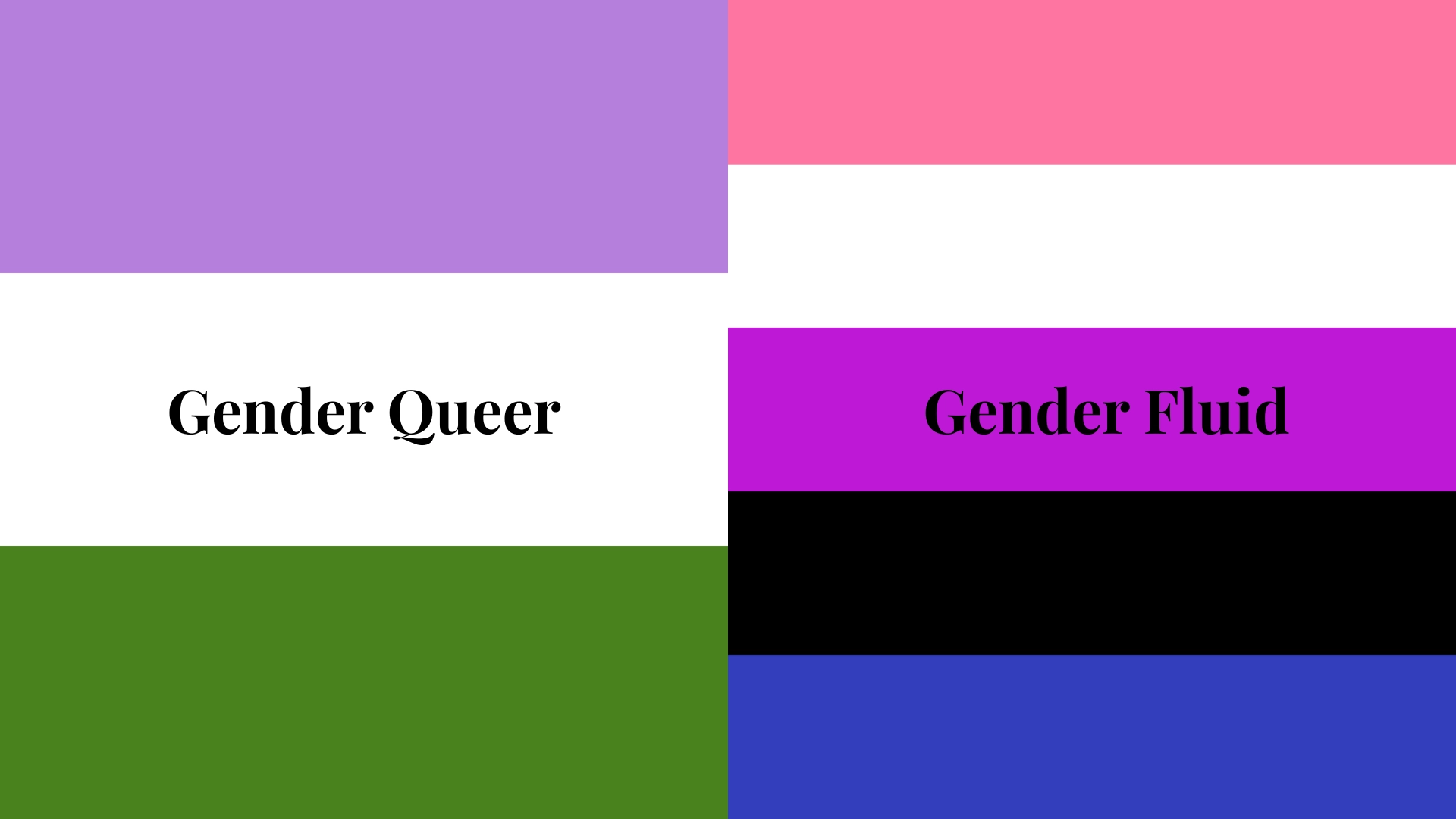
Genderqueer and genderfluid aren’t interchangeable; they describe fundamentally different relationships with gender. One is about where you stand, the other is about how you move.
1. Predictability of identity
Genderqueer identity tends to be consistent; you know where you stand in relation to the binary, even if that place is complex.
Genderfluid identity, by contrast, involves movement you can’t always predict. One day might feel masculine, the next neither.
The experience itself is the variability.
2. Stability vs fluidity
Genderqueer is stable, not rigid, but settled.
It’s a fixed point outside the binary that doesn’t shift with mood or circumstance. Genderfluid is defined by its instability, and that’s not a flaw.
The shifting is the identity. Stability and fluidity aren’t better or worse than each other, just genuinely different experiences.
3. Expression vs identity
Genderqueer often challenges how gender gets performed, clothing, presentation, and social roles.
It can be as much about pushing back against norms as it is about personal identity. Genderfluid is less about expression than protest and more about internal experience.
Your presentation might shift, but the identity is about how gender feels, not how it looks.
4. Overlap with other identities
Both terms can coexist with other identities; someone can be genderqueer and genderfluid simultaneously.
Genderqueer sits under the non-binary umbrella, and so does genderfluid. But genderqueer also overlaps with queer identity more broadly, carrying cultural and political weight.
Genderfluid overlaps more with identities that describe gender as a spectrum rather than a fixed position.
5. Common misconceptions
People assume genderqueer means genderfluid, or that genderfluid means someone hasn’t decided yet. Neither is true.
Genderqueer isn’t fluid; it’s fixed outside the binary. And genderfluid isn’t confusion; it’s a consistent pattern of change.
Both misconceptions flatten real experiences into something easier to dismiss.
Can you use genderqueer and nonbinary interchangeably?
Nonbinary is the broader umbrella. It covers anyone whose gender doesn’t fit neatly into man or woman, and that includes genderqueer people.
But genderqueer carries something extra, a political edge, a history of resistance, a deliberate pushback against how society organizes gender.
Not every nonbinary person identifies with that. Some just know they’re not a man or a woman, and that’s enough.
Using them interchangeably flattens that distinction. Genderqueer is a specific identity with its own cultural weight.
Nonbinary is the category it sometimes sits inside, but the two aren’t doing the same work.
Non-Binary vs Genderqueer vs Genderfluid
Nonbinary, genderqueer, and genderfluid are related, but they’re not the same thing.
Each one describes a different relationship with gender, and collapsing them loses something important.
| Aspect | Non-Binary | Genderqueer | Genderfluid |
|---|---|---|---|
| Basic meaning | Gender outside man/woman | Resists or disrupts the binary | Gender shifts over time |
| Umbrella term | Yes, the broadest category | Partial; sits under non-binary | No, specific identity |
| Political edge | Not inherently | Yes, historically resistant | No |
| Stability | Varies | Generally stable | Defined by change |
| Expression focus | Not necessarily | Often yes | Sometimes |
| How long it’s been used | Gained traction in the 2000s | Used since the early 1990s | Emerged mid-1990s |
| Can overlap with others? | Yes | Yes | Yes |
To wrap up
Genderqueer and genderfluid aren’t competing terms; they’re describing two genuinely different experiences of gender.
One holds a fixed position outside the binary, the other moves through it.
So the next time someone uses one of these terms, you’ll know exactly what they mean and, more importantly, why it is important.
People May Ask
1. Can a girl be genderqueer?
Yes. Genderqueer describes your relationship with gender norms, not your assigned sex. Anyone can identify as genderqueer, regardless of biology.
2. Am I cis if I’m genderfluid?
No. Cisgender means your gender identity matches your birth assignment consistently. Genderfluid identity shifts- that’s the opposite of cisgender.
3. Can a genderqueer person be straight?
Yes. Gender identity and sexual orientation are separate. Being genderqueer says nothing about who you’re attracted to.