


Yes, you can. Blood exposure, shared personal items, and mother-to-child transmission are all documented routes for several STDs, none of which require sexual contact.
Most people connect STDs with sexual contact, and that is the most common route.
But it is not the only one.
If you have never been sexually active but have questions about your risk, this article covers the real transmission routes, what the evidence says, and what you can do about it.
This article covers general transmission routes and is not a substitute for clinical advice. If you have concerns about a specific exposure or test result, a sexual health clinic or your GP is the right first call.
What “sexually transmitted” actually means
The term “sexually transmitted disease,” or STD, sometimes also called “sexually transmitted infection” (STI), describes a group of infections that pass from person to person.
Sexual contact is the most common route, but the name is slightly misleading. Several of these infections do not require sex to spread at all.
The CDC tracks hepatitis C through the NNDSS, noting cases where sexual contact isn’t involved.

In 2022, 52% of cases with known injection drug use were linked to IDU, with other non-sexual exposures including needlestick injuries, household contact, hemodialysis, and occupational blood exposure.
Common non-sexual transmission methods
Blood transfusions and contaminated needles
Receiving blood that has not been properly screened is a known risk for HIV, hepatitis B, and hepatitis C.
The FDA requires all donated blood in the US to be tested for these infections, and the blood supply is considered very safe.
The ongoing risk is shared needles — in intravenous drug use, or in clinical and cosmetic settings where equipment isn’t single-use.
Hepatitis C transmission through contaminated tattooing and piercing equipment is a documented route in clinical literature, which is why single-use needles are non-negotiable at any reputable studio.
Shared personal items like razors or toothbrushes
A used razor or toothbrush can carry tiny amounts of blood.
If someone in your household has an undiagnosed infection like hepatitis B or C, sharing these items creates a real, if small, window for transmission.
Hepatitis B can survive on surfaces outside the body for up to seven days, which makes contaminated items riskier than most people expect.
HSV-1, the strain most commonly linked to cold sores, can also spread through shared lip balm, cups, or face towels when a sore is active.
People do not think of this as an STD context, but clinically it is.
Mother-to-child transmission during pregnancy, delivery, or breastfeeding
A pregnant woman with HIV, hepatitis B, syphilis, or herpes can pass the infection to her baby during pregnancy, delivery, or breastfeeding. The clinical term is vertical transmission.
For HIV, antiretroviral treatment during pregnancy reduces transmission risk to below one percent.
For hepatitis B, the vaccine combined with hepatitis B immunoglobulin (HBIG) given to the newborn within 12 hours of birth is highly effective at preventing transmission.
Both interventions depend on prenatal testing identifying the infection in time, which is why routine antenatal screening matters.
For HIV-positive mothers on effective antiretroviral therapy, current WHO guidance recognises that breastfeeding may still be appropriate where treatment is sustained.
Individual clinical advice is what matters here. Speak to your midwife or obstetric team. The right answer depends on your specific circumstances.
STDs that can spread without sex
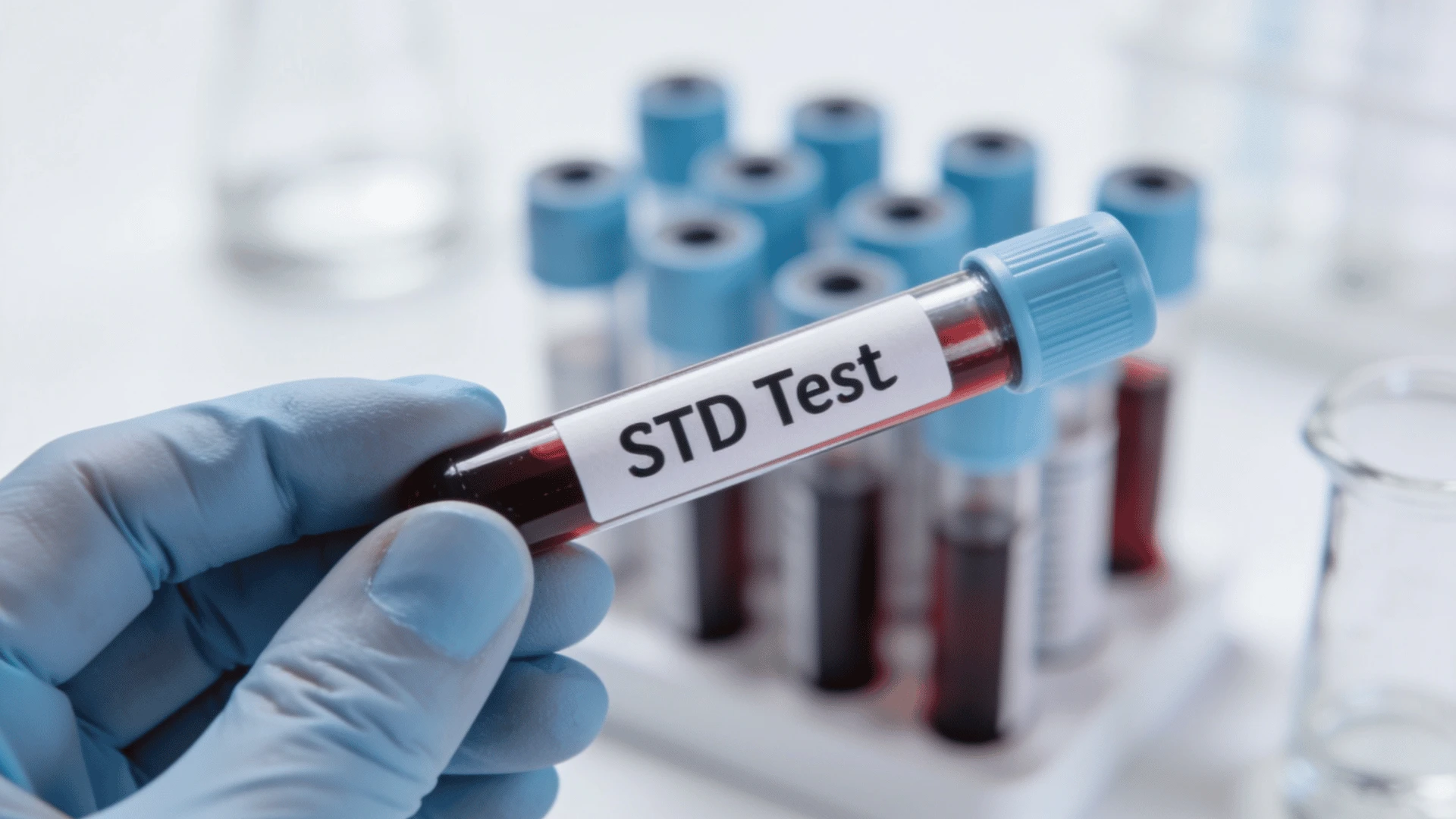
Hepatitis B and C via blood exposure
Hepatitis B is one of the most efficiently transmitted bloodborne infections, significantly more so than HIV through blood contact.
The CDC estimates that around 580,000 and 2.4 million people in the U.S. are living with chronic hepatitis B, with up to 2/3 unaware they have it.
Hepatitis C spreads almost exclusively through blood-to-blood contact.
Unlike hepatitis B, there is no vaccine for hepatitis C, which makes avoiding blood exposure the main line of protection.
HIV through accidental blood contact or contaminated needles
HIV does not spread through casual contact, air, or touch. It passes through infected blood entering a wound, a needlestick injury, or shared injection equipment.
Healthcare workers who suffer needlestick injuries face a risk of around 0.3 percent per exposure to infected blood.
Post-exposure prophylaxis, or PEP, is effective if started within 72 hours and is available through emergency rooms, urgent care centers, and sexual health clinics across the US.
Herpes and HPV in non-sexual cases
HSV-1 is extremely common and easily spread through non-sexual contact with an active cold sore. Many people acquire it in childhood through a kiss from a family member.
A parent with a cold sore kissing a newborn is a recognized risk, particularly for infants with still-developing immune systems.
HPV is primarily transmitted through skin-to-skin contact during sexual activity. Understanding what sexually active means clinically helps clarify why HPV risk assessments are tied specifically to sexual contact rather than general physical closeness.
Non-sexual transmission is not well-established in clinical literature and should not be treated as a significant route.
Real-life situations where non-sexual transmission can happen
Medical and cosmetic procedures
The risk of acquiring an STD through a procedure is low in well-regulated healthcare settings. It rises where sterilization standards are inconsistent.
For tattoos and piercings, if the needle used on the person before you was not disposed of and they had a bloodborne infection, the risk is real. This applies in professional studios and informal settings equally.
Asking about single-use needles before any procedure is reasonable.
Dental and minor surgical procedures in lower-resource settings carry theoretical risk. In well-regulated environments, this risk is negligible.
Household contact
Living with someone who has hepatitis B or C does not put you at high risk, but it does mean avoiding anything that might carry blood, razors, toothbrushes, nail clippers, and cuticle scissors included.
Caring for a family member with active sores or open wounds requires basic precautions.
Gloves when cleaning wounds and thorough handwashing after contact with bodily fluids are simple but effective habits.
Mother-to-child transmission
Prenatal screening for HIV, syphilis, and hepatitis B is standard practice in the US.
The CDC and ACOG (American College of Obstetricians and Gynecologists) both recommend these tests at the first prenatal visit, with some repeated later in pregnancy.
If you are pregnant and do not know your status for these infections, testing is straightforward, and effective interventions are available.
How to reduce your risk
- Do not share razors, toothbrushes, or nail clippers, even with people you live with.
- Ask about single-use needles before any tattoo, piercing, or cosmetic procedure. Studio standards vary by state.
- Get vaccinated. The CDC recommends the hepatitis B vaccine for adults up to age 59. The HPV vaccine is recommended through age 26, with shared clinical decision-making available up to age 45.
- Get screened during pregnancy. The CDC and ACOG recommend HIV, syphilis, and hepatitis B testing at the first prenatal visit.
- Use gloves and basic wound care when caring for someone with a bloodborne infection at home. Some infections can also trigger clitoral nerve pain, which warrants a separate assessment.
Conclusion
Getting an STD without having sex is not a theoretical edge case.
Blood exposure, shared items, and vertical transmission are real and documented.
Knowing this means you can spot actual risk factors in your own life, get the right testing, and act early.
If anything here applies to your situation, your primary care doctor, a local sexual health clinic, or resources through the CDC can point you toward confidential testing options near you.
People also ask
1. Can an STD be transmitted through kissing?
HSV-1 (oral herpes) can spread through kissing during an active sore. Syphilis can also occur if an oral sore is present. Most other STDs do not transmit through saliva.
2. How common is non-sexual herpes transmission?
HSV-1 is commonly acquired in childhood through non-sexual contact. Non-sexual transmission of genital herpes (HSV-2) is rare.
3. What precautions should parents take to prevent STD spread at home?
Accept prenatal STD screening, vaccinate newborns for hepatitis B at birth, and avoid sharing razors or toothbrushes with children.