

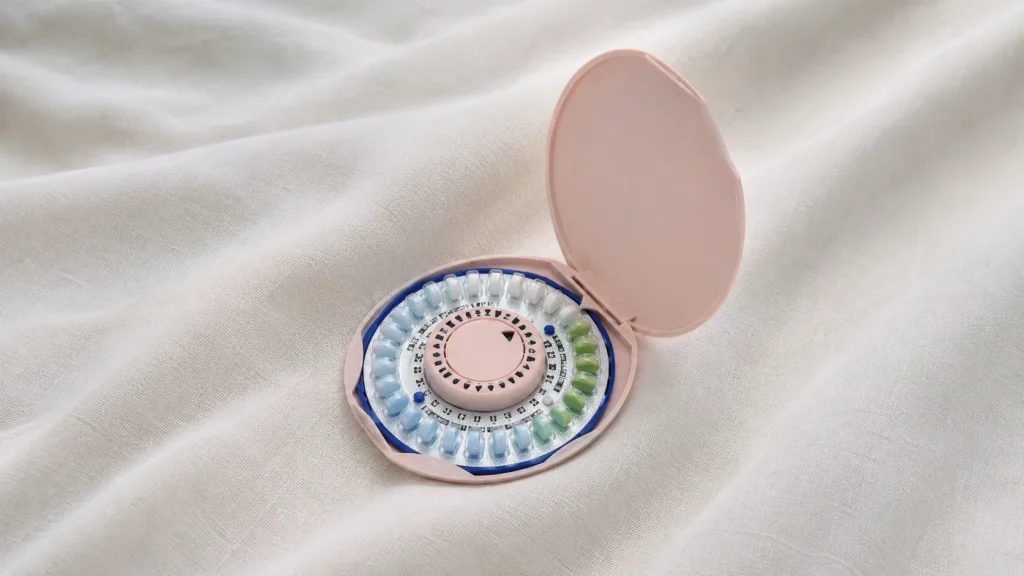
If you have been thinking, can birth control cause anxiety, the question alone says a lot about where you are right now. Well, yes, birth control may alter anxiety, but it is more complicated than this.
Mood changes that seem to arrive out of nowhere, restlessness at night, or a creeping feeling that something is just slightly off, these are real experiences, and they deserve a real answer.
Many people notice their emotions shift after starting, stopping, or switching a method, and the truth is, the picture looks different for everybody.
Hormones, stress, your sex life, how pregnancy fear sits in the back of your mind during intimacy, even the quality of your sleep, all shape mood in ways that overlap.
Let us have a chat about what may be happening in your body, how to read your own pattern, and what to bring to a healthcare provider.
What does birth control anxiety actually mean?
Before putting a label on it, it helps to know what the term is really describing. Birth control anxiety is not a formal diagnosis. It refers to new or noticeably worse anxious feelings that appear to track with starting, stopping, or changing a contraceptive method.
That can look like racing thoughts, irritability, crying more than usual, emotional numbness, difficulty sleeping, mood swings tied to your cycle, a low or absent sex drive, or simply feeling unlike yourself.
Not all anxiety after a method change is caused by that method. Stress, relationship tension, work pressure, PMS, PMDD, thyroid function, trauma history, and other medications can all contribute at the same time.
What matters most is the timing, the pattern, and how severe the symptoms feel. When mood changes appear close to a contraceptive change and do not have an obvious alternative explanation, that pattern is worth paying attention to and worth documenting before a provider visit.
Can birth control cause anxiety?
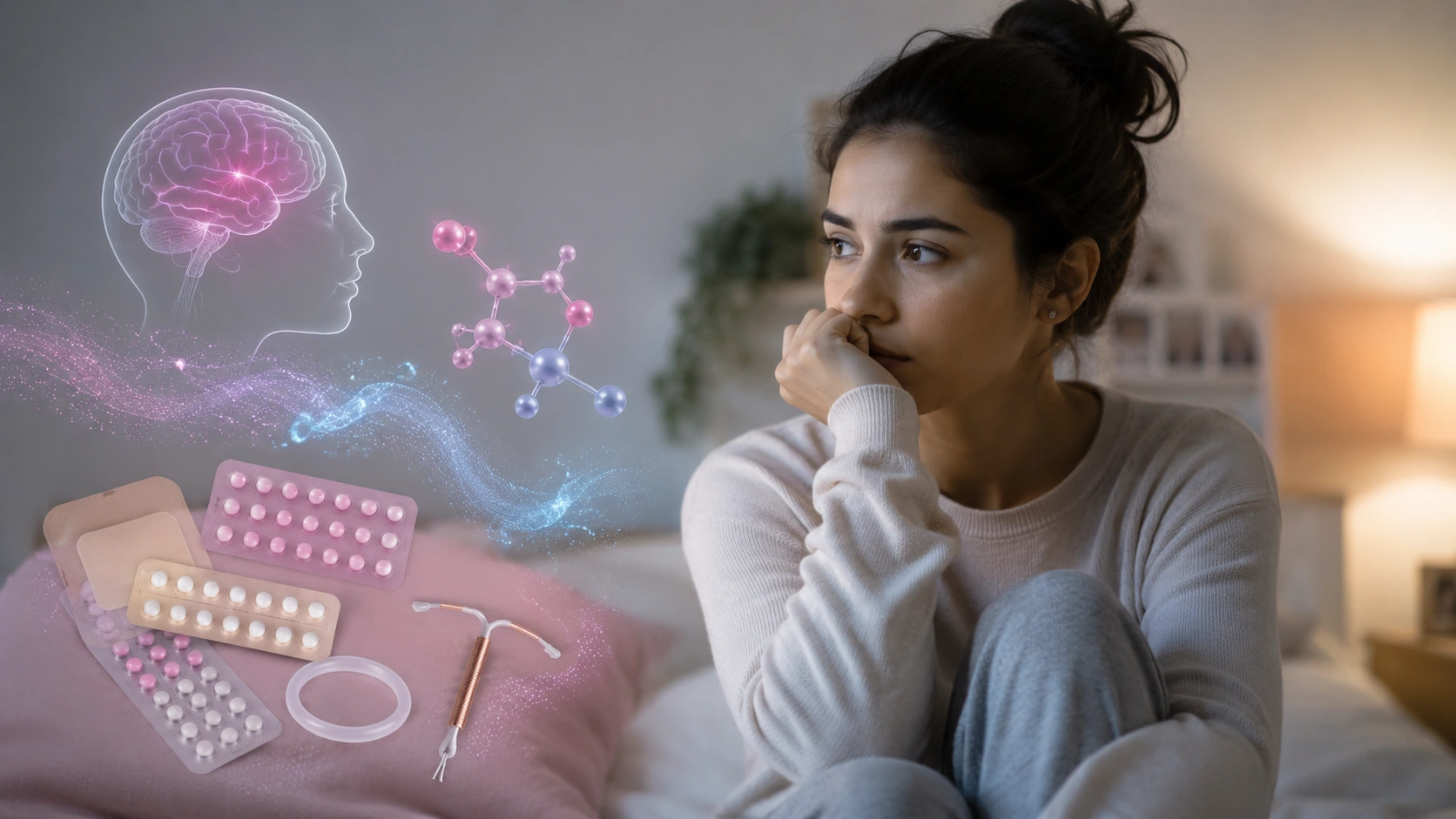
| Hormonal birth control may affect anxiety in some users, particularly around starting, stopping, or switching methods. But anxiety has many causes. Tracking your symptoms and speaking with a healthcare provider before making any changes is the most practical first step. |
Yes, it can, though the picture is rarely straightforward. A 2023 PMC study found that 43.6% of users reported mood changes from hormonal contraception, making it the most common reason people switched or stopped. For others, birth control improves mood by reducing painful periods, heavy bleeding, or pregnancy anxiety. The science is genuinely mixed.
Why is the answer different for every person
Your brain and reproductive hormones are in constant communication. Estrogen and progesterone receptors are located in brain regions involved in emotional processing, including the amygdala and hippocampus.
When a synthetic hormone enters that system, some people barely notice. Others feel it clearly.
Those with a personal or family history of anxiety, depression, or PMDD tend to be more sensitive to hormonal shifts and may need closer mood monitoring when starting or changing a method.
When mood changes usually appear
The most telling window is the first two to three months after starting or switching a method. Changes can also surface after missed pills, dose adjustments, or stopping altogether.
Postpartum, post-miscarriage, and post-abortion periods carry their own hormonal volatility, making it harder to separate method-related effects.
With the DMPA injection, mood changes are particularly difficult to reverse quickly because the progestin dose stays active for approximately three months.
When birth control improves mood instead
Not every hormonal method makes the mood worse. For people whose anxiety is tied to heavy bleeding, painful periods, or PMDD, reducing those symptoms through contraception can meaningfully lower distress.
Reliable pregnancy prevention also removes a significant source of background anxiety around sex, which improves intimacy and emotional comfort for many users.
The key is to match the method to the person, not to assume that hormones always harm mental well-being.
Symptoms worth tracking related to mood changes
Mood changes tied to a contraceptive method can be subtle at first. Knowing what to look for makes it easier to spot a pattern before it escalates or gets dismissed as ordinary stress:
- Persistent racing thoughts or difficulty quieting the mind at night
- Panic attacks or a sudden sense of dread with no clear trigger
- Restlessness, physical tension, or an inability to relax
- Irritability or emotional reactivity that feels out of proportion
- Brain fog, concentration difficulties, or memory gaps
- Crying more than usual or feeling emotionally flat and disconnected
- Significant changes in sex drive or discomfort with intimacy
- Feeling tense before or during sex, or avoiding it without a clear reason
- Mood swings that closely follow your bleed or the pill-free interval
- Feeling like a version of yourself you do not recognize
None of these symptoms alone confirms a method is to blame, but several appearing together, shortly after a contraceptive change, is a pattern worth documenting and raising with a provider.
Symptoms that begin soon after a method change and track with your cycle or dosing pattern are the most meaningful to flag.
For some people, hormonal shifts from contraception can also overlap with early perimenopause and menopause symptoms, making it harder to separate what the method is doing from what the body is already going through independently.
Symptoms that are severe, sudden, or involve thoughts of self-harm need medical support without delay, not a waiting period.
How hormonal contraception affects the brain and stress response
Synthetic hormones do not just prevent pregnancy. They interact with brain chemistry in ways that can shift mood, stress tolerance, and emotional baseline differently in each person.
Ethinyl estradiol (a synthetic estrogen in combined birth control pills) influences serotonin activity, the neurotransmitter most closely tied to mood regulation.
Progestin acts on GABA receptors, the brain’s main calming pathway, and can raise monoamine oxidase activity, an enzyme that breaks down serotonin, reducing the amount available. Research confirms progesterone can worsen mood through this mechanism, while newer estrogen formulations may carry a weaker link.
Not all progestins behave the same: Drospirenone has anti-androgenic properties that many users find more mood-neutral. Older progestins like levonorgestrel and norethindrone are more androgenic and may be more likely to affect mood.
Cortisol and stress recovery are also affected: A 2023 UCLA study found pill users had elevated inflammatory markers and an altered cortisol response to stress, meaning the body may take longer to settle after a stressful moment, which can feel like persistent low-level tension.
Indirect effects matter too: Changes to sleep quality, bleeding patterns, libido, and pain levels can all feed into mood, even when the hormonal effect itself is modest.
None of this means hormonal contraception is harmful across the board. It means the hormonal environment is active, and some bodies respond more strongly than others.
Knowing the mechanism helps make sense of what you may be feeling and gives you better language to use with a provider when something shifts.
Method-by-method mood overview
Every hormonal method works differently in the body, and their relationship with mood is not uniform. This table covers the main options side by side so you can see where the key differences lie:
| Method | Hormones | Mood notes | Long-term? | STI protection? |
| Combined pill | Estrogen + progestin | May reduce PMS for some; mood-sensitive users should track carefully | No, daily | No |
| Progestin-only pill (mini-pill) | Progestin only | No estrogen; may suit those sensitive to estrogen, but progestin sensitivity still applies | No, strict daily timing | No |
| Patch | Estrogen + progestin | Similar profile to combined pill; higher estrogen delivery in some formulations | No, weekly | No |
| Vaginal ring | Estrogen + progestin | Steady hormone release; lower-maintenance; mood response varies | No, monthly | No |
| Hormonal IUD (Mirena, Kyleena) | Progestin (levonorgestrel) | Mostly local effect; some systemic absorption; mood tracking still worthwhile | Yes, 3 to 8 years | No |
| Copper IUD (ParaGard) | None | No synthetic hormones; good option for hormone-sensitive users; may worsen cramping | Yes, up to 10 years | No |
| Implant (Nexplanon) | Progestin only | Irregular bleeding common; mood response varies by person | Yes, up to 3 years | No |
| Shot (DMPA) | Progestin only | Some users report mood changes; hormone cannot be reversed once injected | Medium (3-month cycles) | No |
| Condoms | None | No hormonal effect on mood | No, per-use | Yes |
| Fertility awareness method | None | Requires consistent tracking and predictable cycles | No | No |
No table captures every individual response. Use this as a starting point for conversation, not a final decision, and factor in your own cycle history and mental health background alongside it.
| Note: Condoms are the only method in this table that also reduces the risk of STI transmission. Any method change, especially moving away from barrier contraception, should include a conversation about sexual health screening if a relationship is new or non-exclusive. |
Is there a best birth control for mood stability?

There is no universal answer to which contraceptive is the best birth control for mood stability, and any source claiming otherwise is oversimplifying
The right method is the one that aligns with your hormonal sensitivity, your cycle history, your mental health background, your sex life, your plans around pregnancy, and your practical needs around privacy and maintenance.
For some people, a low-dose combined pill creates a steady hormonal environment that reduces the cycle-related mood fluctuations driving their anxiety.
For others, even a small amount of synthetic progestin causes a noticeable shift in their emotional baseline. People with PMDD (premenstrual dysphoric disorder) may benefit from specific combined pills, particularly those containing drospirenone, which has been studied for mood-related outcomes in this group.
Research reviewed by Clue Health indicates that combined oral contraceptives do not appear to harm mood in most users, though individual variation is significant.
Anyone with a history of anxiety or depression should not feel dismissed or told that mood concerns are minor. They deserve options, a clear follow-up plan, and the ability to switch without having to fight for it.
Can stopping birth control help anxiety?
It may help, but only if the method is genuinely contributing to the problem. Stopping without a clear plan can create new concerns just as real as the ones being left behind:
- If hormones are the trigger, stopping may bring noticeable relief within a few weeks as the body recalibrates to its natural cycle.
- If anxiety has other roots, stopping will not resolve it and may add new stressors, including cycle unpredictability, returning period pain, acne, or pregnancy risk without backup contraception in place.
- A recalibration period is normal. Some people feel better quickly. Others experience a temporary dip in mood before their natural hormone production restabilizes.
- The DMPA injection is a special case, because the progestin dose remains active for approximately three months, so any mood changes linked to it cannot be reversed the way stopping a daily pill can.
- Always have a backup plan. Anyone stopping a hormonal method should have alternative contraception ready before the last dose, not after.
Stopping without speaking to a provider first is rarely the cleanest route. A short conversation can prevent a longer, messier transition and keep pregnancy risk firmly in the plan.
Birth control, anxiety, sex, and relationships
Anxiety and sexual well-being are closely linked. When stress rises, libido often falls first, because the body does not do arousal and threat-response at the same time.
A reliable contraceptive can reduce pregnancy fear enough that sex feels more present and relaxed. But hormonal mood changes can also cause emotional withdrawal, reduced interest in touch, or physical shifts in lubrication and sensitivity that a partner may misread as personal distance rather than a physiological response.
Some people also notice ovary pain after sex alongside these hormonal shifts, which adds a physical layer to what can already feel like a complicated emotional situation.
If your mood changes are affecting your relationship, communicating that clearly matters. A partner who understands what is happening physiologically is in a much better position to support you than one who is guessing.
Pregnancy prevention is a shared responsibility, and that includes being part of the conversation when a method is not working for your body or your mental health.
|
Something to say to a partner: “My anxiety has changed since starting this method, and I am tracking it to understand whether they are connected. I may need to talk to my doctor about switching. What I need from you right now is patience, not pressure, while I figure out what feels right.” |
Long term birth control options and their effect on mood

LARCs, meaning hormonal IUDs, copper IUDs, and implants, are reversible and low-maintenance.
Removing the daily pill burden can itself reduce anxiety, though mood response still varies by method and person.
Mood response, however, is not uniform. Many hormonal IUD users report no psychological side effects and appreciate the reduction in heavy or painful bleeding.
Hormonal IUD (Mirena or Kyleena)
The hormonal IUD releases levonorgestrel, a progestin, primarily locally within the uterus. This is why systemic absorption is lower than with a daily pill.
Many users experience reduced or absent bleeding over time, which can itself lower anxiety tied to heavy periods or cycle unpredictability.
Mood tracking in the first three to six months after insertion is still sensible, and any persistent psychological changes should be discussed with a provider rather than silently tolerated.
Copper IUD (ParaGard)
The copper IUD works without any synthetic hormones. It is a strong option for people whose primary concern is hormonal mood sensitivity. The copper acts as a spermicide, and the device lasts up to ten years.
The downside for some users is heavier or more cramping-prone periods, at least in the first few cycles.
A review in PubMed found that copper IUD use among women with pre-existing depressive or bipolar disorders was not associated with worsening of their condition, which is relevant context for anyone with an existing mental health history.
What to do if you think birth control is affecting your mood
Strong or persistent mood changes are not a side effect to silently push through. These steps can help you act with clarity rather than sit with uncertainty about what to do next:
- Do not dismiss strong or persistent symptoms as something to push through.
- Track for two to four weeks using the symptom log above if symptoms are mild to moderate.
- Note the date you started or changed your method, the brand, and any missed doses.
- Check whether anything else changed at the same time, including new medications, caffeine, sleep, or major life events.
- Book a healthcare appointment and bring your tracking record.
- Ask about switching dose, progestin type, or method rather than simply stopping.
- If stopping, have backup contraception ready before you do.
- Seek urgent help for panic that feels unmanageable, thoughts of self-harm, or feeling unsafe.
Working through this list before a provider appointment means you arrive with a record and a question, not just a feeling, which makes for a much more productive conversation and a faster path to the right answer.
Questions to bring to a provider
Walking in with specific questions makes it much harder to leave with a vague response. These are the ones worth asking directly, especially if past appointments have felt rushed:
- Could this method be contributing to my anxiety, based on the timing?
- Would a different progestin formulation be worth trying?
- Would a lower-dose combined option make sense for my history?
- Is the copper IUD a realistic option given my cycle symptoms?
- Given my anxiety history, is the injection a good choice?
- Could PMDD, a thyroid issue, or another condition be part of the picture?
- What should I use for contraception while switching?
- When should I follow up if symptoms do not improve?
If a provider dismisses these questions without a clear reason, that is useful information too. A second opinion is always available, and mood concerns around contraception are clinically legitimate.
| Seek help without delay if you experience: Thoughts of self-harm or suicide, panic attacks that feel unmanageable or dangerous, severe depression, feeling unsafe around yourself or others, new paranoia, extreme behavioral shifts, or physical symptoms like chest pain, sudden vision changes, or severe unexplained headache. These are not side effects to track quietly. They are signals to act immediately, through emergency services, a crisis line, or an urgent care provider. |
Frequently asked questions
Does the type of progestin in a pill make a difference for anxiety?
Yes, it can. Different progestins have different activity profiles. Some, like drospirenone, have anti-androgenic properties that some users find more mood-neutral. Others, like older levonorgestrel formulations, are more androgenic and may affect mood more noticeably in sensitive individuals. A provider can discuss which progestin is in your current method and whether a switch is worth considering.
Do weight-loss injections like tirzepatide or semaglutide affect birth control?
This is worth flagging with a clinician. Some GLP-1 receptor agonist medications may affect the absorption of oral contraceptives, particularly if they alter gastric emptying or cause vomiting. If taking a weight-loss injection alongside an oral contraceptive, ask your provider whether a non-oral method or additional barrier contraception is advisable.
Is it normal for anxiety to get worse right after stopping birth control?
A temporary period of hormonal recalibration after stopping is common. The body’s own estrogen and progesterone production resumes, and that transition can involve some emotional volatility for a few weeks. If anxiety escalates significantly or does not settle within six to eight weeks, a provider visit is the right next step rather than waiting it out alone.
Can the implant or IUD be removed early if my mood is badly affected?
Yes. Long-acting reversible contraception is reversible. Removal is always an option if a method is not working for your body. A trained provider can remove a hormonal IUD, copper IUD, or implant at any point. You do not need to wait until the end of its lifespan. Have a plan for backup contraception ready for the day of removal if pregnancy prevention remains a priority.
Closing thoughts
If “can birth control cause anxiety” has been a question sitting quietly in the background of your life, the answer is that yes, it can, for some people and some methods, but the picture is genuinely more complicated than a yes or no.
What matters most is whether your experience fits the pattern and whether you have the information to take that pattern to a provider with confidence.
The best birth control for mood stability is the one that works with your specific body, history, and life, not a product on a list.
If long term birth control is part of what you are weighing, that decision should factor in mood, libido, and relationship comfort alongside pregnancy prevention effectiveness.
Your symptoms are worth tracking. Your concerns are worth raising. Drop a comment below and share your progress.
Sources
- Psychological side effects of hormonal contraception: a disconnect between patients and providers, PMC/NYU, 2023
- Hormonal contraception and mood disorders, PMC, 2022
- Hormonal contraceptive use is associated with differences in women’s inflammatory and psychological reactivity, Brain Behavior and Immunity, Mengelkoch et al., 2023
- Psychiatric symptoms and levonorgestrel IUD use: a systematic review, Taylor & Francis, 2022
- Safety of hormonal contraception and IUDs in women with depressive and bipolar disorders, PubMed, 2016
- How different types of hormonal birth control affect mental health, Clue Health, 2024





One Response