

Key Takeaways
Gratitude is a habit you build, not a feeling you wait for.
Small, consistent actions matter more than grand gestures.
There are simple gratitude exercises that fit into any routine.
Gratitude can improve your relationships, mindset, and daily mood.
You don’t need to be in a perfect headspace to start practicing.
Feeling good starts with a little gratitude
We go through the day on autopilot; we wake up, check our phones, rush through tasks, and fall asleep exhausted.
We rarely stop to think about what’s actually going well in our lives; it’s human nature, but that habit quietly drains your energy and your mood.
Research shows that people who regularly practice gratitude feel happier and less stressed, sleep better, handle tough situations more calmly, and tend to have stronger relationships, too.
Practicing gratitude means training your mind to notice the good, even on hard days.
It doesn’t fix your problems, but it does change how you face them. Small things begin to feel meaningful again. Even two minutes a day can make a difference.
How to practice gratitude daily?
People think gratitude only shows up when life is going well, but it’s actually a practice, like exercise; the more you do it, the stronger it gets.
You don’t need anything special to start, just a few simple habits and the willingness to show up consistently.
1. Start your morning with three good things
Before you reach for your phone in the morning, try thinking of three things you’re grateful for.
They don’t have to be big; a good cup of tea, a warm bed or a friend who checked in on you yesterday.
This small habit sets the tone for your entire day and tells your brain to look for the good rather than defaulting to worry.
2. Keep a gratitude journal
Keeping a gratitude journal is one of the most effective practices out there.
Each night, write down two or three things that went well during the day; be specific – Instead of writing “I’m grateful for my family,” try “I’m grateful my sister called me today just to talk.”
Specific entries hit differently; they remind you of actual moments, and over time, those moments add up, the same way small acts of self-kindness build into learning to love yourself.
3. Say it out loud to someone
Gratitude doesn’t have to stay in your head or on paper; tell someone you appreciate them.
A quick “hey, that really helped me” goes a long way; it feels good for you and even better for them.
This is one of the easiest exercises to build into your day, no planning needed, just a little intention.
4. Pause during the day
You don’t have to wait for morning or night. Try catching a small moment mid-day, a good meal, a kind stranger, or the sunlight through a window.
These tiny pauses are powerful; they pull you out of autopilot and back into the present.
Cultivating gratitude isn’t about dramatic changes, but about paying closer attention to what’s already there.
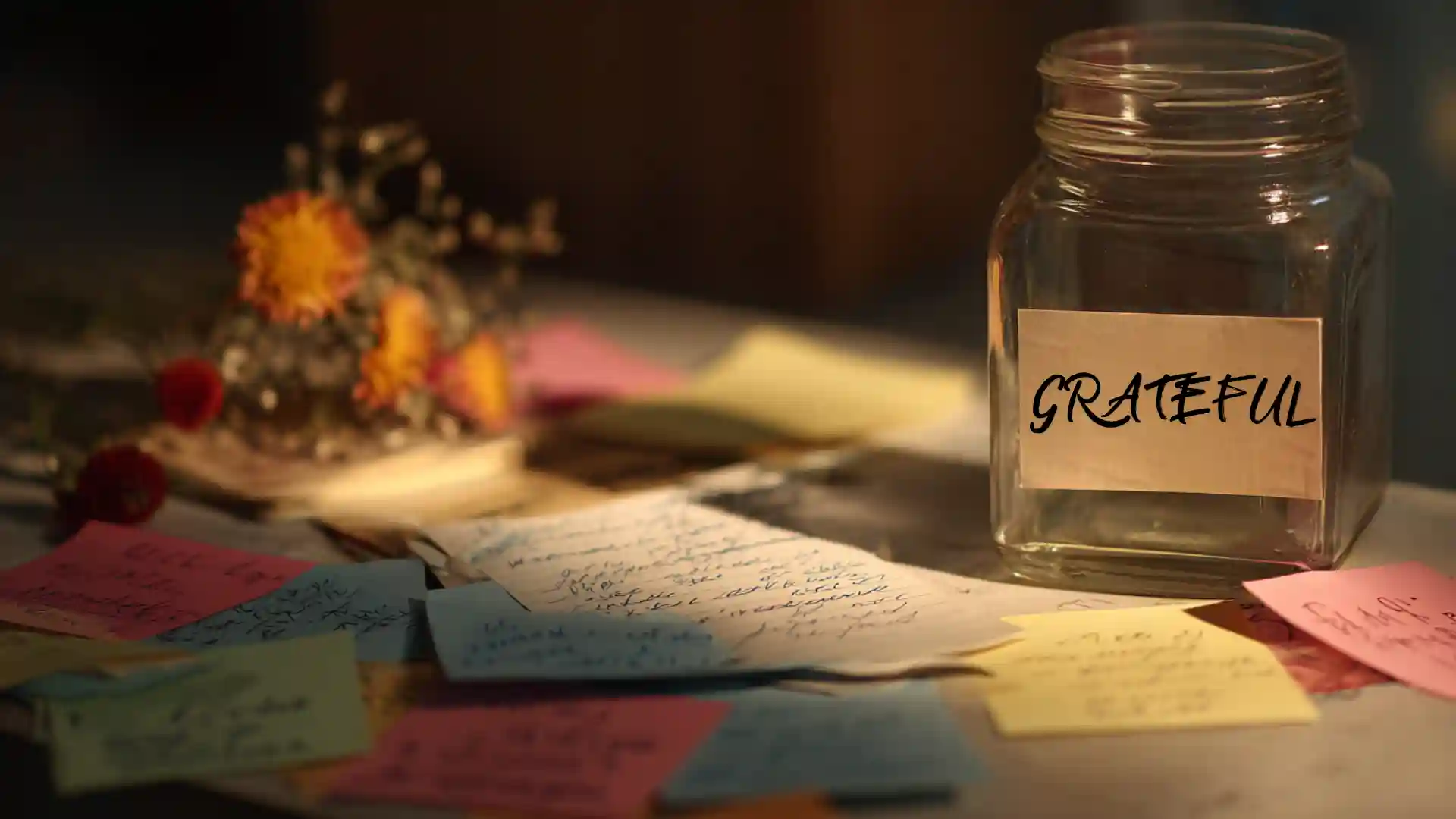
5. Gratitude jar
Keep a jar somewhere visible; every day, write one thing you’re grateful for on a small piece of paper and drop it in. On hard days, pull a few out and read them.
It’s simple, but seeing that jar fill up over weeks is very motivating.
Advanced gratitude practices

Once the basics feel natural, you can take your gratitude practice a little further.
These practices take cultivating gratitude from a daily habit to a way of living.
Mindful gratitude meditation: Sit quietly for five minutes, focus on one thing you’re truly thankful for, and let that feeling grow. It sounds simple, but it goes much deeper than writing in a journal.
Gratitude mapping: Write down one person, one experience, and one personal strength you’re grateful for each week. Over time, this builds a much richer picture of your life.
Expressing gratitude through action: Volunteer, help a neighbor, or do something kind without expecting anything back.
How to cultivate gratitude in different areas of life?
Gratitude isn’t just for the big moments. It fits into every part of your life. Let’s learn how to bring it into the areas that matter.
At work
Pause and think about one thing your job gives you. it could be stability, good people, or even just a skill you’re building.
Taking 60 seconds at the end of your workday to note one good thing helps keep burnout at bay.
In relationships
Tell the people around you that you appreciate them; don’t wait for a special occasion. A simple “thank you” said with meaning can change the whole tone of a relationship.
For yourself
Be grateful for your own body and mind. You show up every day, and that matters. Treat yourself with the same kindness you’d show a good friend.
During hard times
This one’s tough, but even in difficult moments, there’s usually something small to hold onto- a lesson learned, a person who showed up.
Finding that one thing keeps you from losing your footing completely.
In everyday routines
Your morning coffee, your commute, your evening walk- these small moments are easy to overlook, but they’re also the ones that make up most of your life, so notice them more.
Overcoming challenges in practicing gratitude
Some days, gratitude feels impossible; you’re stressed, tired, or just not in the mood- that’s completely normal.
The biggest obstacles are usually stress, a negative headspace, or simply forgetting to do it. Life gets in the way; it happens to everyone.
But consistency matters more than perfection; missing one day is fine, just start again the next, and that same patience is really just what being mindful means in practice.
A few things that help are the following:
- Set a small daily reminder on your phone.
- Tie your gratitude practice to something you already do, like your morning coffee.
- On tough days, aim for just one thing, not three, just one.
Gratitude doesn’t have to be perfect to be powerful.
What people on Reddit say
The Reddit thread post features a user who already finds the standard practice of quietly sitting and feeling grateful for things one by one very effective, even experiencing an “inexplicable high” as they continue.
However, they want to “spice it up” and make their gratitude practice more fun.
They specifically want exercises or games that also let them use a cute notebook they bought, despite not liking writing much and believing feeling gratitude works better than writing it down.
They’re seeking creative, engaging gratitude activities that incorporate their notebook while still prioritizing the emotional experience of gratitude.
The tips and exercises shared here are general in nature and may not suit everyone. If you are dealing with serious mental health concerns, please reach out to a qualified professional.
End note!
Gratitude won’t fix a bad day overnight, or it won’t pay your bills or solve your problems, but it will quietly change how you see things.
Pick one thing from these gratitude exercises, just one, and try it tomorrow morning. Whatever feels easy, start there.
Gratitude isn’t about being perfectly positive all the time. It’s about showing up, even on the hard days, and finding that one small thing worth holding onto.
So, what are you grateful for today? Drop it in the comments. I’d love to hear it!
And if you found this helpful, share it with someone who needs a little more good in their day.
Frequently Asked Question (FAQ’s)
1. What are the 4 A’s of gratitude?
The 4 A’s are Appreciation, Approval, Admiration, and Attention. Together, they help you notice and express gratitude more fully every day.
2. Does gratitude reduce cortisol?
Yes. Studies suggest that practicing gratitude regularly can lower cortisol levels, helping you feel calmer and less stressed overall.
3. Does gratitude lower blood pressure?
Research indicates that grateful people tend to have lower blood pressure. Positive emotions linked to gratitude support better heart health over time.




One Response