

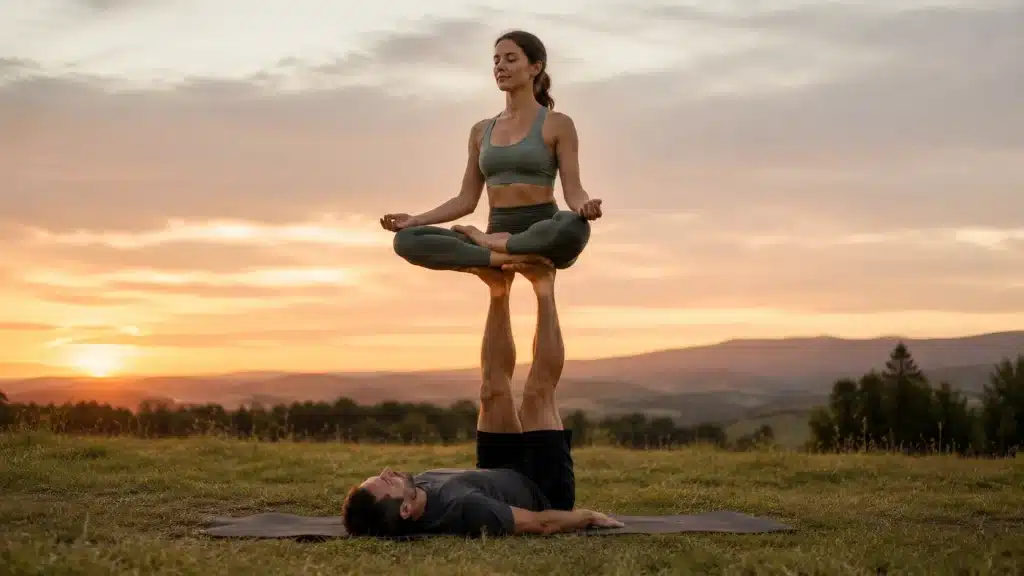
Yoga is often viewed as a personal practice focused on self-awareness and mindfulness.
Practicing couples yoga adds a different dimension by bringing two people together on the same mat.
It is not about mastering advanced poses or creating perfect photos. Instead, it offers a simple way to build trust, improve communication, and enjoy quality time together.
Moving through each pose as a team encourages balance, cooperation, and mutual support.
Read ahead: what couples yoga actually is, the safety rules that matter, and ten poses to try at every level, from your first attempt to your hundredth.
What is couples yoga?
It is also called partner yoga where two people moving through poses, using each other for support, resistance, or counterbalance.
Instead of holding a stretch alone, a partner’s weight or grip helps the other go deeper into it.
It’s not limited to romantic couples either. Friends, siblings, or workout buddies can practice these poses just as easily.
The “couple” part is really just shorthand for “two people.”
Benefits of practicing couple yoga poses
Doing yoga with a partner adds a few things solo practice can’t:
- Better communication – Poses only work if both people talk about what feels good and what doesn’t.
- Deeper stretches – A partner’s weight or pull can take someone further than they’d go alone.
- Shared accountability – It’s easier to stick with a routine when someone else is counting on you to show up.
- A fun way to move together – These feel more like play than a workout, which takes the pressure off actually doing it.
Safety tips before trying couples yoga
A few ground rules make this yoga safer and more comfortable for both people:
- Talk constantly. Ask “does this feel okay?” before pushing into a deeper stretch.
- Warm up first with a few minutes of light stretching before attempting weight-bearing poses.
- Skip a pose if either partner feels sharp pain, not just a stretch.
- Use a mat with good grip and clear the space beforehand.
- Move slowly into and out of every pose, especially ones involving shared weight.
If either of you has a back, neck, or shoulder injury, check with a doctor or physical therapist before trying the weight-bearing poses below.
Beginner couple yoga poses
These beginner-friendly poses are a solid place to start for anyone new to this. They don’t need much strength or balance, just some coordination.
1. Partner forward fold
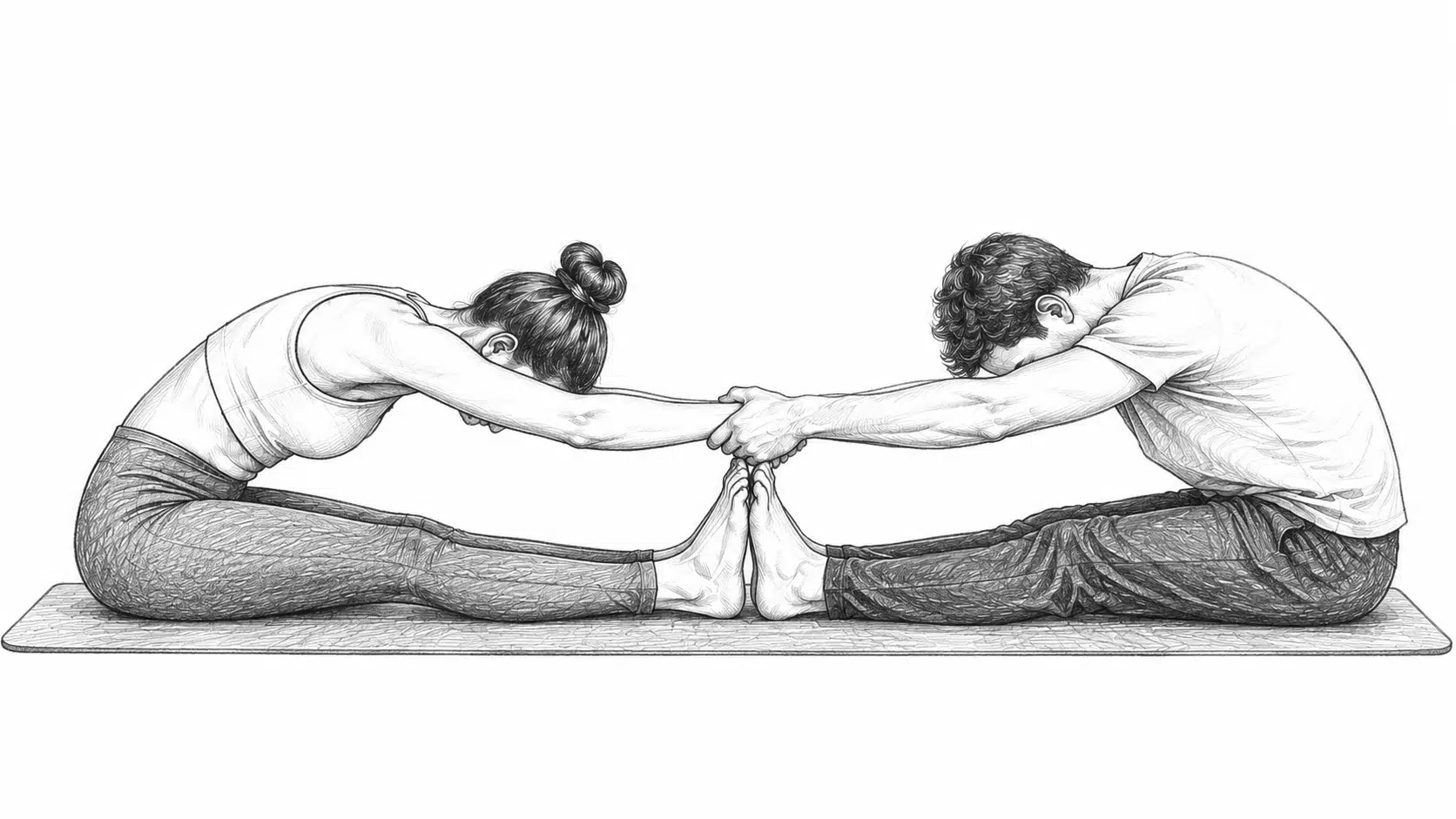
Partners sit facing each other, legs extended, with the soles of their feet touching.
They hold hands and take turns gently leaning back while the other folds forward over their legs.
This stretch opens the hamstrings and lower back and is a good way to warm up before trying anything more advanced.
2. Partner child’s pose
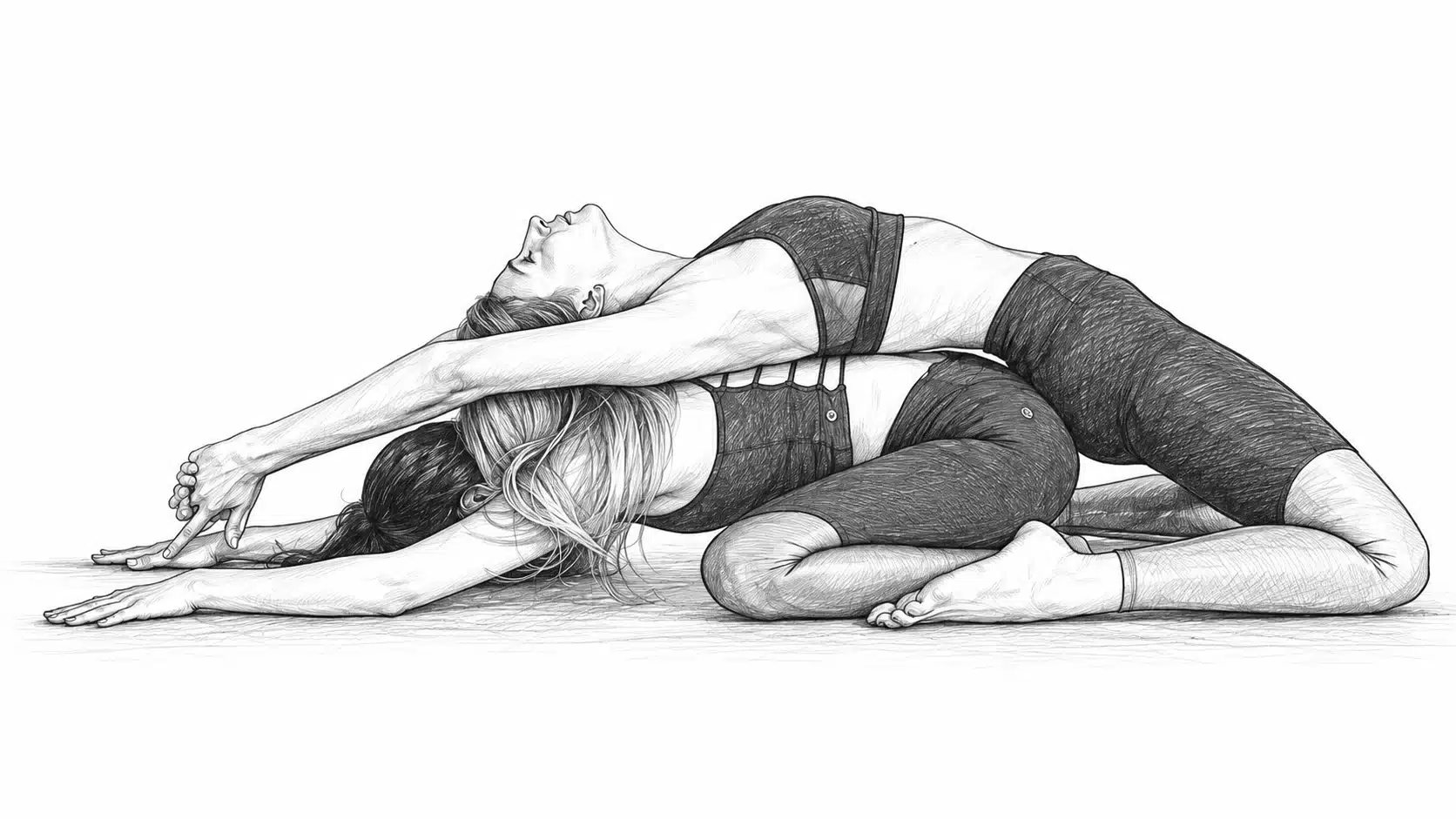
Partners sit back-to-back in a kneeling position, then both fold forward with their arms stretched out in front of them.
It’s calming, low-effort, and works well as a starting pose or a cool-down at the end of a session.
3. Seated spinal twist
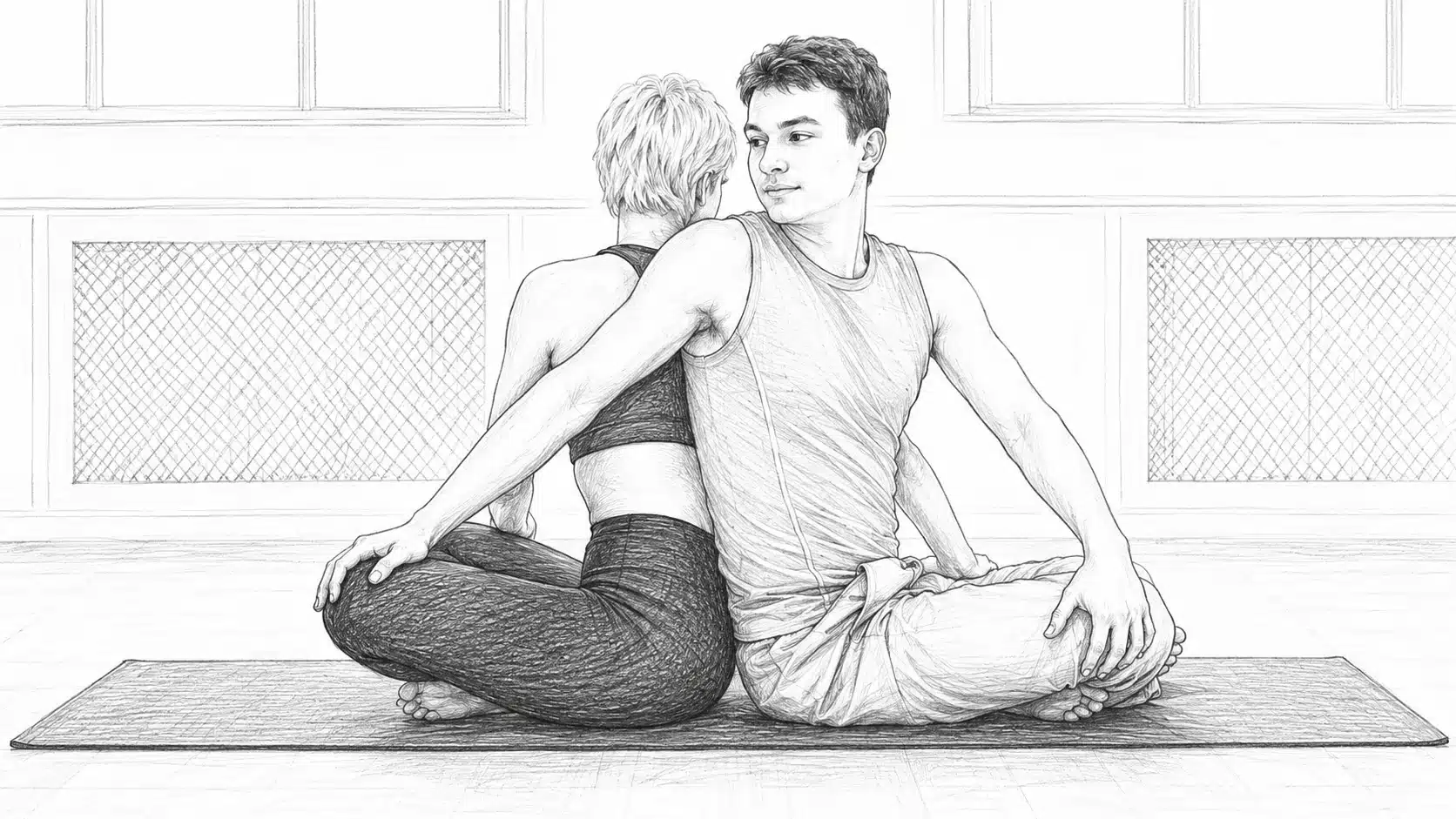
Partners sit back-to-back with legs crossed. Each twists toward the same side and places a hand on the other’s opposite knee for support.
This one loosens up the spine and feels good after sitting at a desk all day.
4. Double downward dog
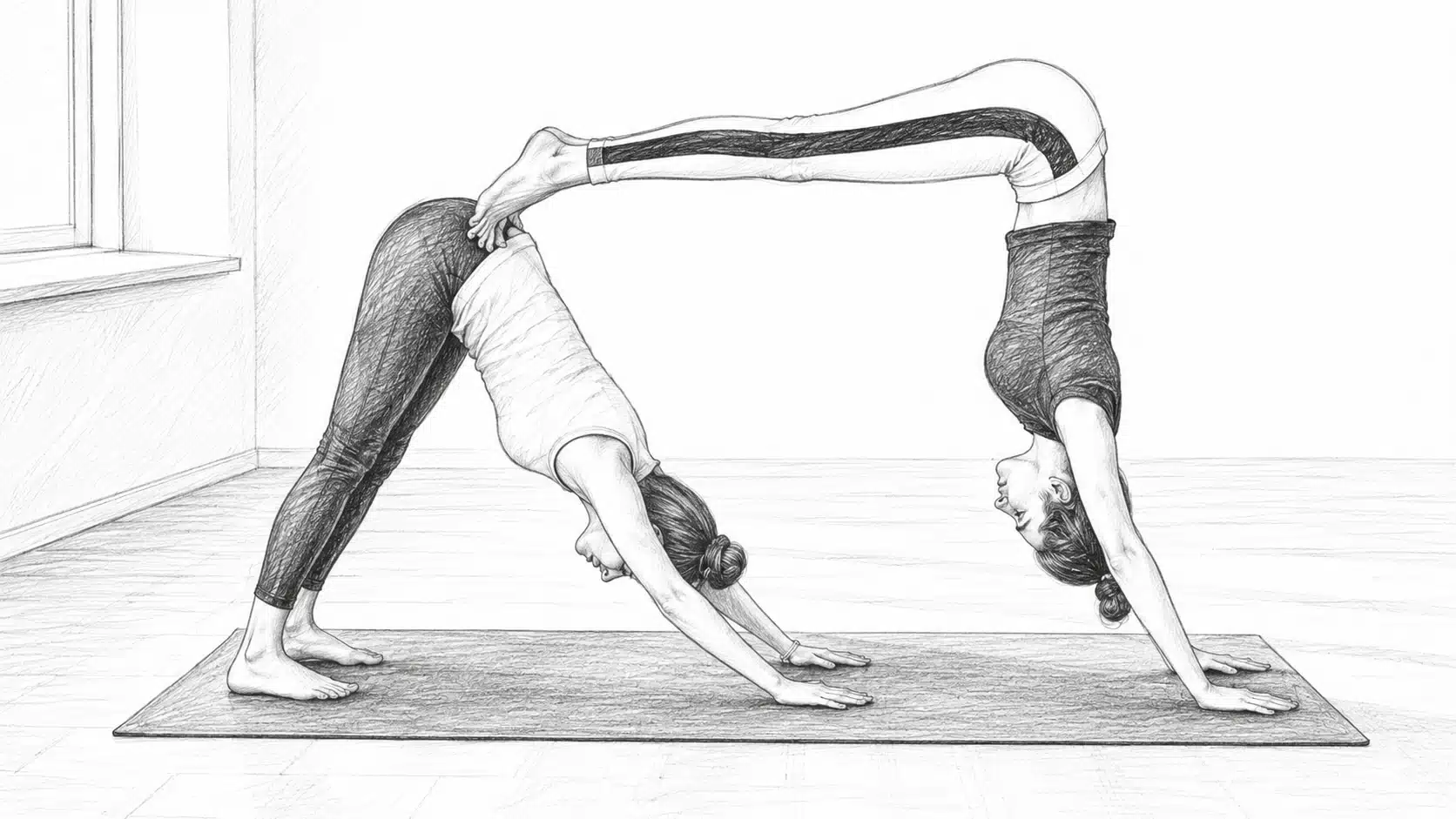
One partner sets up in a regular downward dog.
The second partner places their hands on the first partner’s lower back or hips and steps into their own downward dog, using the base partner for extra height.
The base partner gets a deeper stretch through the shoulders and hamstrings from the added pressure.
Step in slowly and add weight gradually because this one asks more of the base partner’s back than the other beginner poses, so skip it if either of you has lower back sensitivity.
Intermediate couple yoga poses
Once the basics feel comfortable, these poses add a bit more balance and shared effort.
5. Back-to-back chair pose
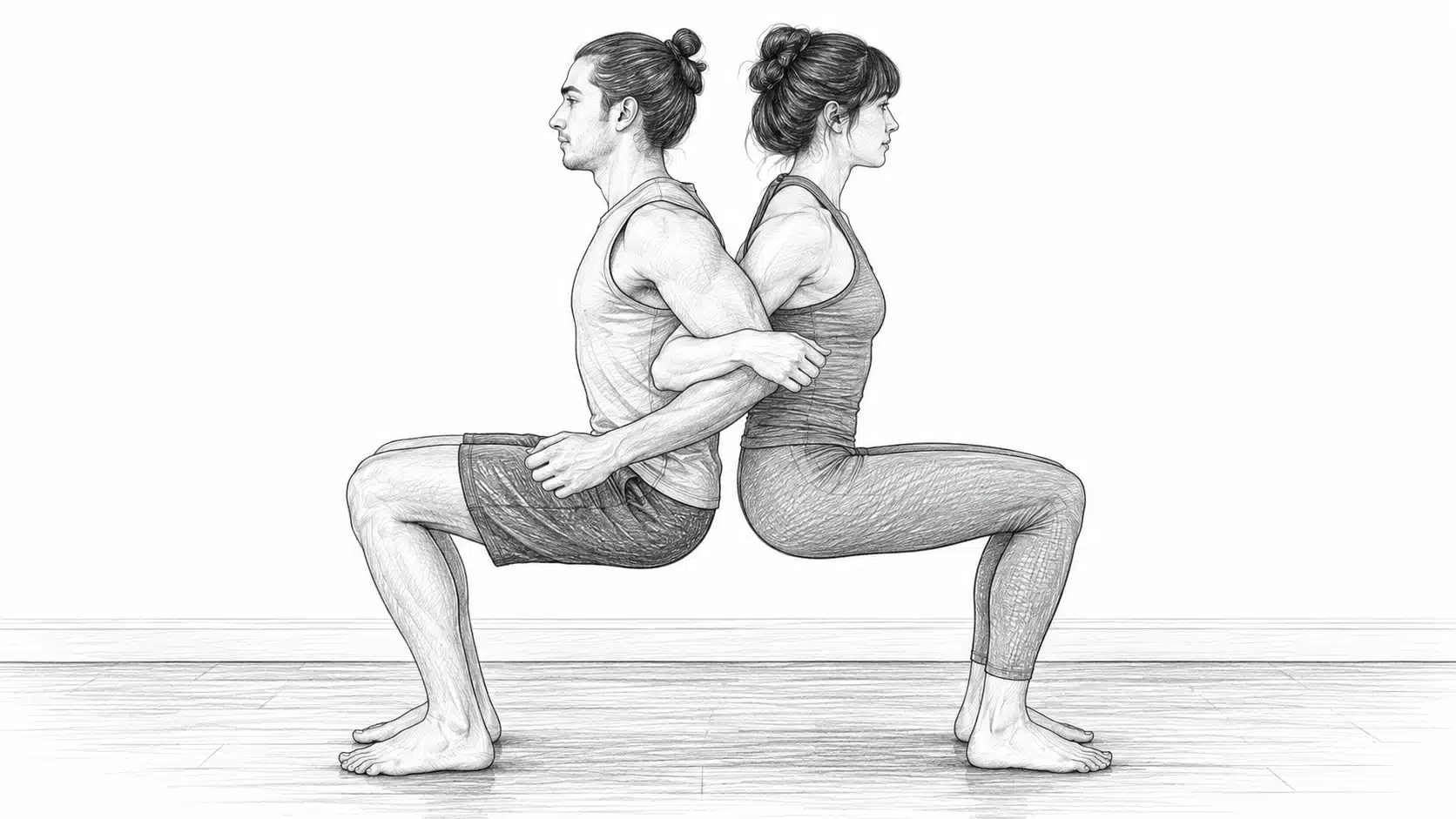
Partners stand back-to-back with feet hip-width apart.
They lean into each other and slowly slide down into a chair pose, using each other’s backs for support the whole way down.
This one builds leg strength fast, and it only works if both people commit to leaning at the same pace.
6. Twin plank
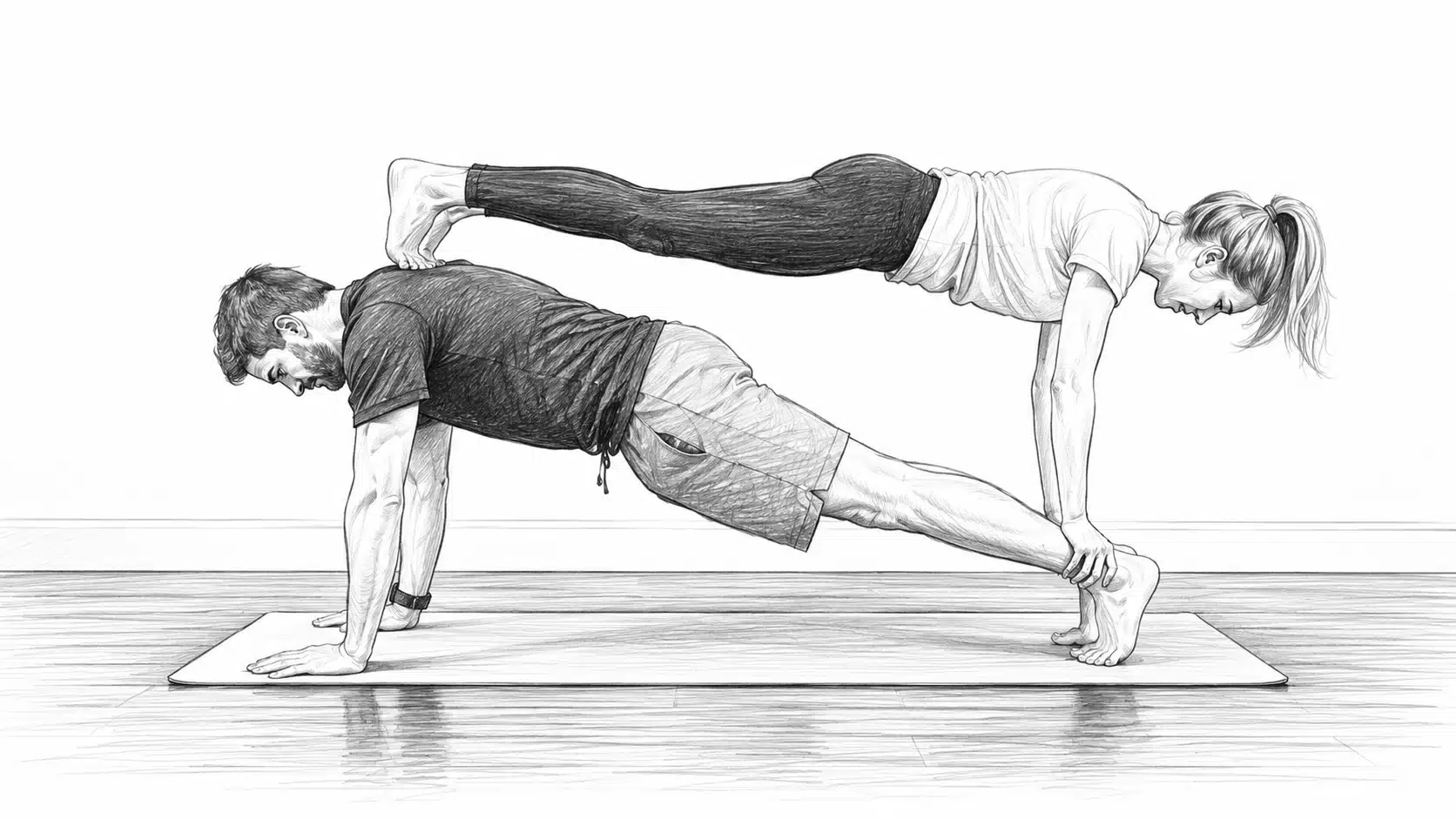
One partner holds a plank on the ground. The second partner places their feet on the first partner’s shoulders and holds their own plank on top.
This is a serious core and shoulder challenge for both people, so it helps to master a regular plank solo first.
This couples yoga pose puts real weight through the base partner’s neck and shoulders. So, build up to it slowly, and stop immediately if either of you feels strain rather than effort.
7. Double tree pose
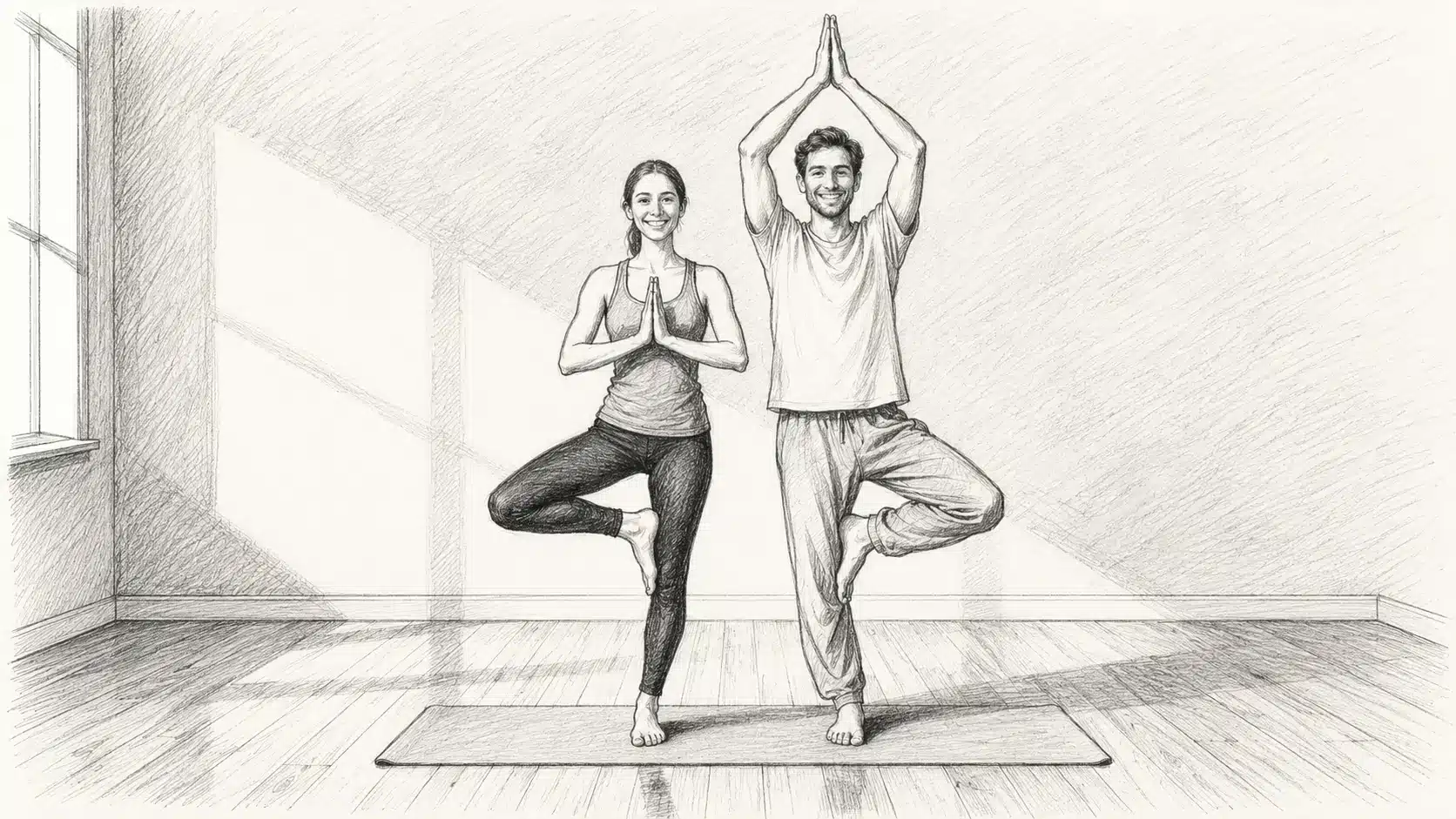
Partners stand side by side, hold hands, and each lifts the inside leg into a tree pose while balancing on the outside leg.
Balance poses like this one are less about strength and more about staying relaxed.
And trusting a partner to hold steady.
Advanced couple yoga poses
These poses ask for more trust, flexibility, and strength. It helps for both partners to feel solid in the beginner and intermediate poses first.
8. Partner boat pose
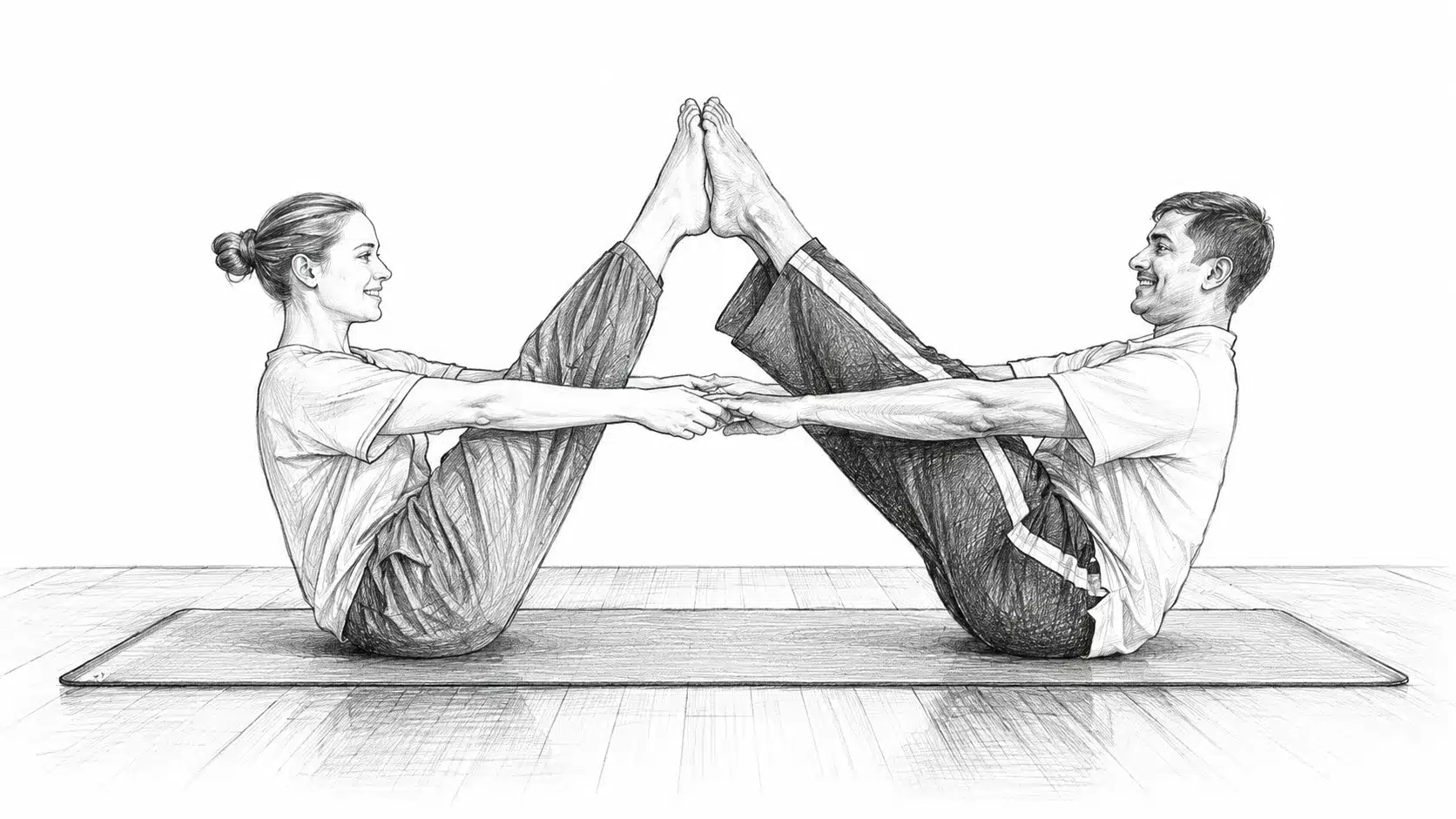
Partners sit facing each other, press the soles of their feet together, and hold hands. Both lean back slowly and lift their legs to form a “V” shape, balancing on their sit bones.
Core strength matters here, but so does moving at the exact same pace as each other.
9. Partner camel pose
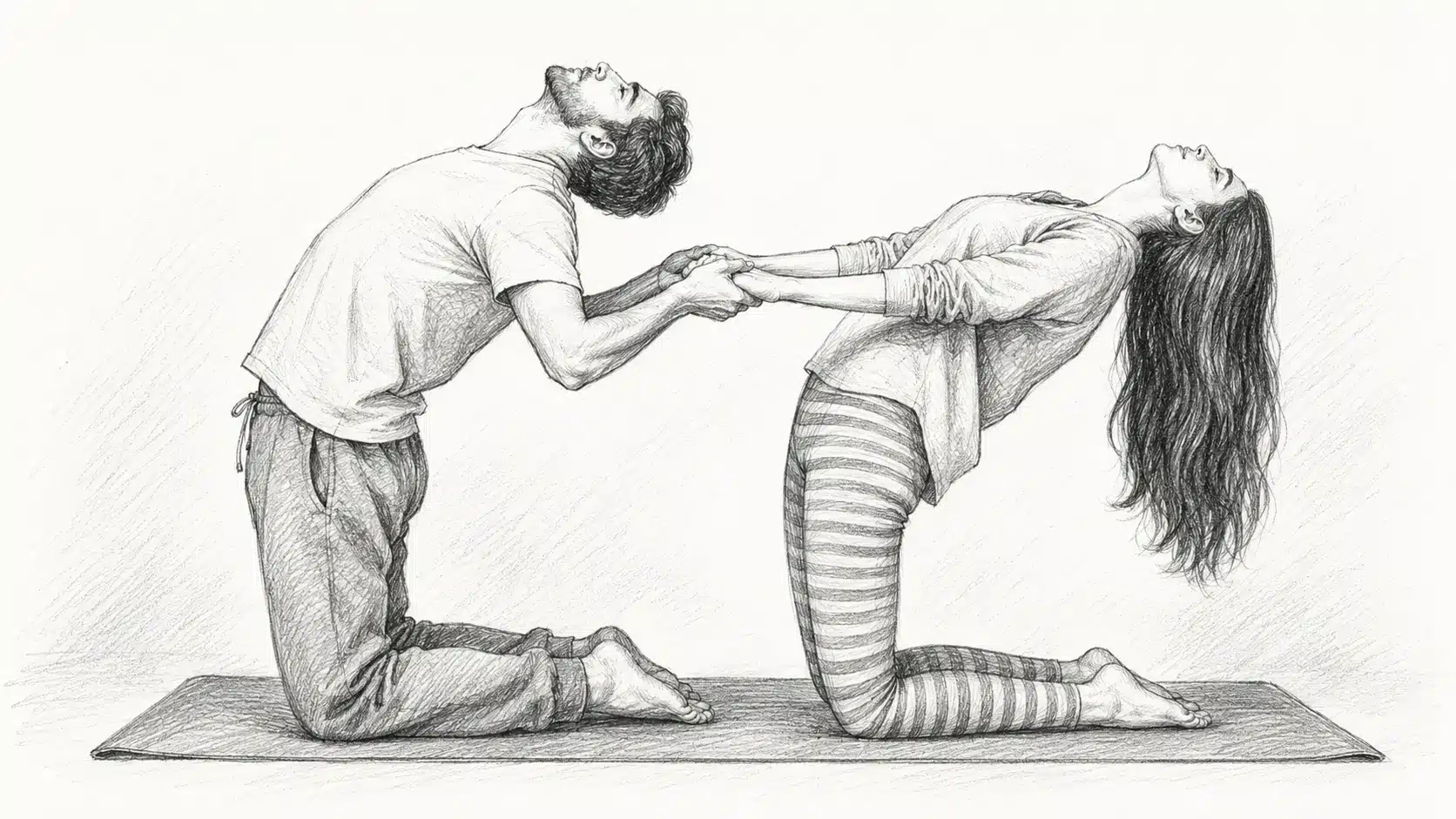
Partners stand back to back and lean into a backbend, using each other’s backs for support while reaching toward the other’s legs or ankles.
This is a deep chest and shoulder opener, and it needs one partner to stay especially steady as a base.
Come out of this one slowly, and skip it if either of you has a history of lower back issues.
10. Temple pose
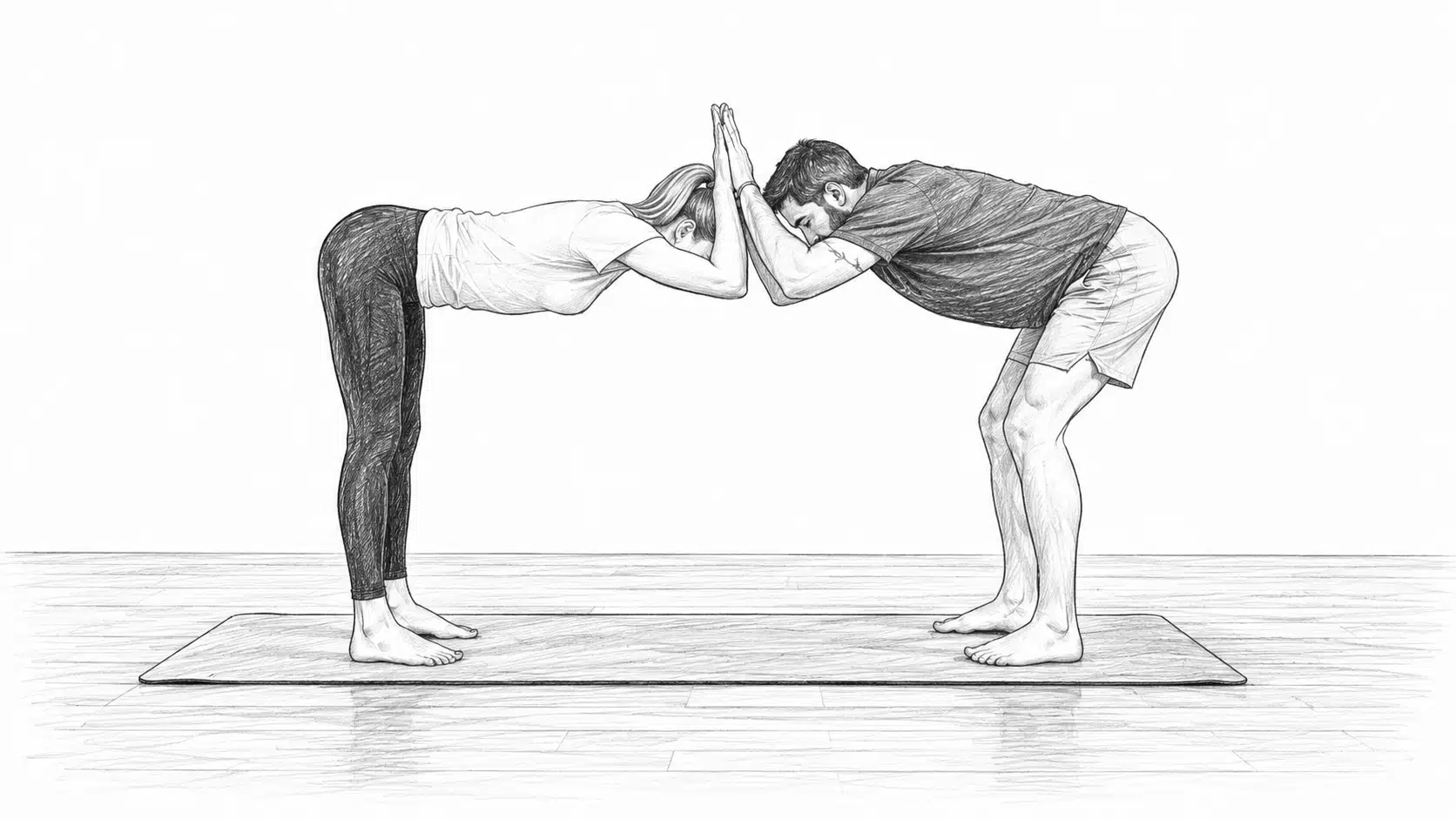
Partners stand facing each other, walk their feet back, and lean their weight forward into each other’s hands or forearms until they form an “A” shape.
It’s a deep stretch through the shoulders and spine, and it only works if both people trust each other enough to lean in fully.
How does couples yoga make for a regular habit?
These yoga poses are easiest to stick with when they become part of a routine rather than a one-off try.
Picking a consistent day and time, even once a week, helps build momentum.
Starting with 15 to 20 minutes rather than a full hour works better for most beginners. Spend the first couple of minutes just checking in with each other before moving into poses.
Short, consistent sessions build the habit faster than long, occasional ones.
Frequently asked questions (FAQs)
1. Is couples yoga good for beginners?
Yes. Many couple yoga poses are designed to be simple enough for two people with no yoga background.
2. Do partners need to be flexible to try couples yoga?
No. Flexibility builds over time, and most beginner poses work fine without it.
3. How long should a couple’s yoga session last?
15 to 30 minutes is a solid starting length for most sessions.