


Premium pleasure products carry price tags most budgets flinch at, and that gap is exactly why so many people search for how to make a sex doll instead of swiping a card.
Money, privacy, and plain old curiosity drive the decision to build rather than buy.
I’ve spent years studying sexual health, and I’ve watched simple, affordable projects turn private exploration into something safe and judgment-free.
This piece covers material choices, step-by-step builds, creative project ideas, and the hygiene habits that separate a good DIY win from a regrettable one.
Curiosity is welcome. Judgment is not.
| Start small. A quick pocket-sized project teaches you what your body likes before you commit a weekend and three hoodies to a full-size build. |
What is safe to use when making a DIY sex doll (or any other toy)
Your skin down there is very sensitive, so the right material choice is very important.
Test every new material on your inner arm before it comes into contact with anything more sensitive. It should be soft and washable.
Here’s what belongs in your build and what doesn’t.
- 100% cotton fabrics: breathable, soft, and machine washable. The reliable workhorse of any homemade setup.
- Hypoallergenic pillows and body pillows: Supportive, chemical-light bases that will not pick a fight with your skin.
- Food-grade silicone and water-based lubricants: Gentle on delicate tissue and compatible with most protective barrier materials.
- Unlubricated latex or nitrile barriers: Your non-negotiable lining for anything involving bodily fluids.
- Skip cheap plastics: Many contain phthalates, which can disrupt hormones and cause other health concerns.
- Skip harsh adhesives and sharp parts: Glue fumes and exposed edges have no business near your favorite anatomy.
- Keep oil away from latex: Oil-based products degrade latex fast, and a torn barrier defeats the entire point.
| Advisory: If you ever notice irritation, itching, or unusual discomfort after use, stop, review your materials and cleaning routine, and talk to a healthcare provider. Bodies communicate. Listen to yours. |
How to make a sex doll from homemade items
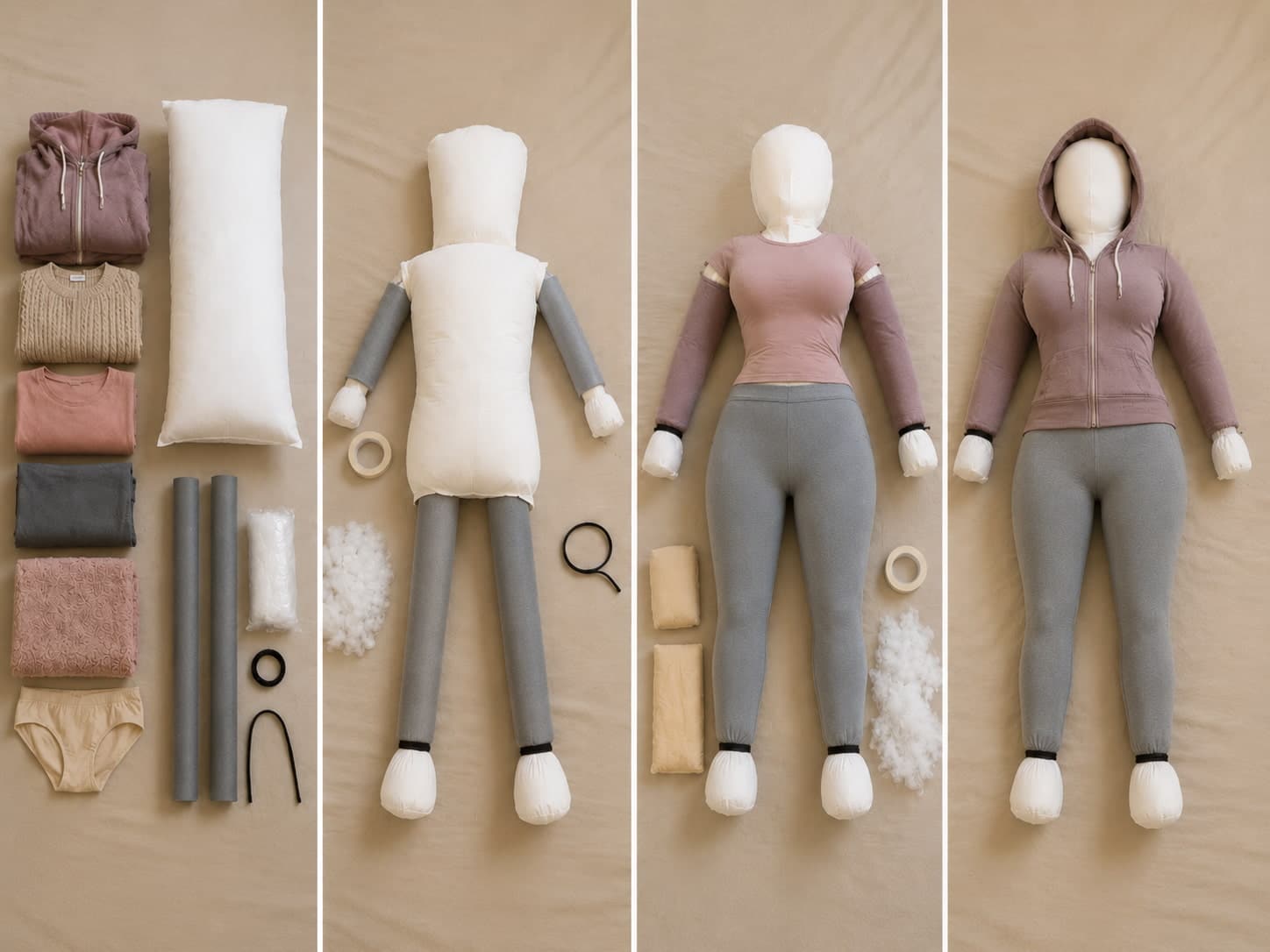
Step 1: Build the core skeleton
Everything starts at the core, here, with good stuffing.
Use a sturdy body pillow or oversized plush item as your central frame.
For bendable limbs, attach soft foam pool noodles with fabric tape, and wrap every edge until nothing pokes, scratches, or surprises you.
Step 2: Add layers for softness
Once the frame is ready, add soft layers to create a comfortable outer shape. Use thick sweaters, leggings, or hoodies to build gentle padding around the core.
Adjust the layers until the shape feels balanced and soft. Add more padding where needed, or remove extra material for a smoother feel.
Step 3: Add the inner layer carefully
This step is about creating a secure and comfortable finish. Make a small opening in the fabric layers, then carefully place the inner component so it sits in a stable position.
Take time to secure everything properly and protect the surrounding materials from moisture or wear.
A little extra care here helps keep the structure neat, comfortable, and easier to maintain.
Step 4: Secure the shape and add the finishing layers
Now focus on the final adjustments. Use soft fabric ties or bands around key areas like the shoulders, waist, and knees to help the structure stay supported and maintain its shape.
Add comfortable outer clothing that feels soft and can handle regular cleaning. Check that the layers sit evenly, adjust the fit as needed, and make small changes over time to improve comfort and stability.
| Caution: Never include rigid rods, wire hangers, or anything that could shift and jab you mid-use. Flexibility should come from foam and fabric, not from materials with stabbing potential. |
Quick DIY toy ideas to try first if you are doubtful
Not ready to commit to a full-size roommate made of hoodies?
These smaller projects deliver serious satisfaction with minimal supplies, minimal time, and pair well with intimate surroundings if you enjoy experimenting at home.
The classic sponge and glove setup
The legendary pocket option that has saved countless budgets. It assembles in minutes, feels surprisingly good, and disassembles back into innocent kitchen supplies faster than you can say “nothing to see here.”
- Place two clean, soft kitchen sponges inside a disposable nitrile or latex glove, cushioned sides facing inward.
- Wrap the assembly in a plastic bottle or a rolled towel to apply gentle, adjustable external pressure.
- Apply a generous water-based lubricant every single time. Researchers in a lubricant safety evaluation published in PLoS One found that formulas vary widely, so stick with gentle, water-based options.
- Swap the glove after each session and wash outer components thoroughly.
Adjust sponge density for tightness or add gentle warmth for realism. Cheap, discreet, and effective is a rare combination in life, so appreciate this one for the engineering triumph it is.
The homemade personal massager
You already own at least three vibrating devices, and yes, that buzzing potential can be borrowed responsibly.
The rules here are simple: external use only, barriers always, electronics nowhere near liquids.
- Use the smooth back of an electric toothbrush handle, never the bristle end, wrapped in a soft cloth or fresh barrier.
- Slip a phone on vibrate into a clean sock or zip-top bag, then place it through clothing or fabric.
- A gaming controller with rumble turned on works the same way, pressed through a layer of fabric.
- Keep every device away from lubricant and moisture, since water-resistant rarely means fluid-proof.
- Never insert any of these. Improvised electronics belong outside the body, full stop, no exceptions, no creative interpretations.
Wipe devices down afterward and swap barriers every session.
Once you know which intensity your body prefers, you can shop for a real massager with confidence, not guesswork.
One of my favorite sex education shows, ironically known as “Sex Education,” can teach you a lot about diy situations and different ways of masturbating.
You can check out this review of different dildos from the show itself:
DIY vs store-bought: How they stack up
Wondering whether your homemade masterpiece truly competes with commercial options? Here is the honest, side-by-side breakdown so you can decide where your money and creativity belong:
| Factor | DIY Builds | Commercial Products |
| Cost | Nearly free, uses household items | Ranges from modest to eye-watering |
| Privacy | Total, nothing to ship or hide receipts for | Discreet shipping, but still a purchase record |
| Customization | Unlimited, you control every detail | Limited to available models and options |
| Durability | Weeks to months with good care | Years with medical-grade materials |
| Cleaning | Barrier swaps plus fabric washing | Purpose-built, often rinse-and-go surfaces |
| Realism | Decent with smart layering | High, with lifelike textures and joints |
Neither column wins outright. DIY shines for budget, privacy, and experimentation, while commercial options reward you with longevity and polish. Many people happily run both systems side by side.
When to move from DIY to professional options
Homemade builds are brilliant teachers, but every student eventually outgrows the classroom. Here are the signs you are ready to upgrade, plus what to look for when shopping.
- You are constantly rebuilding or repairing your setup, and the maintenance time outweighs the savings.
- You crave textures, weight, and articulation that fabric and foam physically cannot deliver.
- You have disposable income earmarked for self-care, because pleasure counts as self-care, full stop.
- Shop for skin-safe certifications, medical-grade silicone, and non-porous, easy-clean surfaces.
- Prioritize articulated joints, customizable weights, and modular designs that allow targeted upgrades.
- Read independent reviews, not just glossy product pages, before spending serious money.
Upgrading is graduation, not betrayal. Everything you learned building with sponges and sweaters now makes you a sharper, pickier shopper when comparing modern pleasure devices, which is exactly how smart purchases get made.
Final thoughts
Learning how to make a sex doll or how to make a sex toy at home is equal parts craft project, budget hack, and self-discovery exercise, with a healthy dose of giggling at your own ingenuity along the way.
You now have the material knowledge, construction steps, creative variations, and hygiene rules to handle any DIY sex doll project safely and well. Keep barriers in place, keep fabrics clean, and keep listening to what your body tells you.
Whether your creations remain trusted favorites or stepping stones toward professional upgrades, you have earned the satisfaction that comes from making something genuinely yours. Stay safe, stay clean, and have an unreasonable amount of fun.
Drop a comment below and let me know if you succeeded in making a fully functional doll.
Frequently asked questions
Is making and using homemade intimate items normal?
Completely. Sexual creativity and self-exploration are healthy, common behaviors across every age group and demographic. Privacy and budget constraints make DIY solutions a practical choice for millions of people, even if no one brings them up at dinner parties.
Can you share a homemade setup with a partner?
Only with strict barrier protocols. Use a brand-new sheath for each person, every time, and never share porous components like sponges or sleeves directly. When in doubt, build a second setup, because sponges cost less than treating an infection.
What if you are allergic to latex?
Switch every latex component to nitrile or polyurethane alternatives, which deliver the same moisture protection without the reaction. Check lubricant labels too, since some formulas contain irritants. Patch test new materials on your forearm before any intimate contact.
Can frequent use with these setups affect your sensitivity?
Very tight or rough setups used constantly can temporarily condition you to one specific sensation. Vary your pressure, textures, and techniques regularly, use plenty of lubricant, and your responsiveness stays flexible across different kinds of stimulation.
How do you discreetly dispose of worn components?
Seal used barriers and worn sleeves in an opaque bag before binning them; never flush anything. Fabric items can be washed and donated to textile recycling once de-modified. Nobody needs to know your retired sponge’s life story.