
Key takeaways
Pride’s roots run deeper than celebration and connect to a specific moment in history that sparked everything.
June was chosen for a reason, and there’s a real story behind why this month matters.
Every rainbow flag, parade, and ceremony carries powerful meaning for the LGBTQ+ community.
Pride has evolved over time as the community has grown, changed, and fought for what matters most.
Which month is pride month?
June it is!!
Every year, the entire month lights up with parades, celebrations, and communities gathering to honor LGBTQ+ identity and history, but Pride didn’t just happen by accident.
June was chosen specifically to mark a pivotal moment when the queer community stood up and fought back.
So when you see rainbow flags flying in June, you’re watching people celebrate resistance, resilience, and the right to exist proudly.
When was pride month created?
Pride Month wasn’t created overnight. After Stonewall in 1969, the first Pride marches hit the streets in 1970 one year later.
But it took decades for June to be officially recognized. Different cities adopted Pride celebrations at different times.
Bill Clinton held the first White House Pride Month event in 1999.
However, it wasn’t until 2000 that President George W. Bush made it official federal policy.
Before that, communities had already been celebrating for nearly thirty years, building the momentum that eventually made it impossible to ignore.
The core values of pride month
Pride Month isn’t just about having fun (though that’s definitely part of it). It’s rooted in values that have guided the LGBTQ+ community for decades.
Here’s what Pride actually stands for:
Visibility
Pride puts queer people front and center, showing that LGBTQ+ people exist and deserve celebration without apology.
Resilience
The community survived discrimination, violence, and erasure for decades.
Pride celebrates how we endured, fought back, and refused to disappear; that strength lives on today.
Solidarity
Pride brings people together, queer and allies alike. It reminds us we’re stronger together, and standing up for each other changes everything.
Self-expression
You get to be exactly who you are without hiding.
Pride protects your right to express your identity, love who you love, and live authentically.
Equality
At its heart, Pride demands that LGBTQ+ people have the same rights and dignity as everyone else. It’s a call for justice that’s still ongoing.
Pride month traditions and symbols
Pride Month is visual, colorful, and unapologetically loud.
You’ll see the same symbols and traditions popping up every June because they mean something to the community.
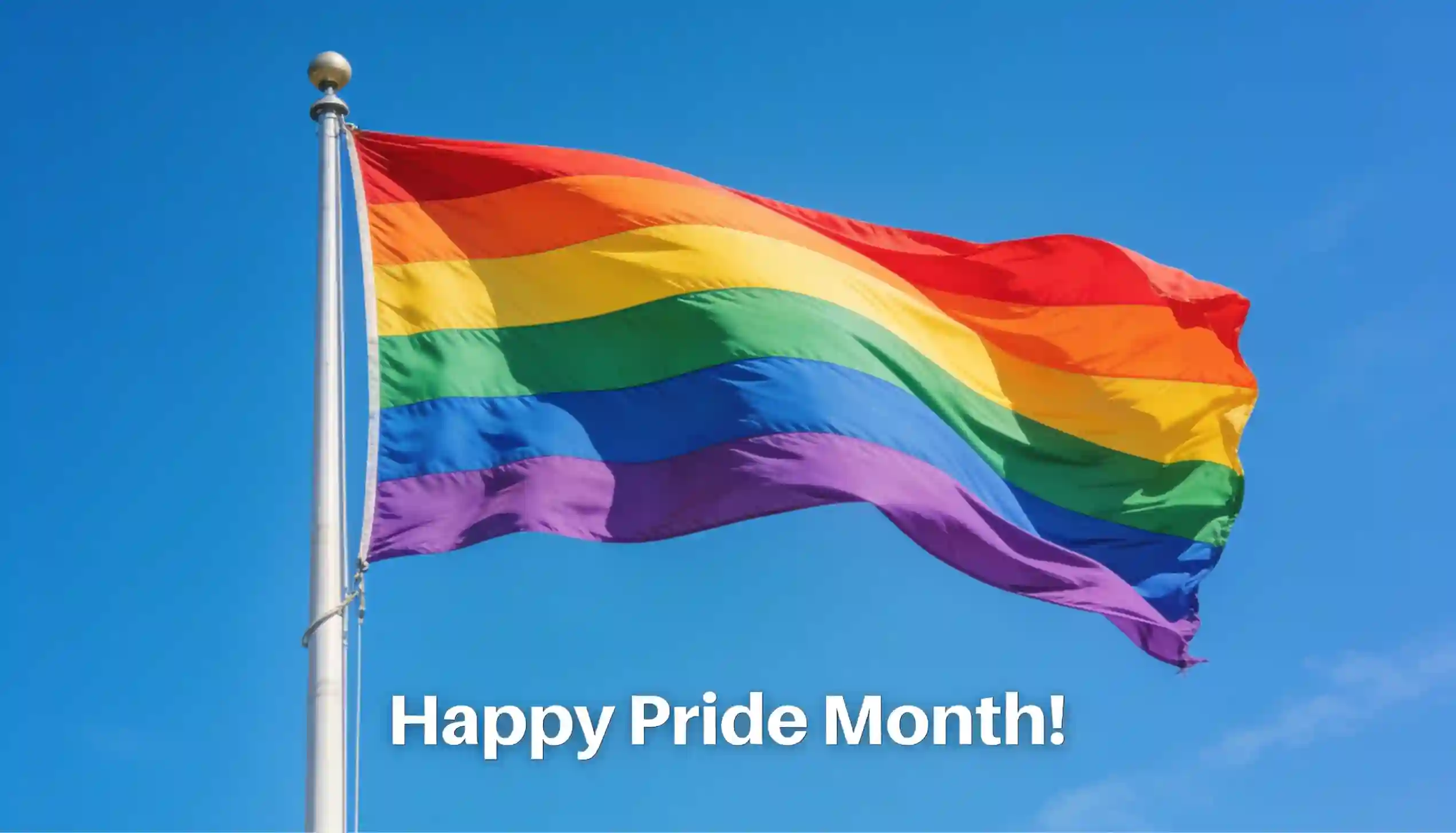
The rainbow flag
The six-stripe rainbow flag is the most iconic Pride symbol, designed by artist Gilbert Baker in 1978. Each color has meaning.
- Red: Represents life and the vitality of the community.
- Orange: Symbolizes healing from past trauma and discrimination.
- Yellow: Stands for the sun and hope for the future.
- Green: Represents nature and natural human diversity.
- Blue: Symbolizes harmony and peace within the community.
- Purple: Represents the spirit and pride of being LGBTQ+.
It’s become the universal symbol of LGBTQ+ pride, and you’ll see it everywhere during June.
Pride parades
This is the main event. Thousands of people march through city streets in celebration, protest, and joy all at once.
Parades started as political demonstrations and evolved into massive community gatherings.
They’re loud, colorful, and unapologetic, exactly what Pride is supposed to be.
Key traditions
Pride Month has rituals that happen year after year. These moments create connection, honor history, and make Pride what it is.
- Drag performances: Drag artists perform with creativity and humor, entertaining crowds and pushing boundaries.
- Community gatherings: Block parties and festivals bring queer folks and allies together to celebrate as one.
- Remembrance ceremonies: Pride includes solemn moments to honor those lost to AIDS, violence, and discrimination.
- Ally participation: Supporters march alongside the community to show solidarity.
- Visibility and coming out: Pride creates safe spaces where people feel empowered to be open.
Can non-lgbtq+ people participate in pride month?
Yes, absolutely. Straight and cisgender people can join Pride too, it’s called being an ally.
Allies support the LGBTQ+ community and help fight for equal rights. You can march, celebrate, and cheer alongside queer folks.
But Pride exists for the LGBTQ+ community first. It’s their space to be seen and celebrated.
If you’re an ally, come to support, not to be the main focus. Show up, listen, and help make sure everyone feels safe and proud.
End note!
Pride isn’t just something to observe. It’s a movement you can be part of.
Whether you’re LGBTQ+ or an ally, June is your chance to celebrate identity, honor history, and stand up for equality.
So this June, don’t just watch from the sidelines, get involved, learn more and show support.
Pride Month reminds us that visibility and acceptance aren’t luxuries they’re rights worth fighting for, every single day.
Frequently asked questions (FAQs)
1. Which gender has more bisexuals?
Bisexuality exists across all genders. Studies suggest bisexual identity is reported similarly, though more research is needed for accurate data.
2. What state has the fewest gays?
There’s no reliable data ranking states by LGBTQ+ population. People live everywhere. Rural and urban areas both have thriving queer communities.
3. At what age do most lesbians come out?
Coming out ages vary widely. Some people come out in their teens, others in adulthood, and some never do. There’s no single “most common” age.