


No two vaginas look the same. And yet somehow, most people grow up thinking there is one version that is normal and everything else is a question mark.
There is not. Innie and outie vagina is just anatomy. Nothing more, nothing less.
Whether your labia sit tucked in or extend outward, both are completely normal, incredibly common, and not something that needs fixing, hiding, or explaining.
This is just your body. And your body has never needed a disclaimer.
Vulva vs. vagina
Most people use the word vagina to describe everything down there. But technically, the vagina is the internal canal that connects the uterus to the outside. You cannot see it from the outside.
What you can see is the vulva. That includes the labia majora, the outer lips.
The labia minora, the inner lips. The clitoris is the nerve-rich tip at the top of the vulva. And the vestibule, the area around the vaginal opening.
When people talk about innie and outie vaginas, they are actually describing the labia. Specifically, how much the labia minora sit inside or extend beyond the labia majora.
Same body. Just different vocabulary. And knowing the difference matters more than most people realize.
What is an innie vagina?
An innie vagina is when the labia minora, the inner lips, sit tucked inside the labia majora, the outer lips.
From the outside, the vulva looks relatively smooth and closed.
Innie vaginas are often what gets portrayed in mainstream media and textbooks, which is part of why so many people assume it is the default. It is common, yes. But common does not mean it is the only normal.
Innie vaginas come in different sizes, shades, and shapes too. No two look exactly alike, even within the same category. And that is completely fine.
What is an outie vagina?
An outie vagina is when the labia minora extend beyond the labia majora.
The inner lips are visible from the outside and can vary in size, shape, and extent.
Some are slightly prominent. Some are more noticeable. All of it is normal.
Outie vaginas are incredibly common and just as natural as innies. The reason they are often treated as unusual comes down to representation, not reality.
When one type gets shown more, everything else starts to feel like an exception. It is not. An outie is not a flaw. It is just anatomy doing what anatomy does.
Visual and descriptive differences between innie and outie vaginas
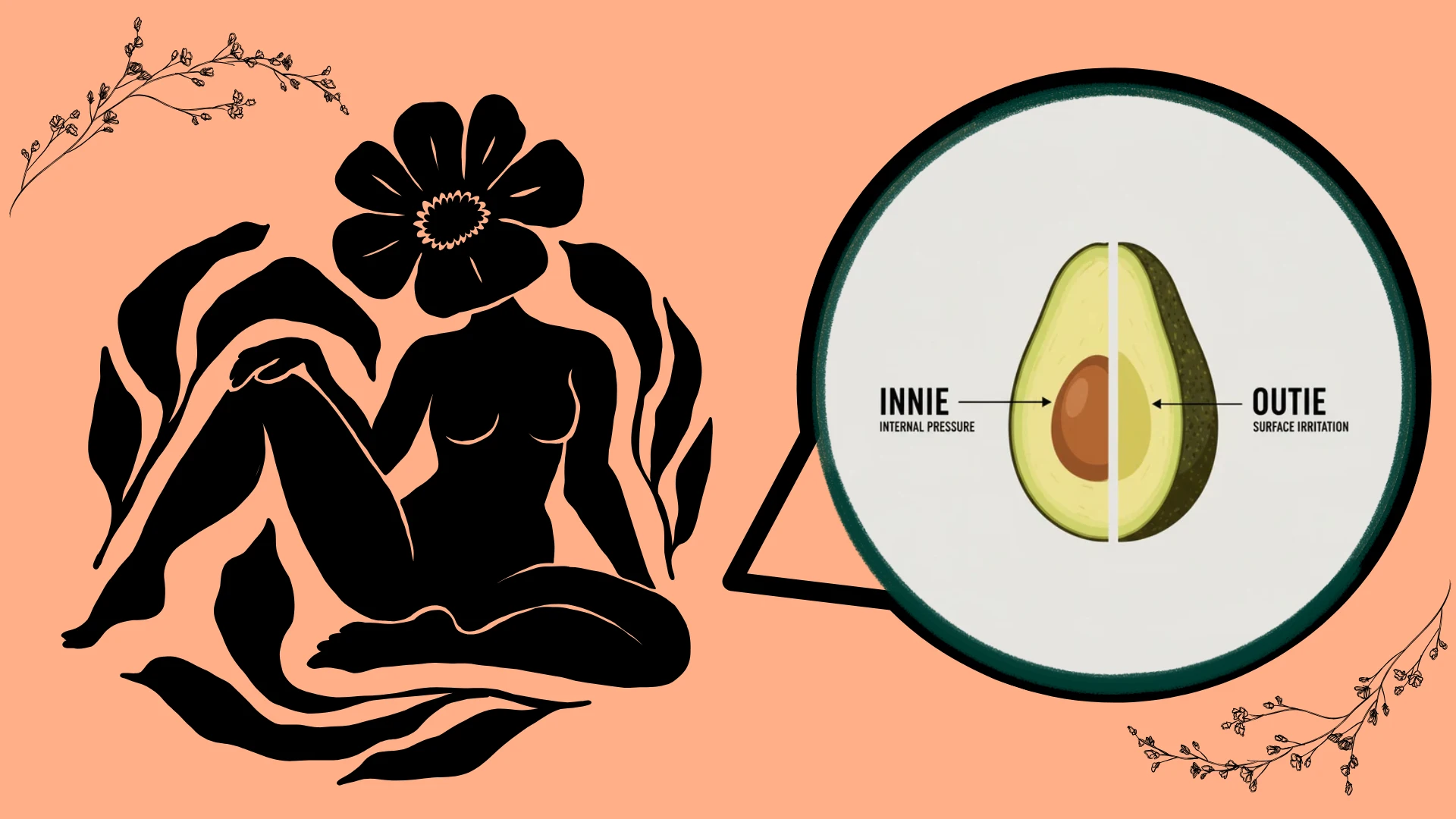
The difference between an innie and an outie comes down to one thing. Where the labia minora sit in relation to the labia majora.
Everything else is just variation within that.
1. Labia structure
The labia minora can range from very small and tucked in to longer, wider, and more prominent. They can be symmetrical or uneven. Smooth or slightly ruffled at the edges.
Lighter or darker in color than the surrounding skin. None of these differences indicate anything about health, hygiene, or normalcy.
That is just the natural range. Nothing about it needs explaining or apologizing for.
Labia can also change in appearance over time due to hormonal shifts, pregnancy, aging, and weight changes. What you see at 20 may look slightly different at 40. Both are normal.
2. Sensory and functional aspects
An innie and an outie function in exactly the same way. There is no difference in sensitivity, sexual function, lubrication, or fertility based on how the labia sit.
The clitoris, which is the primary source of pleasure for most people, is present in all vulvas regardless of labia type. How it looks has nothing to do with how it works or how it feels. Some people do experience ovary pain after sex, which is unrelated to labia type and has its own distinct causes worth understanding separately.
A 2005 study published in BJOG found that labia minora length ranges from 20 mm to 100 mm in healthy women, with no functional differences. What you see in the media is a fraction of that range.
If you ever feel discomfort during physical activity or intimacy that you think is related to labia size, that is worth discussing with a gynecologist. It is a medical conversation, not an aesthetic one.
3. Variation and normalcy
There is no standard vulva. The range of what is normal is far wider than most people are taught.
Labia minora can measure anywhere from less than one centimeter to over five centimeters.
Color varies. Texture varies. Symmetry is neither guaranteed nor required.
Every single variation within that range is healthy, natural, and valid. That is not anatomy talking. That is culture. And culture gets this one wrong.
If you have concerns about changes in your vulva that feel sudden or unusual, like unexpected swelling, pain, or discharge, those are worth checking with a doctor. Anatomy is normal. Sudden changes sometimes need attention.
How common are innies and outies?
Most people have never seen accurate data on this. And that gap is exactly where the anxiety comes from. Here is what the research actually shows.
- A Journal of Sexual Medicine study found that labia minora length ranges from 20 mm to 100 mm in healthy women
- Lloyd et al. found that approximately 56 percent of women have visible labia minora extending beyond the labia majora
- A 2004 BJOG study confirmed that labia minora width ranges from 7 mm to 50 mm across healthy individuals
- Asymmetry between the left and right labia is common and considered a normal anatomical finding
There is no dominant type. Innies and outies are both widely represented across all body types, ages, and ethnicities.
Most vulvas fall somewhere on a spectrum, and that spectrum is wider than most medical textbooks bother to show.
Innie vs outie vagina: does type affect function or sensation?
Labia exist to protect the vaginal opening and the urethra from bacteria, friction, and irritation.
They do that job regardless of whether they sit tucked in or extend outward. Size and shape do not change that function at all.
Sexual sensation comes primarily from the clitoris and the thousands of nerve endings in the surrounding tissue, not from labia type or size. An outie is not more or less sensitive than an innie. That said, some people do experience clitoral nerve pain regardless of vulvar type, which is a separate issue from anatomy and worth addressing if it comes up.
Neither type predicts pleasure, comfort, or sexual experience in any way.
Your vulva is not performing better or worse based on how it looks. What happens on the outside has no bearing on what happens on the inside.
Anatomy and experience are two completely separate conversations.
If you want to go deeper on vulva anatomy, the Royal Berkshire Hospital put together a clear and straightforward read worth bookmarking.
Frequently asked questions
1. Is it normal to have an outie vagina?
Yes, completely. Research shows the majority of women have visible labia minora, making outies one of the most common anatomical variations, not an exception.
2. Can you change from an innie to an outie over time?
Yes, labia can change in appearance due to hormonal shifts, pregnancy, aging, and weight changes, and that is a completely normal part of how bodies evolve.
3. Does having an outie vagina affect sexual pleasure?
No, sexual sensation comes primarily from the clitoris and surrounding nerve endings, not from labia type, so neither an innie nor an outie has any advantage over the other.
4. Why does my vagina look different from what i see online?
Because most media only represent one type. The actual range of normal vulva appearances is far wider than what gets shown, and what you see online is rarely an accurate reflection of reality.
5. Should I be worried if one side of my labia is bigger than the other?
No, asymmetry between the left and right labia is extremely common and considered a completely normal anatomical finding with no impact on health or function.





One Response