

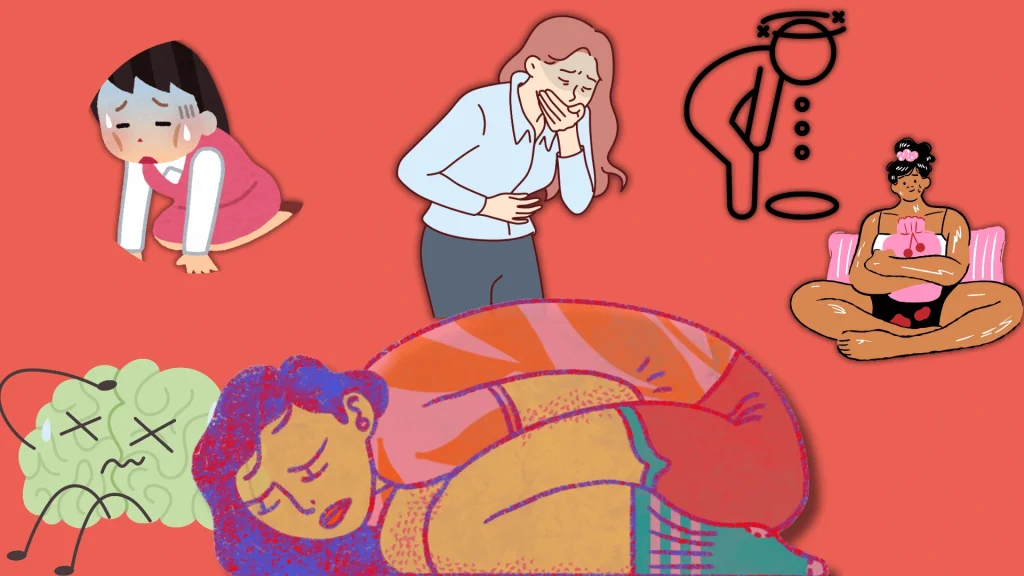
If you’ve ever spent the first day of your period hunched over a toilet wondering what’s happening, you’re not imagining it — and you’re not alone.
Period-related vomiting has a clear physiological explanation: it comes down to prostaglandins and hormone shifts, and for some people, they hit hard enough to make functioning normally feel impossible.
This article covers why it happens, what makes it worse, and what actually helps.
What’s actually happening in your body
Period-related vomiting is not random. A few different biological mechanisms tend to overlap, and for some people, all of them hit at once.
How estrogen and progesterone drive nausea
Estrogen and progesterone shift sharply in the days leading up to and during your period.
Estrogen has a direct influence on the chemoreceptor trigger zone, the part of the brain that controls nausea.
When it drops suddenly around menstruation, some people experience the same kind of queasiness linked to early pregnancy or hormonal contraceptives.
Progesterone adds to this by slowing gastric motility, meaning food moves through the digestive system more slowly, which compounds the nausea.
Sensitivity to these hormonal shifts varies considerably between individuals, which is why one person gets mildly queasy and another can’t keep food down.
Prostaglandins at work
Prostaglandins are lipid compounds that the uterus produces to trigger contractions that shed the uterine lining. They don’t stay confined to the uterus.
When prostaglandin levels are high, these compounds enter the bloodstream and affect smooth muscle tissue elsewhere, including the stomach and bowel.
This is why period nausea often arrives alongside cramping.
High prostaglandin levels cause more intense uterine contractions, and those same chemicals can trigger loose stools, stomach upset, and vomiting.
People with more painful periods tend to produce more prostaglandins, which is why their symptoms are often more severe.
Linked symptoms
Nausea during your period rarely arrives alone.
Menstrual migraines, triggered by the same estrogen drop, come with their own nausea. Fatigue changes how the body processes sensation, making you more sensitive to smells, motion, and general discomfort.
That heightened sensitivity can push borderline nausea over the edge into vomiting.
If you’re treating cramps but ignoring a migraine that’s running alongside them, you’re only solving part of the problem.
Common symptoms associated with vomiting during periods
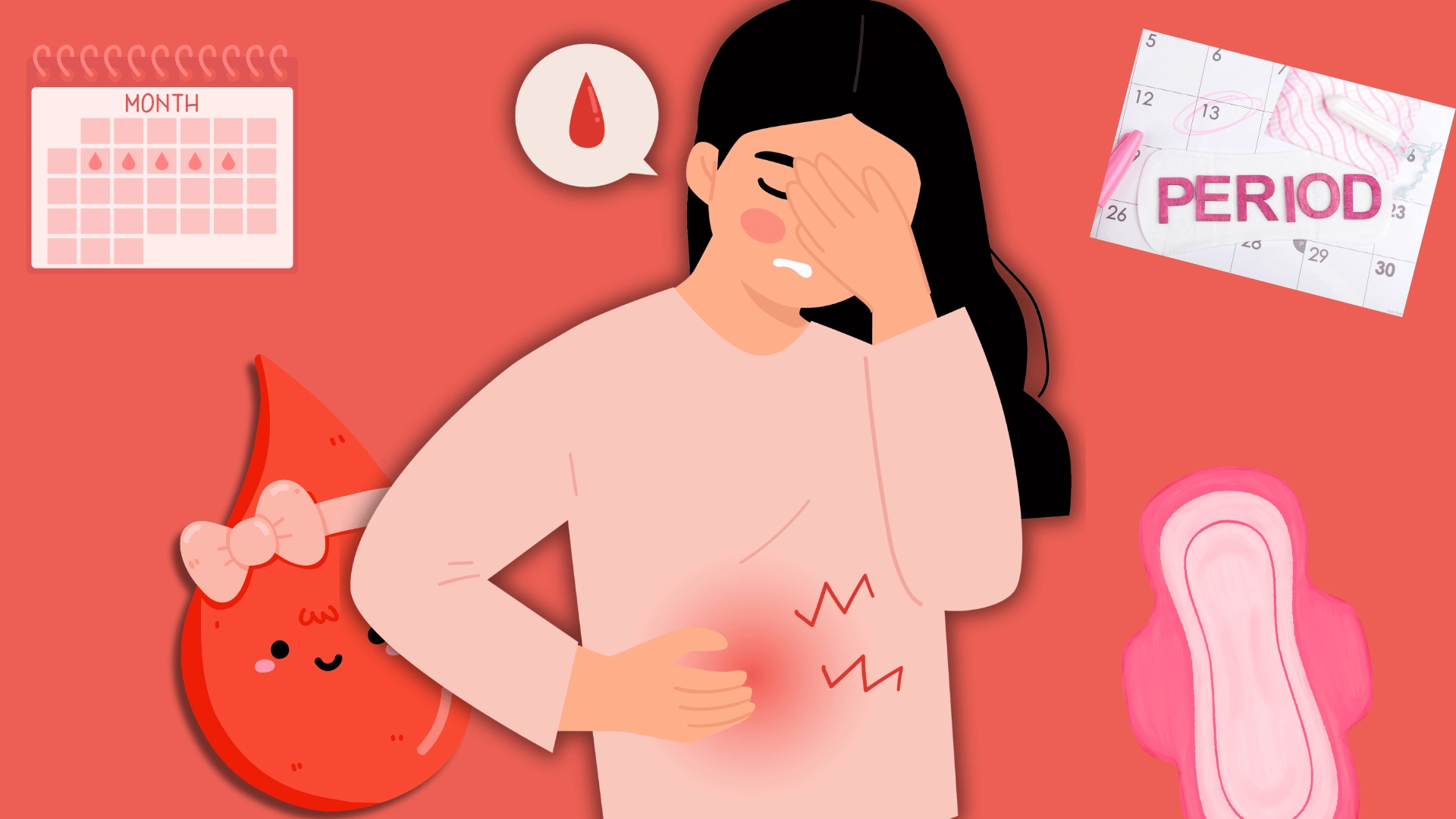
Knowing what’s typical makes it easier to spot when something needs more attention.
Nausea before and during menstruation
Nausea can start a day or two before bleeding begins, during the late luteal phase when prostaglandins are rising, and estrogen is falling.
For most people, it peaks on the first day of flow and eases off by day two or three as the hormonal picture stabilizes.
If your nausea consistently starts several days before bleeding begins rather than at the onset of your period, that pattern fits more closely with PMS or PMDD than prostaglandin activity.
The distinction matters because the treatment approach is different.
Stomach cramps and digestive disturbances
Because prostaglandins affect gut motility broadly, it’s common to experience a range of gastrointestinal symptoms alongside nausea: loose stools, bloating, and cramping that can be hard to distinguish from uterine pain.
Some people describe this as feeling like a stomach bug, which is clinically accurate in that the mechanism is similar, even if the cause is different.
Headaches, fatigue, and hormonal mood swings
Menstrual migraines are tied to the estrogen drop around menstruation and tend to be more severe and longer-lasting than regular headaches.
Combined with the fatigue that typically accompanies heavy or painful periods, the sensory load can be enough to bring on vomiting even when nausea starts mildly.
Hormonal contraceptives are sometimes used to manage these symptoms, though it is worth understanding whether birth control causes anxiety before starting, since mood effects can add to the overall symptom burden rather than reduce it.
Mood shifts like irritability and low mood don’t directly cause nausea, but they raise the overall stress response, which has real downstream effects on gut sensitivity.
Who’s more likely to throw up during their period
Not everyone gets nauseous on their period. These are the factors that tend to predict who does.
Severe cramps (dysmenorrhea)
Primary dysmenorrhea, painful periods without an underlying condition, is directly linked to higher prostaglandin production.
The same mechanism that causes worse cramps causes more prostaglandins to spill into the bloodstream, which means more gastrointestinal symptoms, including nausea and vomiting.
Secondary dysmenorrhea, which is period pain caused by an underlying condition like endometriosis, follows a different pathway.
Some people with secondary dysmenorrhea also report ovarian pain after sex, which points to deeper pelvic involvement beyondstandard period cramping and warrants its own assessment. It produces similar nausea and GI symptoms through inflammation and nerve sensitization rather than prostaglandin overproduction alone.
In a clinical setting, the two are often difficult to distinguish on symptom alone — what tends to flag secondary dysmenorrhea is pain that doesn't respond to NSAIDs the way it should, or GI symptoms that are disproportionate to the reported flow.
Lifestyle factors
Arriving at your period already depleted makes everything worse. Skipping meals means there’s nothing to buffer stomach acid during a time when the gut is already irritable.
Dehydration, common during heavier flow days, lowers blood pressure, which on its own can trigger nausea even before hormones are factored in.
Chronic stress elevates cortisol, which disrupts gut motility and lowers the threshold for vomiting.
None of these causes vomiting periodically on their own, but they consistently make it more likely.
Underlying conditions
Endometriosis, PCOS, and PMDD all have documented associations with more severe menstrual symptoms, including nausea and vomiting.
Endometriosis, in particular when lesions are present on or near the bowel, can cause significant GI disruption that peaks during menstruation.
If you’re sexually active and experiencing nausea around what you think is your period, a pregnancy test is worth doing.
Early pregnancy nausea and period nausea can be difficult to distinguish by symptom alone.
Is it normal to throw up on your period?
Yes, with some qualification.
Nausea during menstruation is common and has a clear physiological explanation.
Occasional vomiting, particularly on the first day of a heavy or painful period, falls within the range of normal menstrual experience.
What isn’t typical is vomiting severe enough to cause dehydration, symptoms that last beyond the first two days, or pain that feels significantly worse than previous cycles. These warrant medical attention.
They can indicate prostaglandin levels high enough to suggest an underlying condition or something else going on entirely.
If it’s regularly stopping you from eating, working, or functioning normally, that’s not a baseline to accept.
It’s worth a proper conversation with a GP or gynaecologist.
Remedies and ways to reduce nausea during periods
There’s no single fix that works for everyone, but a combination of small adjustments often helps a lot.
Diet and hydration tips
Small, bland meals work better than skipping food entirely.
The goal is to keep something in your stomach without adding fat or fiber that slows digestion further. Plain rice, crackers, toast, and banana are reliable starting points.
Ginger has reasonable clinical support for nausea reduction. Ginger tea, capsules, or chews are practical options if you can tolerate them.
Staying hydrated matters more than most people expect. Sipping water or electrolyte drinks consistently throughout the day works better than trying to drink large amounts when you’re already nauseous.
Pain relief options
NSAIDs like ibuprofen and naproxen are the most evidence-backed option for period-related nausea because they target the underlying cause directly.
Both ACOG and RCOG recommend NSAIDs as the first-line treatment for primary dysmenorrhea.
Starting them at the first sign of menstruation, rather than waiting until symptoms peak, is consistently noted in clinical guidance as more effective than reactive use.
Paracetamol treats pain but does not affect prostaglandins, so it’s less useful specifically for prostaglandin-driven nausea and cramping.
NSAIDs are worth taking with food since some people find them irritating on an empty stomach.
Lifestyle adjustments
Heat applied to the lower abdomen genuinely helps.
It works differently from NSAIDs by relaxing muscle tissue and improving blood flow rather than suppressing prostaglandins, which means the two approaches target different parts of the problem and can be used alongside each other.
Light movement like a short walk or gentle stretching can help by encouraging circulation without overloading the body.
Reducing caffeine in the first day or two of your period is also worth trying, since caffeine can irritate the stomach and worsen dehydration.
When to see a doctor
See a doctor if any of the following apply:
- Vomiting is severe enough to prevent keeping food or water down
- Symptoms are significantly worse than in previous cycles
- Pain accompanies vomiting and is located anywhere other than the lower abdomen
- You have had unprotected sex and haven’t ruled out pregnancy
- Symptoms continue beyond the first two days of your period
Endometriosis and PMDD are significantly undertreated — not because they’re rare, but because people are often told their symptoms are normal when they’re not.
Severe period vomiting is not something you should just live with.
Conclusion
If you’ve been wondering why you throw up on your period, the short answer is prostaglandins and hormone shifts, usually working together.
It’s a physiological response, not an exaggerated one. For most people, it’s manageable with NSAIDs, hydration, small meals, and heat.
For some, it’s a sign of something that warrants a proper clinical look.
Tracking when in your cycle symptoms appear, how severe they are, and what helps is genuinely useful information for any doctor you see about it.
This article is for informational purposes only. If you’re experiencing severe or persistent symptoms, speak with your GP or gynaecologist. Don’t manage it alone.
Frequently ask questions
1. Can diet prevent vomiting during menstruation?
Small, bland meals and staying hydrated can reduce nausea severity, though diet alone won’t prevent it entirely.
2. Is vomiting a sign of pregnancy or a period?
Both cause nausea. A home pregnancy test is the simplest way to tell the difference.
3. Should I see a doctor for period-related vomiting?
Yes, if vomiting is severe, persistent, or regularly stops you from functioning normally each cycle.





One Response