

Have you ever come across the acronym LGBTQIAPK and felt unsure about what every letter actually stands for? You are not alone.
As conversations around gender and identity have grown more open, the acronym has also grown to include more communities.
Understanding what each letter means is a small but meaningful step toward being genuinely informed and respectful.
Let’s unpack the LGBTQIAPK letter by letter, in simple, easy-to-follow language.
What does LGBTQIAPK stand for?
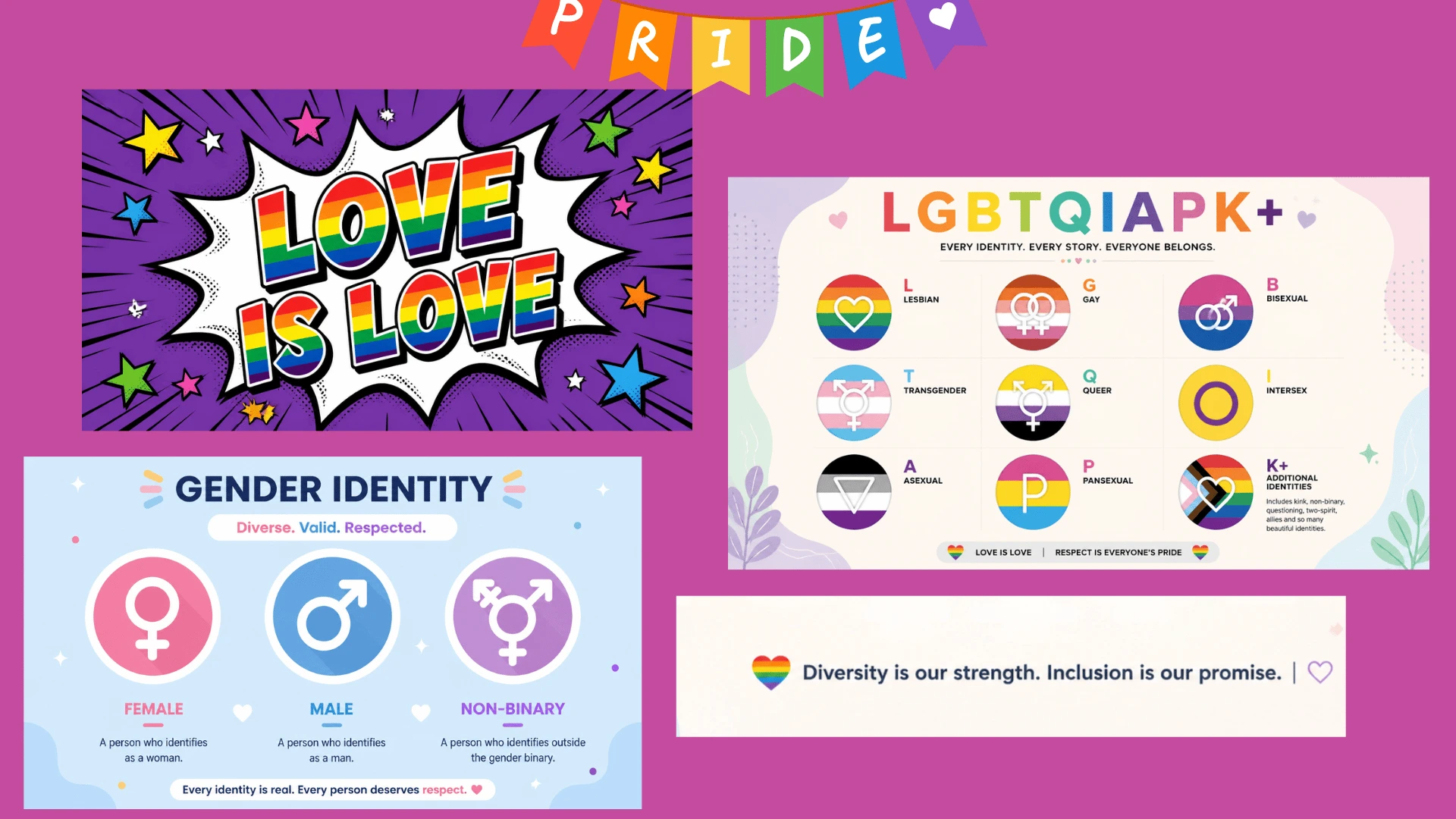
LGBTQIAPK stands for:
- L – Lesbian
- G – Gay
- B – Bisexual
- T – Transgender
- Q – Queer (or Questioning)
- I – Intersex
- A – Asexual (or Aromantic, or sometimes Ally)
- P – Pansexual (or Polyamorous)
- K – Kink
It is an expanded acronym that represents a wide range of sexual orientations, gender identities, and communities.
Each letter stands for a distinct group or identity.
The original acronym, LGB, dates back to the late 1970s and early 1980s. Over the decades, more letters were added as communities pushed for better representation.
The current form reflects that effort to be more inclusive rather than leaving any group unnamed or overlooked.
It is worth noting that not every version of the acronym includes all these letters.
You may see LGBT, LGBTQ, LGBTQ+, or other variations depending on the context or organization using it. The “+” in shorter versions is meant to acknowledge identities that are not spelled out explicitly.
Letter-by-letter breakdown
L: Lesbian
A lesbian is a woman who is emotionally, romantically, or sexually attracted to other women. The term applies to both cisgender and transgender women.
The word “lesbian” has roots in the Greek island of Lesbos, historically associated with the poet Sappho, whose work described love between women.
Today, it is widely used and self-identified by many women in the community.
Some women prefer to use the broader term “queer” instead, and that is a personal choice. There is no single way someone must identify within the spectrum.
G: Gay
“Gay” most commonly refers to men who are attracted to other men, though the term is sometimes used as an umbrella word for the broader LGBTQIAPK community.
Context usually makes it clear which meaning is intended.
Historically, “gay” was used across genders. Over time, it has become more associated with men, while women often prefer “lesbian” as a more specific term.
Some nonbinary individuals also identify as gay.
B: Bisexual
“Bisexual” refers to someone who experiences attraction to more than one gender.
A common misconception is that bisexuality means equal attraction to men and women, or that it only applies to people who are cisgender. Neither is accurate.
Attraction for bisexual people can vary in intensity and is not fixed. Someone can be predominantly attracted to one gender and still identify as bisexual.
The Bisexual Resource Center (BRC), a nonprofit that has supported the bisexual community since 1985, describes bisexuality as attraction to people of the same gender and other genders, with no requirement for equal or constant attraction.
Another myth worth addressing is “bisexual erasure,” the tendency to dismiss or invalidate bisexual identities, particularly when someone is in a relationship that appears straight or gay.
Bisexuality does not disappear based on who someone is currently dating.
T: Transgender
“Transgender,” or “trans,” is an umbrella term for people whose gender identity differs from the sex they were assigned at birth.
For example, someone assigned male at birth who identifies as a woman is a transgender woman.
Being transgender is about gender identity, not sexual orientation.
A transgender person can be straight, gay, bisexual, or any other orientation. This is one of the most common points of confusion, and it is important to keep the two distinct.
Gender dysphoria, the distress some trans people feel about the mismatch between their identity and assigned sex, is recognized by major medical organizations, including the American Psychiatric Association.
Medical transition, such as hormone therapy or surgery, is one option some trans people pursue, but not all do, and that does not make their identity any less valid.
Q: Queer
“Queer” was historically used as a slur against LGBTQIAPK people.
Over time, many within the community reclaimed it as a positive, self-chosen identity. Today, it is widely used as both a personal identity and an inclusive umbrella term.
For some people, “queer” feels more fitting than any specific label because it does not box in a fixed identity. It can describe sexual orientation, gender identity, or both.
That said, context still matters. The word carries a painful history for older generations who experienced it as an attack.
Using it respectfully means following the lead of the person you are talking about and never applying it to someone who has not used it for themselves.
I: Intersex
“Intersex” refers to people born with physical sex characteristics, such as chromosomes, hormones, or anatomy, that do not fit typical definitions of male or female.
This can be visible at birth or may not become apparent until puberty or later.
Intersex variations occur in an estimated 1.7 percent of the population, roughly comparable to the number of people born with red hair.
Despite this, intersex people are frequently misunderstood or conflated with being transgender.
Being intersex is a biological reality, not a gender identity or sexual orientation. Many intersex people identify with the sex they were raised as. Others do not.
Intersex advocacy organizations have increasingly focused on ending medically unnecessary surgeries performed on intersex infants without their consent, a significant human rights concern.
A: Asexual or Ally
The “A” in LGBTQIAPK can stand for two different things depending on the context: asexual and ally.
“Asexual,” often shortened to “ace,” refers to people who experience little or no sexual attraction to others. This does not mean they are incapable of romantic relationships.
Many asexual people have meaningful romantic partnerships.
The asexual spectrum also includes terms like demisexual, for those who only experience attraction after forming a strong emotional bond, and graysexual, for those who experience attraction rarely or under specific circumstances.
An ally, by contrast, is not a member of the LGBTQIAPK community by identity.
An ally is someone who supports and advocates for the rights and dignity of LGBTQIAPK people.
Including “ally” in the acronym has been debated within the community, with some feeling the letter should represent identity rather than support.
P: Pansexual
“Pansexual” refers to someone who experiences attraction to people regardless of their gender.
The key distinction from bisexuality is that pansexuality explicitly includes attraction to nonbinary, genderfluid, and all other gender identities, not just binary genders.
The prefix “pan” comes from the Greek word meaning “all,” which reflects the idea that gender is not a limiting factor in attraction.
Pansexuality and bisexuality sometimes overlap in how people use them. Some people use both labels for themselves. Others feel one fits them better than the other.
There is no conflict between the two; they are different ways of describing attraction that may resonate differently with different people.
K: Kink
The “K” in LGBTQIAPK stands for kink, which refers to sexual practices, interests, or dynamics that fall outside of conventional norms.
This can include a wide range of activities and communities organized around consensual, negotiated sexual expression.
The inclusion of “kink” in the acronym has been one of the more debated additions.
Supporters argue that kink-inclusive communities have long been intertwined with LGBTQIAPK history and advocacy, particularly in spaces like leather and BDSM communities that were visible in early queer activism.
Critics argue that kink represents behavior rather than identity and that its inclusion conflates sexuality with sexual practice in ways that can complicate how the community is perceived publicly.
Both perspectives exist within the community, and this remains an ongoing conversation rather than a settled matter.
Common misconceptions about LGBTQIAPK
There are several misunderstandings that come up repeatedly when people first encounter this acronym.
Myth 1: Every letter refers to a sexual orientation
Not true. Some letters, like T for transgender and I for intersex, refer to gender identity and biological sex characteristics, not who someone is attracted to.
Myth 2: “Queer” is always offensive
The word has a painful history, but many people reclaim and use it with pride.
Whether it is offensive depends entirely on who is using it, how, and to whom. It should never be applied to someone who hasn’t used it for themselves.
Myth 3: Intersex and transgender mean the same thing
They are completely different. “Intersex” refers to biological sex characteristics present at birth.
“Transgender” refers to a person’s internal sense of gender identity. A person can be intersex without being transgender, and vice versa.
Myth 4: Bisexual people are confused or “going through a phase.”
Bisexuality is a valid, stable identity.
Research consistently shows that bisexual individuals make up a significant portion of the LGBTQIAPK community, though they often face stigma from both heterosexual and gay or lesbian communities.
Myth 5: Asexual people do not have relationships
Many asexual people have deeply fulfilling romantic relationships.
Sexual attraction and romantic attraction are separate things, and asexual people experience the latter just as anyone else might.
Conclusion
The LGBTQIAPK meaning goes well beyond a string of letters. Each one represents real people with distinct identities, histories, and communities.
Getting familiar with what each letter stands for is a practical starting point for more informed, respectful conversations.
You do not have to memorize everything at once.
Even knowing the basics, like understanding that gender identity and sexual orientation are not the same thing, can make a meaningful difference in how you engage with the people around you.
Frequently Asked Questions (FAQ’s)
1. Can the letters in LGBTQIAPK change over time?
Yes. Acronyms like LGBTQIAPK evolve as society recognizes more identities. New letters may be added to reflect growing awareness and inclusivity.
2. Is it okay to ask someone what their letter in LGBTQIAPK is?
It can be respectful if done politely and in the right context. Always prioritize listening and avoid making assumptions about someone’s identity.
3. Do all communities use the full LGBTQIAPK acronym?
Not always. Some spaces use shorter versions like LGBTQ+ or LGBTQIA. The full acronym is mainly used to highlight inclusivity of every identity, but usage varies by community and region.