

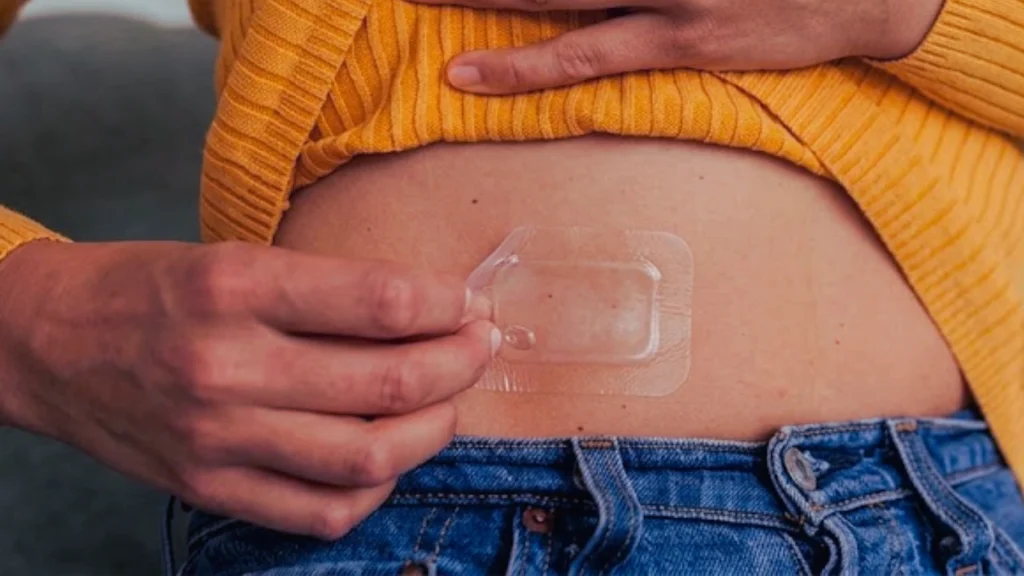
If you’ve just been prescribed an estradiol patch, the placement question comes up quickly.
Lower belly, outer thigh, upper arm – the options feel arbitrary until you understand what the patch actually needs from your skin.
Placement matters for absorption.
Put it in the wrong spot – over a scar, near the waistband, on skin that moves constantly, and the patch lifts, the seal breaks, and the dose becomes inconsistent.
Placement guidance here is general. Your prescription leaflet and prescriber are the primary reference; brands vary, and some approved sites differ by formulation.
Where should you put an estrogen patch? Quick answer
Estrogen patches go on clean, dry, hairless skin, ideally on your lower abdomen, lower back, buttocks, or upper arm/thigh (depending on your specific patch type and your doctor’s instructions).
Below the waistline is usually best.
Estradiol patches are designed for areas with consistent skin thickness and good blood flow.
But please avoid placing it on your breasts, waistband areas, oily skin, or anywhere irritated or broken. Always follow your prescriber’s specific instructions.
Also, rotate your site with every new patch. The same spot repeatedly can cause skin irritation and reduce absorption over time.
How an estrogen patch helps
Think of your estrogen patch as a slow-release superhero without any pills or injections, just a small adhesive patch.
Each patch contains estradiol, a form of estrogen your body already knows. It’s suspended in a gel or adhesive layer, which will be absorbed the moment it touches your skin.
But how does it enter your body?
Once applied, estradiol travels through a process called transdermal absorption.
Step 1 – The adhesive layer bonds to your skin’s surface, creating a sealed delivery zone.
Step 2 – The hormone slowly diffuses through the outer skin layer (the epidermis) and into the dermis below.
Step 3 – Tiny blood vessels (capillaries) just beneath the skin pick up the estradiol and carry it into your bloodstream.
Step 4 – From there, it circulates through your body, reaching your brain, bones, heart, and everywhere else that benefits from estrogen.
This same delivery principle is why certain prenatal vitamins takenoutside of pregnancy can also affecthormone-related systems in ways that are worth understanding before use.
5 best estrogen patch placements
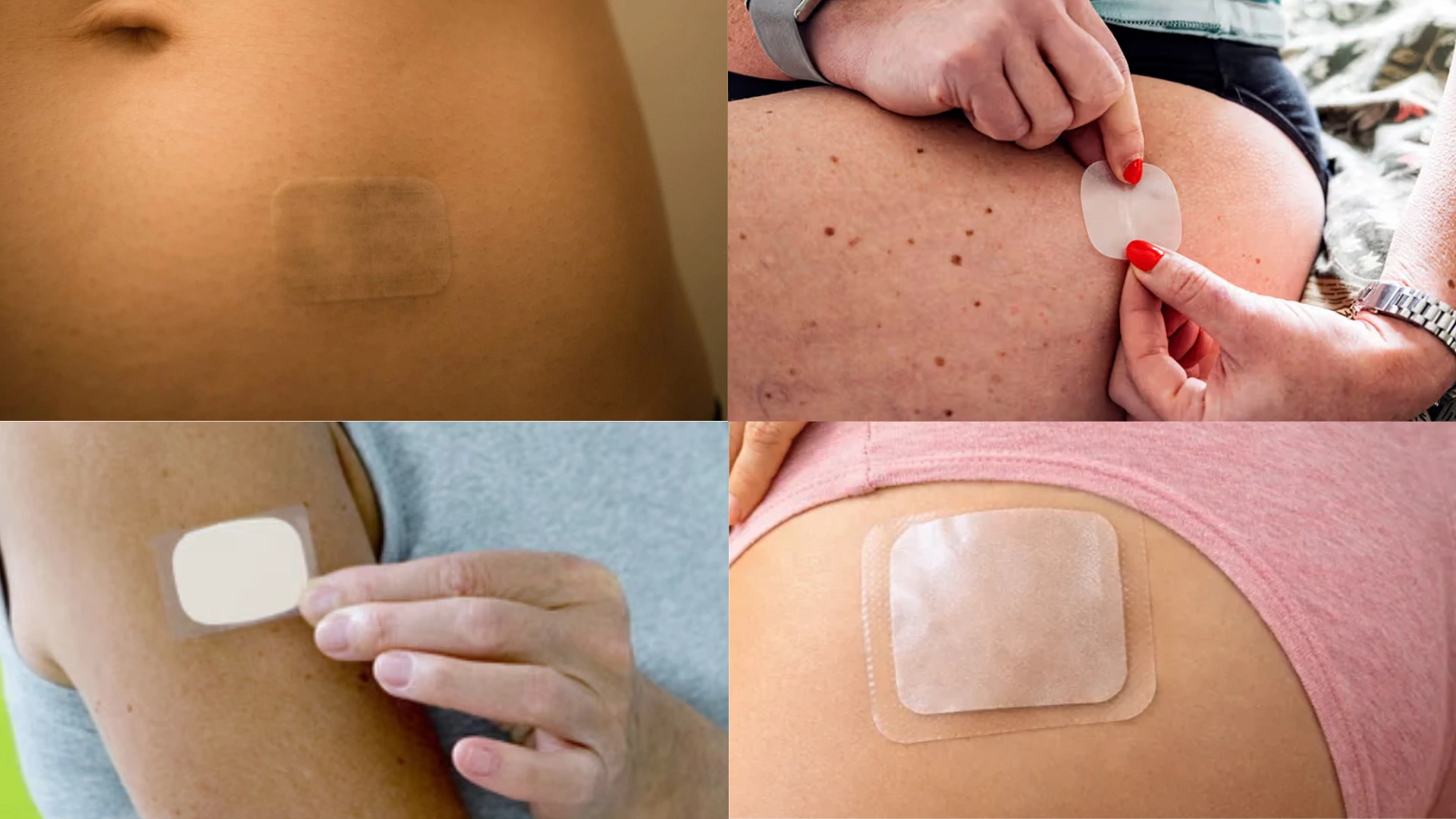
The best spots for your estrogen patch should be relatively hairless, have consistent skin thickness, good blood flow, and low friction from clothing or movement.
1. Lower abdomen
This is the most recommended site.
The skin on your lower belly is thin enough to allow steady absorption, flat (which helps the patch stay sealed and in contact with your skin), and easy to check and reapply.
Use it anywhere below your belly button and above the pubic hairline.
Stay at least an inch away from your waistband to avoid friction that could peel the patch loose.
2. Lower back
The lower back is a go-to option, especially if your abdomen is more sensitive or if you prefer to rotate away from the front of your body.
The skin here is smooth, stays covered by clothing, and is less exposed to friction throughout the day.
But it can be harder to apply on your own.
Use a mirror or a trusted person who can do it for you.
3. Buttocks
The upper outer area of the buttocks is another well-supported placement site for estradiol patches. The skin is smooth, well-padded, and holds patches securely.
Avoid areas that bend when you sit, as repeated movement can lift the edges and reduce contact with your skin.
4. Upper outer thigh
Some patch brands are approved for thigh placement, though not all.
Check your prescription leaflet before using this site.
The upper outer thigh has consistent skin, and it’s for people who find abdominal or back placement uncomfortable.
Avoid the inner thigh entirely, as friction from walking can quickly dislodge the patch.
5. Upper arm (Brand dependent)
Some formulations are approved for upper arm use – yours may not be, so confirm with your prescription leaflet before using this site.
If it is approved, the outer upper arm is easy to reach and apply alone.
That said, the arm sees more movement than lower-body sites, so press firmly along all edges after application.
How long does it take to work?
The patch doesn’t flood your system all at once.
It releases estradiol gradually and steadily, reaching stable levels in your blood within 24-48 hours of first application.
This steady-release approach is also why patches are commonly prescribed during perimenopause and menopause, when hormone levels shift unpredictably, and consistency matters most.
Most patches are designed to last 3-4 days, with some lasting a full 7 days (check your prescription).
How to apply an estrogen patch: Step-by-step
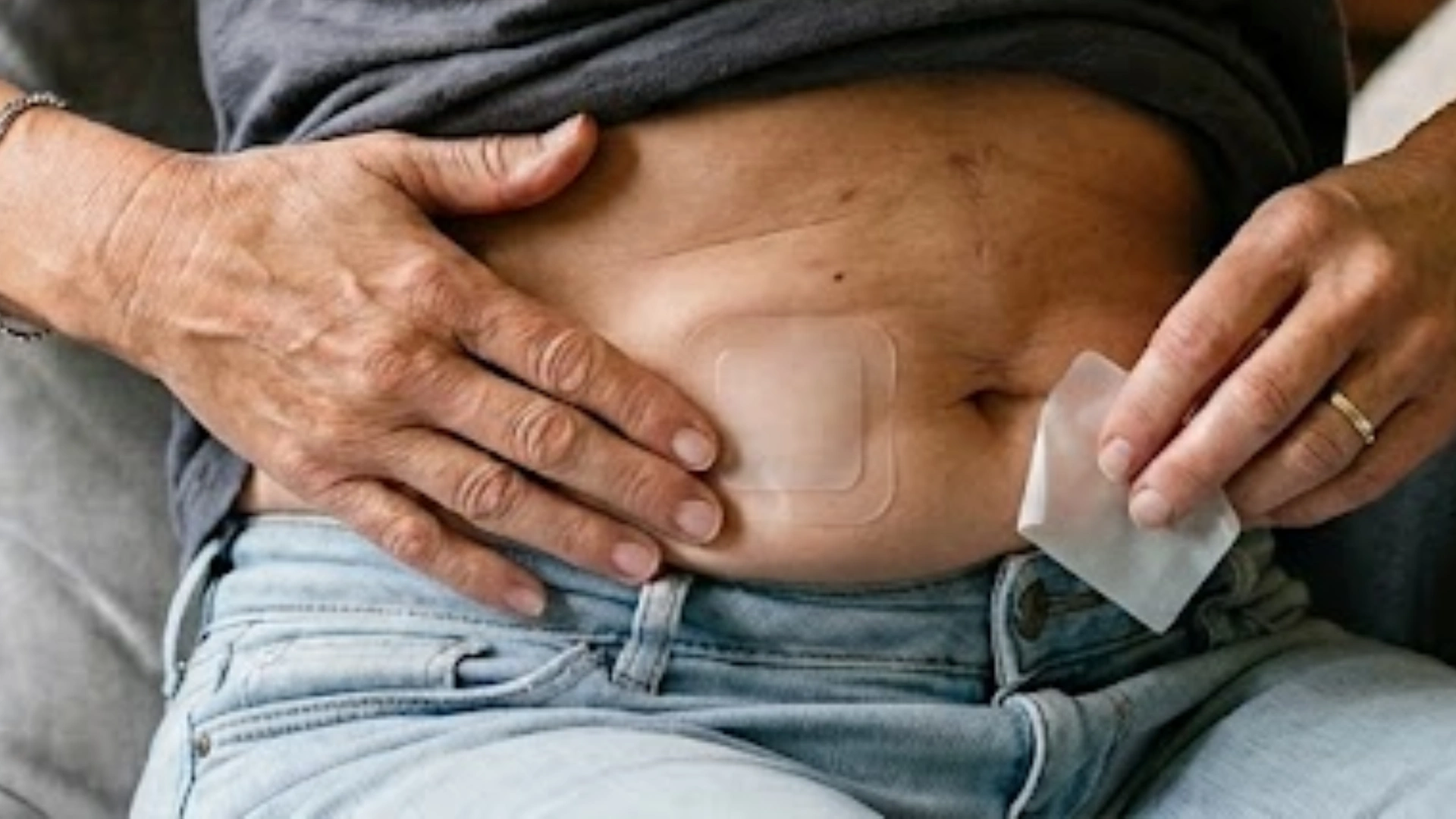
The whole process takes under two minutes.
Step 1: Clean and dry the site
Before anything touches your skin, clean the application site with mild soap and warm water. Rinse thoroughly and then pat the area completely dry.
Oils, lotions, sweat, and residue from previous patches all create a barrier between the adhesive and your skin.
This weakens the seal and slows absorption.
Give the area a full minute to air-dry after patting, if you can.
Step 2: Choose your rotation site
Before you open the patch, decide where to place it.
If this is not your first application, it should be a different spot from your last one. Refer to your rotation plan and pick your next site.
Having this decided before you open the packaging keeps the process clean and quick.
Step 3: Open the packaging carefully
Tear open the pouch along the notched edge.
Avoid using scissors directly near the patch itself since nicking the patch can affect how it releases estradiol. Take the patch out and hold it by the edges.
Minimal contact with the adhesive side is better.
Step 4: Peel the liner away
Most patches have a two-part protective liner.
Fold the patch in half gently, and peel back one side of the liner, then the other. Some patches have a single liner that peels away in one motion.
Don’t let the adhesive side fold onto itself as you peel.
And if that happens, do not try to separate it. Use a new patch instead.
Step 5: Apply and press firmly
Place the sticky side directly onto your chosen skin site. Press down firmly with the palm of your hand for at least 30 seconds.
Work your way around the edges with your fingertips, making sure there are no air pockets.
Step 6: Wash your hands after application
Wash your hands with soap and water straight after applying.
Estradiol transfers via skin-to-skin contact. This matters particularly around children and pregnant people. [Source: FDA GOV]
Why skin and not a pill?
Great question. When you swallow an estrogen pill, it passes through your digestive system and liver first, which break a portion of it down before it even reaches your bloodstream.
The patch bypasses all of that.
It delivers estradiol directly into circulation.
Conclusion
Hormonal health is deeply personal, and knowing the details is important.
When in doubt, your prescriber or pharmacist is always your best resource for guidance specific to your body and your brand.
Stick with it. Rotate faithfully. Let me know in the comments how you do it!
Frequently asked questions (FAQs)
1. Does the estradiol patch cause weight gain?
It can cause minor fluid retention early on, but estradiol patches are not directly linked to weight gain.
2. What are the first signs of estrogen working?
People notice improved sleep, reduced hot flashes, and better mood within two to four weeks. Full effects on skin, energy, and libido take longer.
3. How long can you stay on estradiol patches?
Duration depends on your symptoms, health history, and risk profile.