


You’ve probably seen the word genderqueer pop up in conversations, on forms, maybe in someone’s bio.
And you’re not sure what it actually means.
This isn’t a label that fits neatly into a two-option system.
You’ll get a clear, honest explanation of what genderqueer means, their pronouns and the distinction between gender queer and nonbinary.
How do sex and gender differ?
Sex and gender are used all the time interchangeably, but they’re not the same thing.
Sex refers to biological characteristics: chromosomes, hormones, and reproductive anatomy.
Gender is something else entirely. It’s a social and psychological experience: how you identify, how you move through the world, how society categorizes you.
Sex is assigned at birth. Gender is something you live. And for a lot of people, the two don’t line up neatly, which is exactly why the distinction matters.
The difference is the foundation for understanding almost everything else on this site.
Genderqueer gender identities
Genderqueer isn’t a single fixed identity; it’s an umbrella term that encompasses a range of experiences.
Some people use it as a standalone label; others sit under it through more specific identities.
1. Agender
Agender means having no gender, or experiencing gender as completely absent. It’s not the same as being undecided or confused.
For agender people, gender simply isn’t part of how they experience themselves. Some also identify as genderless or gender-neutral.
It sits under the genderqueer umbrella but stands as its own distinct identity.
2. Bigender
Bigender describes experiencing two genders, either simultaneously or at different times.
Those two genders might be male and female, or they might include non-binary identities.
It’s about holding two genuine, distinct gender experiences. And for bigender people, both are equally real.
3. Pangender
Pangender refers to experiencing many genders, or a gender that encompasses a broad, expansive range.
It’s fluid and wide rather than fixed to specific points. Some pangender people experience their gender as a kind of wholeness that cuts across categories.
It’s worth noting the term is still debated in some community spaces.
4. Gender fluid
Gender fluid means your gender shifts across days, situations, or time.
You might feel more masculine on some days, more feminine on others, or somewhere outside both entirely. It’s not an inconsistency.
It’s a genuine experience of gender as something that moves. Gender fluidity can exist within the genderqueer umbrella or independently of it.
5. Androgynous
Androgynous describes a gender experience or expression that blends or sits between masculine and feminine.
Some androgynous people identify with both, some with neither. It’s one of the older terms in this space and shows up in gender expression as much as identity.
The two aren’t always the same thing.
6. Neutrois
Neutrois is a neutral or null gender identity.
People who identify as neutrois often describe their gender as absent, neutral, or neither male nor female, similar to agender in some ways, but with its own distinct community and history.
For many, it comes with a desire to present in a way that feels gender-neutral or without gender markers.
7. Demigender
Demigender means partially identifying with one gender, but not fully.
The most common forms are demiboy and demigirl, but demigender identities aren’t limited to the binary.
The “demi” part signals a partial connection, not a halfway point between two things, but a genuine, partial relationship with a gender that doesn’t go all the way through.
Don’t confuse gender queer with non-binary
The two terms get swapped constantly, and while there’s real overlap, they’re not identical. Genderqueer carries a longer history and a more explicitly political edge.
| Points | Genderqueer | Non-binary |
|---|---|---|
| Origin | Early 1990s | Mid-2000s onward |
| Primary use | Identity + political statement | Umbrella/descriptive term |
| Tone | Deliberately counter-cultural | More neutral, widely adopted |
| Scope | Specific identity label | Broader categorical term |
| Clinical use | Rarely used | More common in medical/formal contexts |
| Community roots | LGBTQ+ activism | Wider mainstream adoption |
| Binary relationship | Actively challenges it | Exists outside it |
| Age of term | Older, established | Relatively newer |
What are the pronouns for Genderqueer people?
There’s no single set of pronouns that applies to all genderqueer people. It’s personal, and the only way to know is to ask.
That said, some patterns are common. Many genderqueer people use:
- They/them: The most widely used gender-neutral option.
- He/him or she/her: Some genderqueer people use binary pronouns, alone or mixed.
- Ze/hir, xe/xem: Gender-neutral neopronouns created specifically outside the binary.
- Any pronouns: Some people genuinely don’t mind which you use.
Getting it wrong occasionally happens. Not trying doesn’t. When in doubt, default to they/them until you know otherwise.
Support gender queer people in your life
Supporting someone who’s genderqueer doesn’t require a degree in gender studies. It requires attention, consistency, and a willingness to get things wrong and keep going anyway.
Use their correct pronouns and name
This is the most direct thing you can do.
If someone tells you their pronouns or name, use them every time, including when they’re not in the room. Slipping up happens.
Correcting yourself and moving on is fine. Making it a big moment isn’t helpful for anyone.
Don’t out them to others
Knowing someone’s gender identity is a trust, not a conversation starter. Never share that information with others without explicit permission.
Being outed, even casually, can damage relationships, affect safety, and strip someone of control over their own story.
Educate yourself
Don’t put the full weight of your learning on the genderqueer person in your life. Read, listen, look things up.
There’s plenty of accessible information out there, and taking the initiative to find it signals that you’re taking their identity seriously rather than treating it as an inconvenience.
Challenge ignorant comments
When someone says something dismissive or incorrect about genderqueer identities, in the room or not, say something. You don’t need a perfect response.
A simple “that’s not quite right” or “actually, it doesn’t work like that” goes further than silence.
Allyship shows up in small moments too.
Ask, don’t assume
If you’re unsure about something- pronouns, how someone wants to be introduced, what language feels right- ask directly and privately.
Most people would rather answer a genuine question than be misrepresented.
Assuming, even with good intentions, tends to go wrong more often than asking does.
Respect that identity can shift
Gender identity isn’t always fixed, and for some genderqueer people, how they identify or what language they use may change over time.
That’s not an inconsistency.
Follow their lead, update how you refer to them when asked, and don’t treat change as something that needs to be explained.
Books on genderqueer identity worth reading
You’re exploring your own identity or trying to understand someone else’s; books can get you closer than most things.
These five are worth your time; each approaches gender differently, and none takes the easy route.
Gender Queer: A Memoir
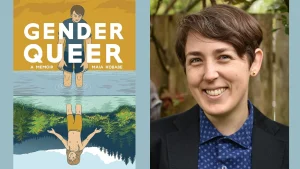
Maia Kobabe’s graphic memoir is one of the most honest accounts of genderqueer identity out there.
It traces the process of understanding their own gender and sexuality over the years, in ways that are specific, uncomfortable, and genuinely moving.
One of the most challenged books in US libraries, which tells you something.
Stone Butch Blues

Leslie Feinberg’s 1993 novel follows Jess Goldberg through working-class America, navigating butch identity, labor politics, and a world that has no clean category for them.
It’s raw and political in equal measure.
Foundational reading, not just for the genderqueer community, but for anyone serious about LGBTQ+ history.
Detransition, Baby

Torrey Peters’ debut novel is sharp and funny, and it refuses to be tidy about gender, relationships, or identity.
It follows three people bound together by a pregnancy and the messy negotiations of what that means for each of them.
Peters writes trans women’s lives with specificity that most fiction comes nowhere near.
She Who Became the Sun
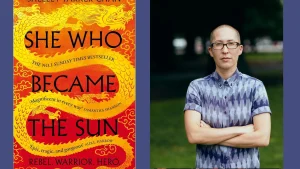
A historical fantasy set in 14th-century China, following a peasant girl who takes her dead brother’s identity to survive and builds something unexpected from it.
Gender, power, and survival are threaded through every page.
It doesn’t map neatly onto modern identity labels, and that’s exactly what makes it interesting.
Wrapping it up
Genderqueer isn’t a phase, a trend, or a source of confusion; it’s a legitimate identity with a history, a community, and a language that’s still evolving.
The language will keep shifting. That’s not a problem; it’s how living communities work.
If one thing stays with you, make it this: when someone tells you who they are, believe them. No qualifications needed.
Want to go deeper? Our guide on non-binary identities covers the broader umbrella — and where genderqueer fits within it.
People may ask
1. Can a queer woman have a boyfriend?
Yes. Queer describes identity, not relationship structure. A queer woman can absolutely be in a relationship with a man.
2. Is queer the same as straight?
No. Queer typically describes identities outside heterosexual or cisgender norms. Straight refers specifically to heterosexual attraction between people of different genders.
3. What is another word for genderqueer?
Non-binary is the closest alternative, though not identical. Some also use gender-nonconforming, genderfluid, or simply queer depending on personal preference.