

Pansexuality is one of the most misunderstood sexual orientations out there, and that confusion causes real harm.
Research consistently shows that bisexual and pansexual people face higher rates of identity erasure than any other group in the LGBTQ+ spectrum.
So let’s fix it.
Let’s learn what it means to be pansexual, where it came from, and why the distinction between labels isn’t just semantics.
What does it mean to be pansexual?
Pansexual means you can be attracted to someone regardless of their gender. Not despite it. Regardless of it.
Man, woman, non-binary, genderfluid; gender simply isn’t the deciding factor.
The “pan” comes from the Greek word for “all.” But that doesn’t mean pansexual people are attracted to everyone they meet. It means gender isn’t a filter.
Where bisexuality is often defined as attraction to two or more genders, pansexuality specifically centers the idea that gender is irrelevant to attraction altogether.
Some people use both labels. Others feel one fits better than the other.
It’s a valid, distinct sexual orientation, not a phase, not confusion, and not the same thing as being “too open-minded”.
Pansexual in a relationship
Being pansexual doesn’t change once you’re in a relationship.
If you’re pansexual and dating a man, you’re still pansexual. Dating a woman, still pansexual. Dating a non-binary person, you guessed it, still pansexual.
A common misconception is that commitment somehow cancels out your orientation. It doesn’t. Your identity isn’t defined by who you’re with right now.
That said, pansexual people in relationships do sometimes navigate specific challenges.
There’s the erasure problem, where others assume your sexuality based on your partner’s gender. And there’s the internal pressure some feel to “prove” their identity, which no one should have to do.
Who you love doesn’t override who you are. The two have always coexisted, and they always will.
Myths about pansexuality
Misconceptions about pansexuality are everywhere, and most of them stem from confusing attraction with behavior.
Some myths are harmless misunderstandings. Others cause real damage to how pansexual people are perceived and treated.
Pansexual people are attracted to everyone
Being attracted regardless of gender isn’t the same as being attracted to every person you meet.
Straight people aren’t attracted to every person of the opposite gender either.
Pansexuality describes who you can be attracted to, not a constant, indiscriminate pull toward every human being you encounter.
Pansexuality affects sexual behavior
Your sexual orientation describes attraction, not behavior.
Pansexual people don’t have a particular “type” of sex life; they have relationships, boundaries, and preferences just like anyone else.
Assuming otherwise conflates identity with behavior, which is both inaccurate and reductive.
Pansexual people can’t have biological children
Sexual orientation has no bearing on biology. Pansexual people have the same reproductive capabilities as anyone else.
Whether someone can or wants to have biological children depends entirely on individual circumstances, not on who they’re attracted to.
Pansexual people cannot be faithful
Fidelity is about commitment, not orientation. Pansexual people are just as capable of monogamy as anyone else.
The myth that broader attraction means less loyalty doesn’t hold up; infidelity occurs across every sexual orientation, and faithfulness is a personal choice.
It is not a function of who you’re capable of finding attractive.
Pansexuality vs Bisexuality vs Polysexuality vs Omnisexuality
Pansexuality often gets grouped with bisexuality, polysexuality, and omnisexuality, and while they overlap, they’re not interchangeable.
| Aspect | Pansexual | Bisexual | Polysexual | Omnisexual |
|---|---|---|---|---|
| Core meaning | Attracted regardless of gender | Attracted to two or more genders | Attracted to multiple, but not all genders | Attracted to all genders, gender is noticed |
| Gender’s role | Irrelevant | Relevant but not limiting | Selective | Acknowledged |
| Scope | All genders | Multiple genders | Some genders | All genders |
| Key distinction | Gender-blind attraction | Gender-inclusive attraction | Gender-selective attraction | Gender-conscious attraction |
Signs you may identify as pansexual
Your sexual orientation isn’t always a sudden realization; sometimes it’s a slow accumulation of moments that finally start to make sense.
These signs are simply patterns that many pansexual people recognize in themselves.
Gender isn’t your first filter
When you’re attracted to someone, their gender isn’t the first, or most important, thing you notice.
Personality, energy, and connection tend to come first. The idea of ruling someone out purely based on gender feels genuinely strange to you.
You’ve had crushes across the gender spectrum
Your attractions haven’t stayed neatly within one or two gender categories.
Over time, you’ve found yourself drawn to men, women, non-binary people, or others, without it feeling contradictory or confusing.
Existing labels never quite fit
Straight never felt fully accurate. Gay or lesbian didn’t either. Even bisexual felt close but not exact.
If you’ve cycled through labels without any of them landing right, pansexuality might be worth exploring.
You connect with pansexual experiences
Reading about pansexuality, the gender-blindness, the breadth of attraction, feels like recognition rather than information.
When pansexual people describe their experiences, you don’t just understand them intellectually. You relate to it personally.
The “what if” feeling
You catch yourself genuinely open to romantic or sexual connections with people of all genders, not hypothetically, but naturally.
It’s not a conscious decision. It’s just how attraction seems to work for you.
Celebrities who identify as pansexual
When public figures speak openly about their sexuality, it gives others language for experiences they might not have had words for yet.
These celebrities have all publicly identified as pansexual, each in their own way and on their own terms.
Miley Cyrus
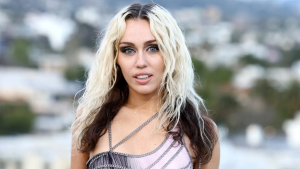
Miley Cyrus has spoken openly about her pansexuality in multiple interviews over the years.
She’s described feeling attracted to people regardless of gender and has been vocal about her belief that love and connection transcend traditional labels entirely.
Demi Lovato
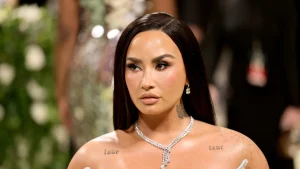
Demi Lovato came out as pansexual in 2021, describing it as a freeing realization.
They’ve spoken about how the label finally felt like an accurate reflection of their experience of attraction, one that didn’t hinge on gender at all.
Janelle Monáe
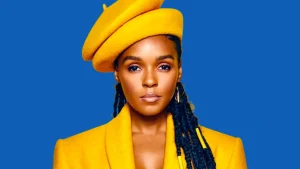
Janelle Monáe publicly identified as pansexual in a 2018 Rolling Stone interview.
Known for weaving themes of identity and liberation into their music, Monáe’s coming out felt consistent with an artistic career built around challenging boundaries and refusing easy categorization.
Cara Delevingne
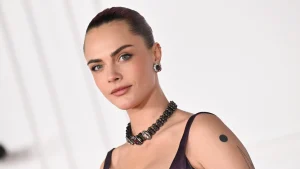
Cara Delevingne has discussed her pansexuality candidly in interviews, describing it as a natural part of who she is rather than a declaration.
She’s been open about the fluidity of her attractions and has spoken about relationships across the gender spectrum.
JoJo Siwa
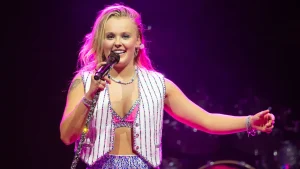
JoJo Siwa came out as pansexual in 2021, becoming one of the most prominent young LGBTQ+ figures in mainstream entertainment.
Her openness resonated widely, particularly with younger audiences still figuring out their identities and seeking representation.
Wrapping it up
Pansexuality isn’t complicated; it’s just attraction that doesn’t use gender as a filter. And yet, the myths, the mislabeling, and the erasure persist.
Hopefully, this has cleared some of that up.
If something in this resonated, you might find it worth reading about bisexuality and sexual fluidity, two concepts that intersect with pansexuality in ways worth understanding.
And if you’re still figuring things out? That’s completely fine. Identity isn’t a test with a deadline.
Take the time you need.
People may ask
1. What is a Berrysexual?
Berrysexual is an informal, internet-born micro-label describing attraction primarily to non-binary or androgynous people, though it isn’t widely recognized in mainstream LGBTQ+ communities.
2. What does SSA mean in dating?
SSA stands for Same-Sex Attraction. It describes romantic or sexual feelings toward people of the same gender, used commonly in both clinical and personal contexts.
3. What does NSA mean in dating?
NSA means No Strings Attached. It describes a casual sexual or romantic arrangement where both people agree there’s no expectation of commitment or emotional involvement.